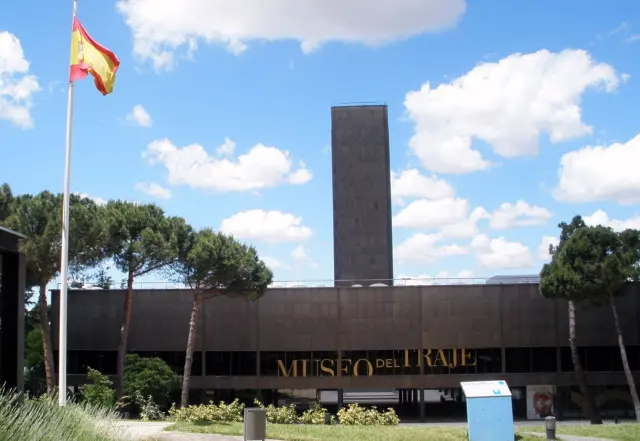
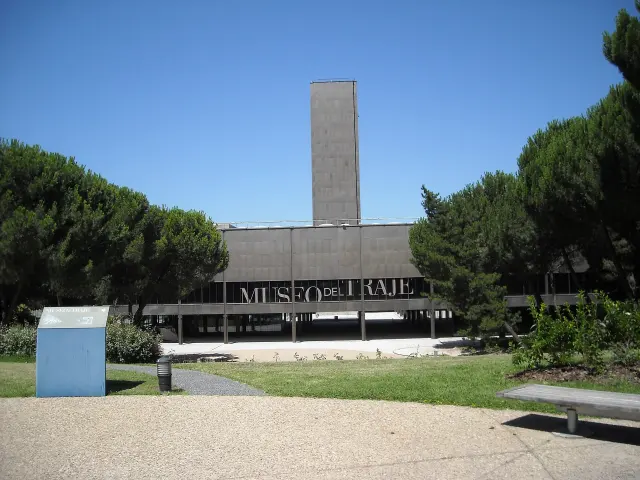
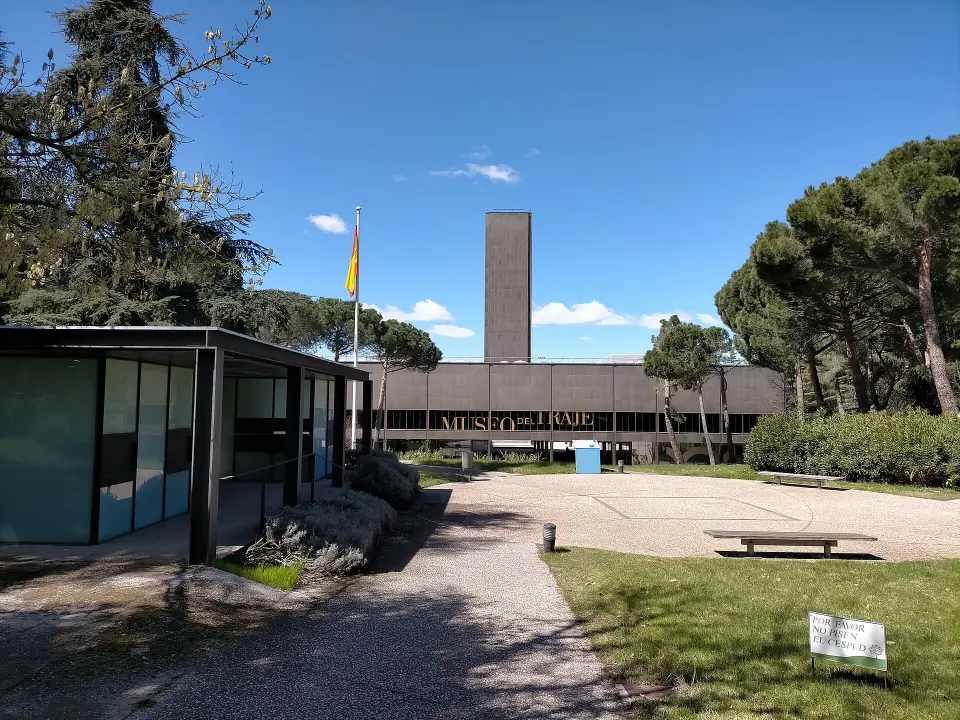
Spanish museum whose dress and fashion collection preserves almost 30,000 objects. It includes regional dress, jewellery and accessories, works by Mariano Fortuny y Madrazo, and pieces by Cristóbal Balenciaga and Pedro Rodríguez; it also holds Rodríguez’s complete documentary archive from 1940 to 1978.
Selected excerpts from our archive offer more context on this subject. Each reading links to the original article and its sources.
Museo del Traje: a collection for reading Spanish fashion
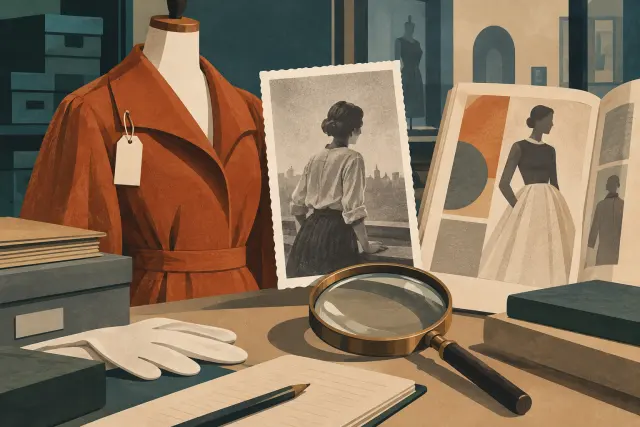
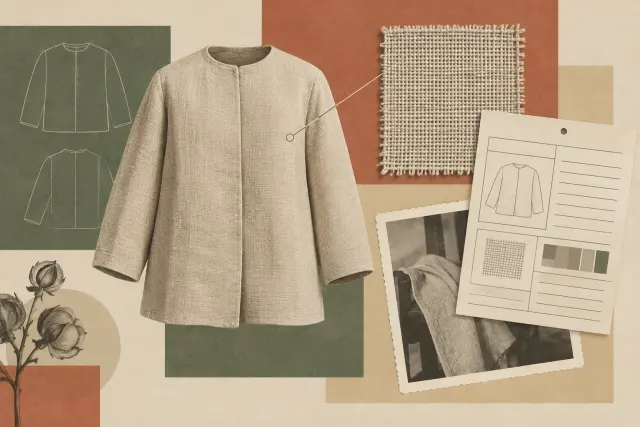
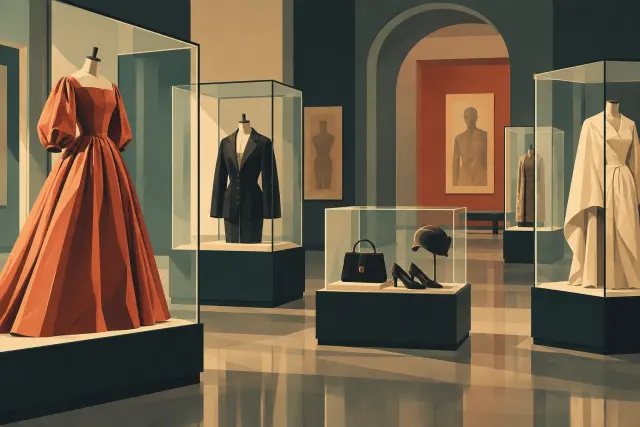
The Museo del Traje presents its fashion and dress holdings as a broad resource for approaching the material culture of clothing in Spain. The available institutional information does not describe one aesthetic line or a closed chronology: it places regional dress, jewellery, accessories, works by Mariano Fortuny y Madrazo, and holdings connected with Cristóbal Balenciaga and Pedro Rodríguez together. That coexistence is itself an invitation not to reduce fashion to a designer’s name or a garment seen in isolation.
Fashion is also made of use, technique, accessories, image circulation and preservation. A public collection therefore offers a different reading from that of a campaign, runway or linear history of trends. It preserves objects, while making visible that each garment enters the museum with questions about provenance, function, context and its relationship to other objects.
The museum highlights a collection of Spanish regional dress together with jewellery and accessories. Precision matters: the supplied sources do not justify turning that body of material into a uniform image of “Spain.” They do support the conclusion that regional clothing and its accessories are central to the institution’s account.
Accessories are not a minor addition. A text in the museum’s orbit explains that fibulae were metal dress fasteners, comparable to modern safety pins. The definition recalls a basic point: an accessory may solve a material need while also shaping social appearance. Gloves, hats, shoes, mantillas, fans and shawls appear in other periods and collections; they should not be treated as interchangeable, but they help us understand clothing as a system of related pieces.
Spanish dress, media, and social life from 1940 to 1970
The 1940-1970 period should not be understood as a uniform style. The institutional source frames it as a journey from post-war Spain to the 1970s; its value therefore lies in changes as well as continuities. A 1942 garment preserved by the Museo del Traje, the Manolita dress in wool crêpe embroidered with jet, is among the objects highlighted by the Community of Madrid. It shows why dated and documented objects are firmer ground than retrospective labels applied to whole decades.
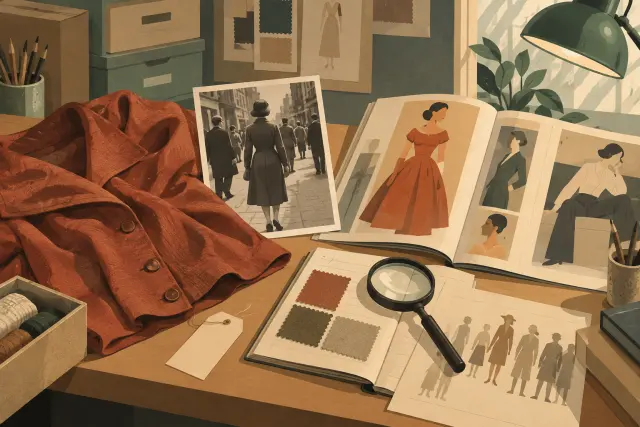
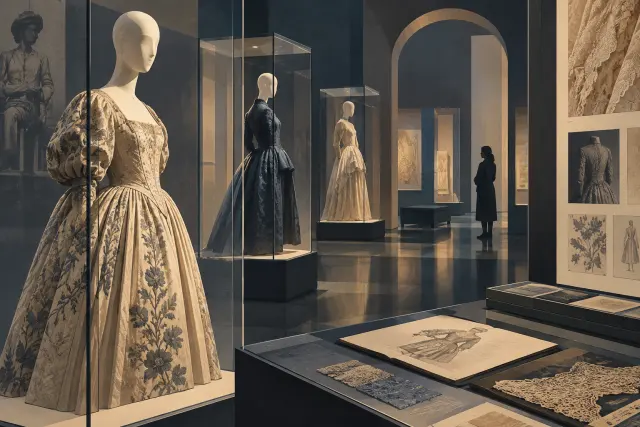
The exhibition brought together 118 photographic reproductions—many previously unpublished according to the institution—and 76 objects from, among other places, the Regional Archive of the Community of Madrid and the Museo del Traje. This combination prevents history from being confined to a display case. Photographs restore body, posture, street, and occasion to clothing; objects offer material and constructional proximity that an image cannot replace.
Specialist publishing was a crucial infrastructure of visibility. The Museo del Traje and Acción Cultural Española devoted the temporary exhibition ¡Extra, moda! El nacimiento de la prensa de moda en España to the conditions that fostered fashion magazines in Spain. According to the Ministry of Culture, these included the development of luxury and textile industries, the beginning of the seasonal system, and the arrival of new fabrics and garments.
Public collections bring needed discipline to nostalgia. The Museo del Traje explains that its exhibition on the fashion press brought publications, magazines, fashion plates, patterns, garments, accessories, and other objects into dialogue in order to prompt reflection on the fashion system and its chief means of dissemination. The approach does not treat clothing as an isolated relic, but as part of an ecosystem of production and representation.
KEY FACTS
- Type
- Museum
- Country or region
- Spain