RetroPauseAnimation
Thematic archive · Animation

Animation and the art of bringing images to life

Drawings, puppets and digital worlds share a question: how do you create movement? This section explores works, techniques and contexts of reception, with attention to production choices as well as the ways animated images are presented and remembered.

Start here

Readings to help you find your bearings.

Analysis · 1990

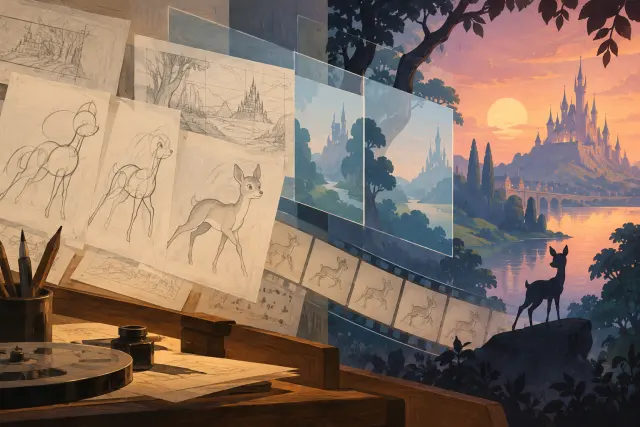
What Disney Animation’s Production Art Reveals

Drawings, story sketches, concept art, and background paintings are not incomplete versions of a film: each belongs to a different stage and answers a different question. Read alongside sequences and finished shots, they reveal decisions about staging, style, and collaboration.

Open story
Analysis · 2000

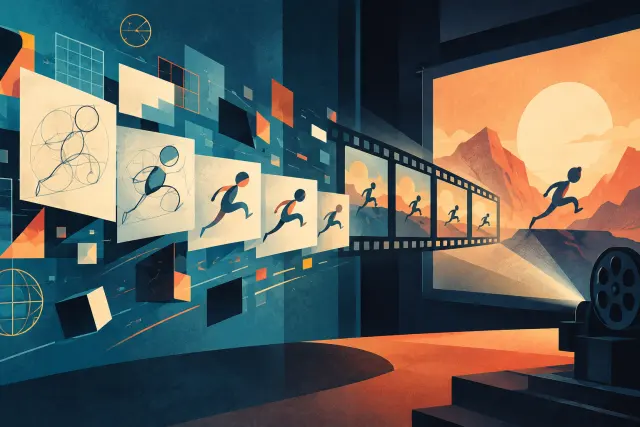
Ánima Estudios: From Web Experiments to Continuous Production

Emerging from the animation team behind Tirabala.com, Ánima Estudios turned a digital venture into an effort to produce features on a continuing basis. Magos y gigantes and Imaginum show both the studio’s technical development and the challenges of financing, distribution and finding an audience.

Open story
Animation

A story in context

Sketches and production materials help reveal choices that a synopsis cannot. The process matters as much as the result.

This section focuses on animation’s languages and techniques. Its exhibition connects with Film and Television, and its publications with Comics.

Choose your path

Three perspectives on the archive.

Featured dossier

What the Frame Leaves Out: Archiving Japanese Animation Production Materials

Cels, drawings, and other intermediate materials reveal production decisions hidden by the finished work. The National Film Archive of Japan’s experience shows how preserving them depends on cataloguing and access as well as collaboration with a global intellectual-property industry.

Read article

Documented milestones

  1. 1914

    Start of Max Fleischer's experimental shorts

    Max Fleischer began producing experimental shorts between 1914 and 1916 to demonstrate the rotoscope, a technique that projected images through a glass panel to be traced frame by frame.

    Read article
  2. 1916

    Start of the Out of the Inkwell series

    John Bray Studios launches the animated series Out of the Inkwell, starring Koko the Clown, based on experimental rotoscoped images.

  3. 1917

    Namakura Gatana is dated to 1917

    The sources place the Junichi Kouchi-attributed short film Namakura Gatana in 1917. They do not document a release month or day, so year precision is retained.

  4. 1917

    Premiere of El Apóstol in Buenos Aires

    Quirino Cristiani releases his work in Argentina, a milestone documented in multiple sources as the first animated feature film, although the exact day is not specified in the evidence.

  5. 1918

    Start of the Out of the Inkwell series

    Max Fleischer begins production of the animated series Out of the Inkwell, which becomes a milestone for the use of the rotoscope.

    Read article

Latest additions

1990s

What Disney Animation’s Production Art Reveals

Drawings, story sketches, concept art, and background paintings are not incomplete versions of a film: each belongs to a different stage and answers a different question. Read alongside sequences and finished shots, they reveal decisions about staging, style, and collaboration.

2000s

Ánima Estudios: From Web Experiments to Continuous Production

Emerging from the animation team behind Tirabala.com, Ánima Estudios turned a digital venture into an effort to produce features on a continuing basis. Magos y gigantes and Imaginum show both the studio’s technical development and the challenges of financing, distribution and finding an audience.

2000s

Production Committees: Who Funds an Anime, and Who Animates It?

The studio credited with animating an anime does not necessarily finance or control it on its own. Production committees bring companies together to share costs, risks, and expertise; their credits offer clues about those relationships, but do not fully disclose contracts or creative decisions.

Contemporary

Beyond the Cel: The Material Complexity of Preserving Anime

Anime heritage resides not only in digital archives but in a physical network of cels and backgrounds that challenges traditional museum conventions. This analysis explores how institutions and academic communities are redefining the documentation of this cultural medium.

1950s

The Archive as Witness: Material Evidence in Animated Design

Beyond the final synopsis, sketches and workbooks preserved in archives provide primary evidence of the technical and artistic decisions that define a character, revealing a process of experimentation hidden by the finished product.

Sources for the selected readings

Editorial review ·
