The object does not speak for itself
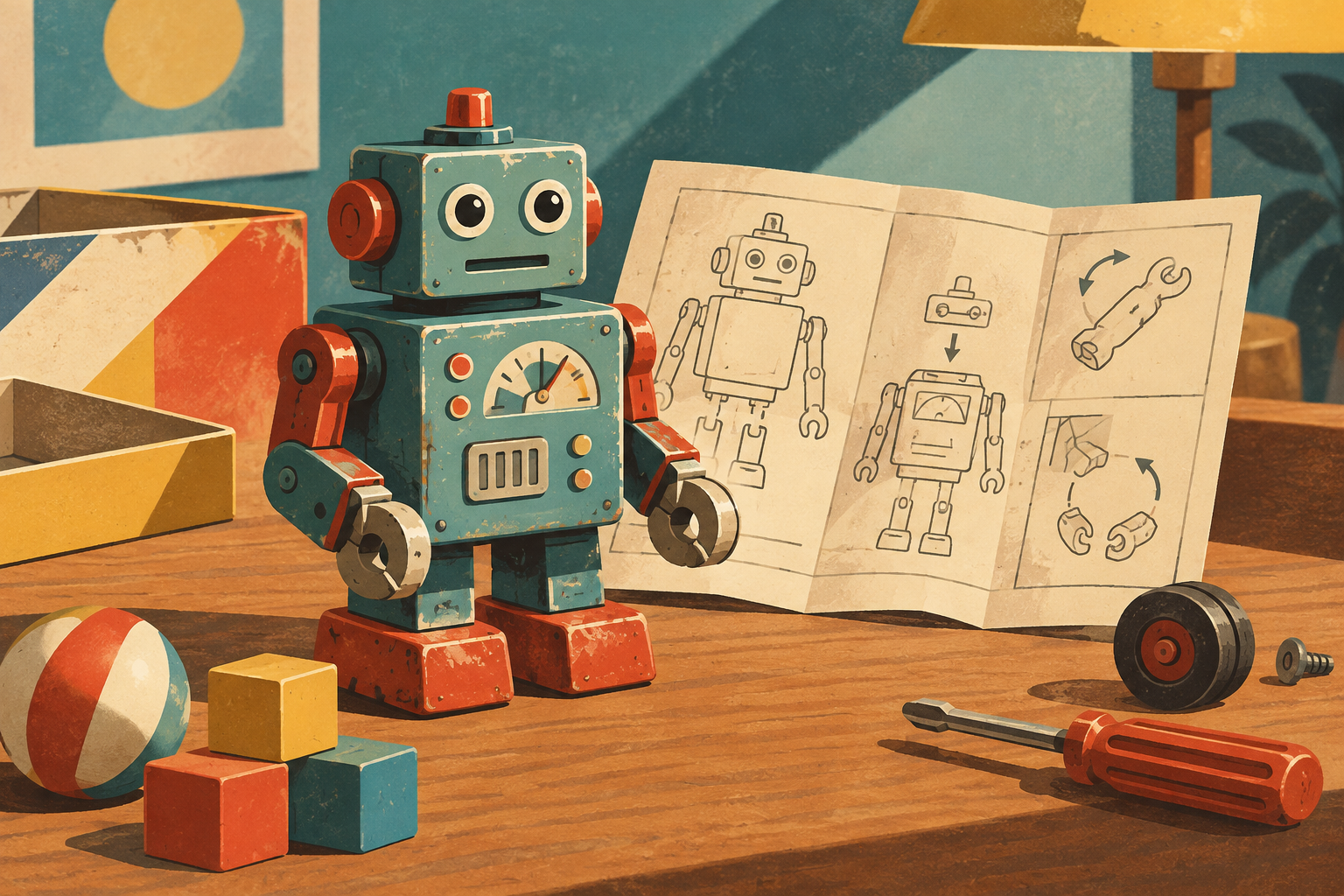
A toy raises different questions depending on what has been preserved with it. The object allows its shape and condition to be observed; a box, instruction sheet or label might provide information about intended use. The sources gathered for this proposal, however, neither reproduce instructions nor describe a particular toy. This analysis therefore does not assign rules, recommended ages or functions to a specific object.
The starting point is narrower: the sources describe toy collections, museums and exhibitions, alongside a bibliographic record concerning Alicante’s toy industry. Together, they suggest a way of reading objects; they do not, by themselves, reconstruct an individual play experience.
The collection as context
The Museu del Joguet de Catalunya’s collection history states that the museum opened in Figueres on 18 June 1982. The available information places its beginnings in a particular building, but the consulted excerpt does not identify which toys belonged to the initial collection or what instructions accompanied them. The date contextualizes the institution; it does not date the objects it holds.
Another source describes the Museo de Historia del Juguete as a collection of more than 6,500 items, mostly from 1870–1985. That figure and range appear in a note about toy museums in Spain. They do not establish which kinds of play predominate or how any individual object was used. A large collection can prompt comparative questions, but answering them requires catalogues, records or objects that can be examined.
Instructions: a source, not an automatic answer
When instructions survive, they should be read as a product document, not as an infallible account of everything that happened during play. They may help identify permitted actions or prescribed sequences, provided they can be securely linked to the object. None of the supplied sources includes the text of an instruction sheet. The questions “what could a player do?” and “who was it designed for?” therefore remain research questions, not conclusions.
It also matters to distinguish material evidence from interpretation. Visible wear can be described when an object is inspected; by itself, it does not prove who used it, for how long or in what way. The material available here contains no conservation or use observations about an individual toy.
From industry to object
An OpenAlex bibliographic record identifies a 1987 article titled “The Toy Industry in the Province of Alicante.” Its title points to a possible industrial context, but is not enough to summarize the article’s arguments or connect them to a particular product. Separately, the Museo Valenciano del Juguete announces a publication about toy companies in Ibi. The announcement supports the existence of that editorial topic; it does not justify claims about manufacturing, design or distribution absent from the available material.
The Museo del Traje exhibition “Los juguetes hablan alemán” is presented as a display of the German toy industry and its place in the world market between the late nineteenth century and an endpoint not specified in the excerpt. It offers a comparative lead, not enough evidence to reconstruct a relationship between that industry and the Spanish objects mentioned here.
What remains to be checked
The proposed reading depends on evidence missing here: an identified object, its packaging, associated instructions and a record or catalogue establishing provenance. With those materials, it would be possible to examine what actions the design proposes, how the text explains them and what signs of use can be observed, keeping observations separate from hypotheses.
For now, the conclusion is deliberately limited. The sources show that collections and museums offer contexts for studying toys, and that industry is another relevant field. They do not establish how anyone played with a particular object. Rarity would not answer that question: progress depends on a documented object and evidence of use, where such evidence exists and can be attributed.
- Decade
- 1980s
- Region
- Spain
- Level
- Introduction
- Entities
- Museum, Museo del Traje, Museo Valenciano del Juguete, Museu del Joguet de Catalunya
Sources and references
- La industria del juguete en la provincia de Alicanteopenalex.org · 2026-10-09
- Historia de la colecciónwww.mjc.cat · 2026-10-09
- los museos de juguetes en españaafede.com · 2026-10-09
- Presentación de “Historia de las empresas jugueteras de Ibi ...www.museojuguete.com · 2026-10-09
- Los juguetes hablan alemán - Museo del Trajewww.cultura.gob.es · 2026-10-09
- El juguete español como documento cultural: qué cuentan los ...www.retropause.com · 2026-10-09