Food seems ephemeral: it is prepared, shared and gone. Yet its history can leave lasting traces in texts, images and collections. The sources gathered here offer three concrete starting points: the history of food in Spain, museum attention to food cycles, and the preservation of posters connected with food. They do not amount to a complete history of popular products or sweets. They do, however, give us a basis for asking how a historical account can be built from what people consume.
History begins with questions
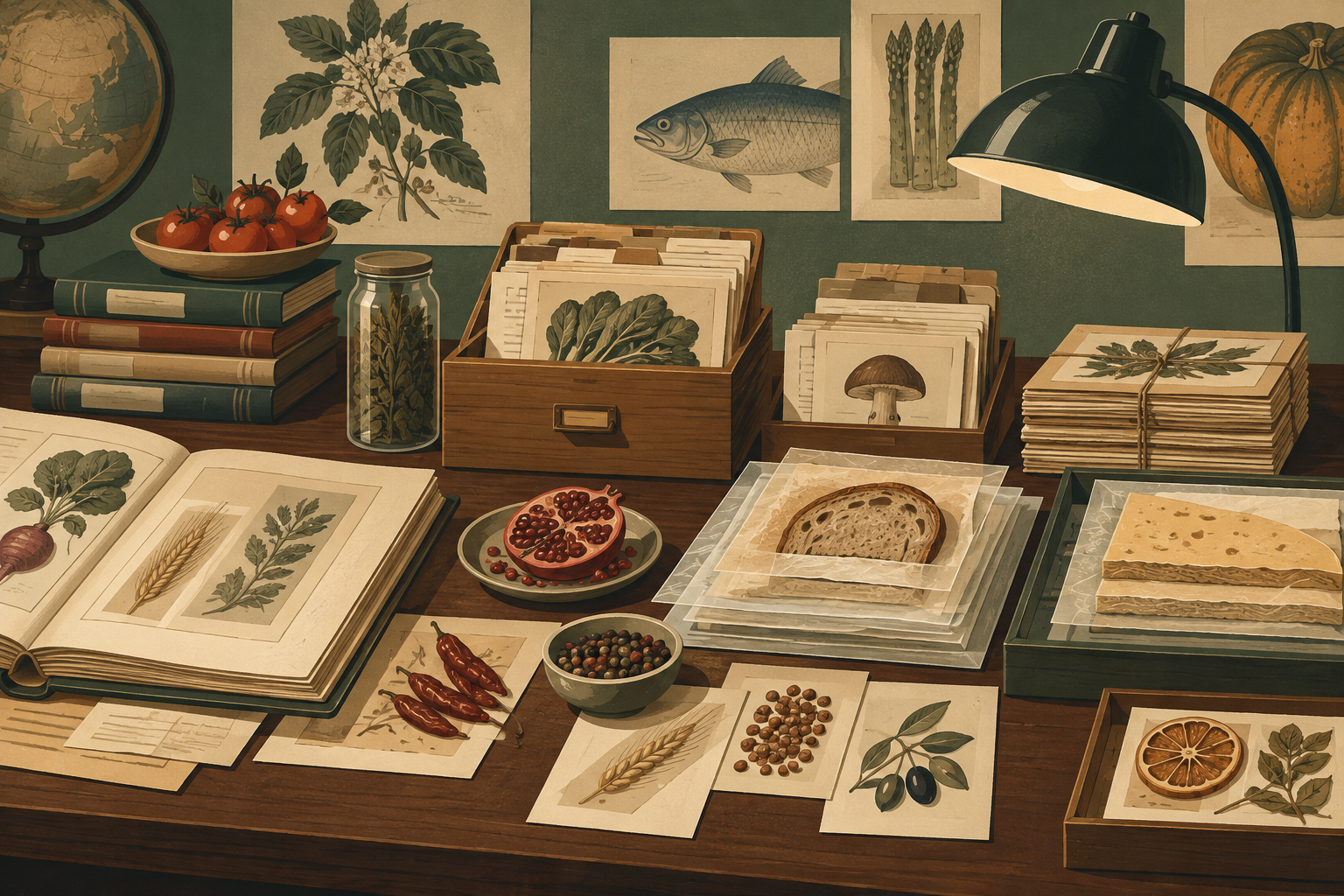
The Fundación Juan March presents the history of food in Spain as a broad survey and notes that the arrival of foods from the New World opened an exchange between the Americas and Europe. This points to a history of food that is more than a collection of recipes: it can also be studied through the movement of foods and contact between regions. The available source does not specify particular products or dates here, so the claim should remain at that general level.
For researchers, the important task is not to fill gaps with memories or assumptions, but to ask what evidence would be needed: documents, images, objects or dated accounts. A food familiar today does not, by itself, tell us when it arrived, who ate it or how its meaning changed.
The time of food
The Museo Reina Sofía page for the exhibition “Sobre la mesa” invites us to think about food through cycles. It mentions seed germination and fermentation as processes that take time. This broadens the subject: food history can include not only what is served, but also the processes that make it possible.
This perspective also helps explain a limitation of display cases: an exhibited food cannot show its entire journey on its own. Interpretation should rely on documented information and make clear which parts of the process are represented and which are not.
Sweets, people and heritage
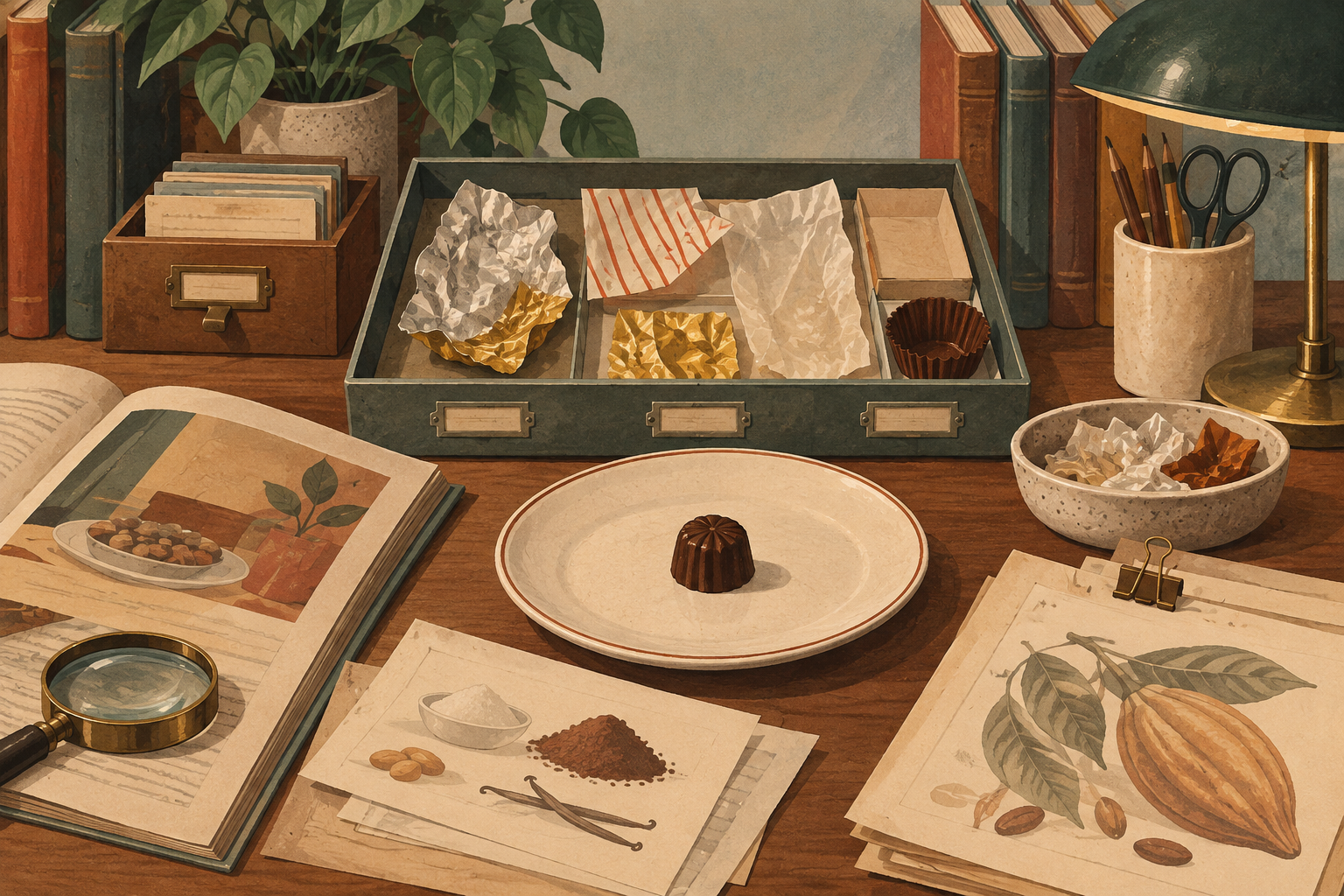
The curatorial text “Patrimonio Comestible: Una historia de dulces y de sus reposteras” presents sweets as historical material and puts their makers in the foreground. Its title suggests an approach that goes beyond the product alone: studying confectionery also means attending to the people and work involved. The available excerpt gives no names, biographies or specific chronologies, so assigning particular examples to it would be unwarranted.
The value of this perspective lies in the questions it makes visible. What can be preserved about a sweet: its name, shape, recipe, image, or the memory of the person who made it? Each answer would require suitable evidence. The word “heritage” does not replace the work of documentation.
Posters tell stories too
The presentation “El sabor de una época” notes that the Museo del Traje holds a large and varied poster collection, including works by important Spanish poster artists and lithographic presses. This allows us to consider posters as visual sources for studying how food was represented. But the available description does not identify individual advertisements, brands or dates; any close reading would need to rely on the objects and their catalogue records.
A poster is not a neutral photograph of what people ate. It is an image made to communicate and should be read in light of its purpose, design and accompanying verifiable information. That caution makes it a source, rather than automatic proof of everyday habits.
What the evidence supports
A scholarly article listed on Dialnet, “Museos de la alimentación: sabores detrás del cristal,” addresses the display of food in museums. The available record establishes the subject of the paper but does not provide enough of its argument to summarize its conclusions. It is useful evidence that food museography is also studied, not grounds for attributing claims that are absent from the supplied material.
Taken together, these sources support a limited but productive proposal: food can be investigated through objects, processes, texts and images, and its history gains depth when it recognizes both those who produce food and those who represent it. The sources do not, by themselves, document a complete history of sweets or establish dates for specific products. An archive begins by recognizing that distinction: between what documents support and what still needs investigation.
- Decade
- Contemporary
- Region
- Spain
- Level
- Introduction
- Entities
- Museum, Museo del Traje
Sources and references
- Patrimonio Comestible: Una historia de dulces y de sus ...www.cultura.gob.es · 2026-09-29
- Historia de la comida en Españawww.march.es · 2026-09-29
- Sobre la mesawww.museoreinasofia.es · 2026-09-29
- Museos de la alimentación: sabores detrás del cristal - Dialnetdialnet.unirioja.es · 2026-09-29
- El sabor de una épocaartsandculture.google.com · 2026-09-29