Identification is not valuation
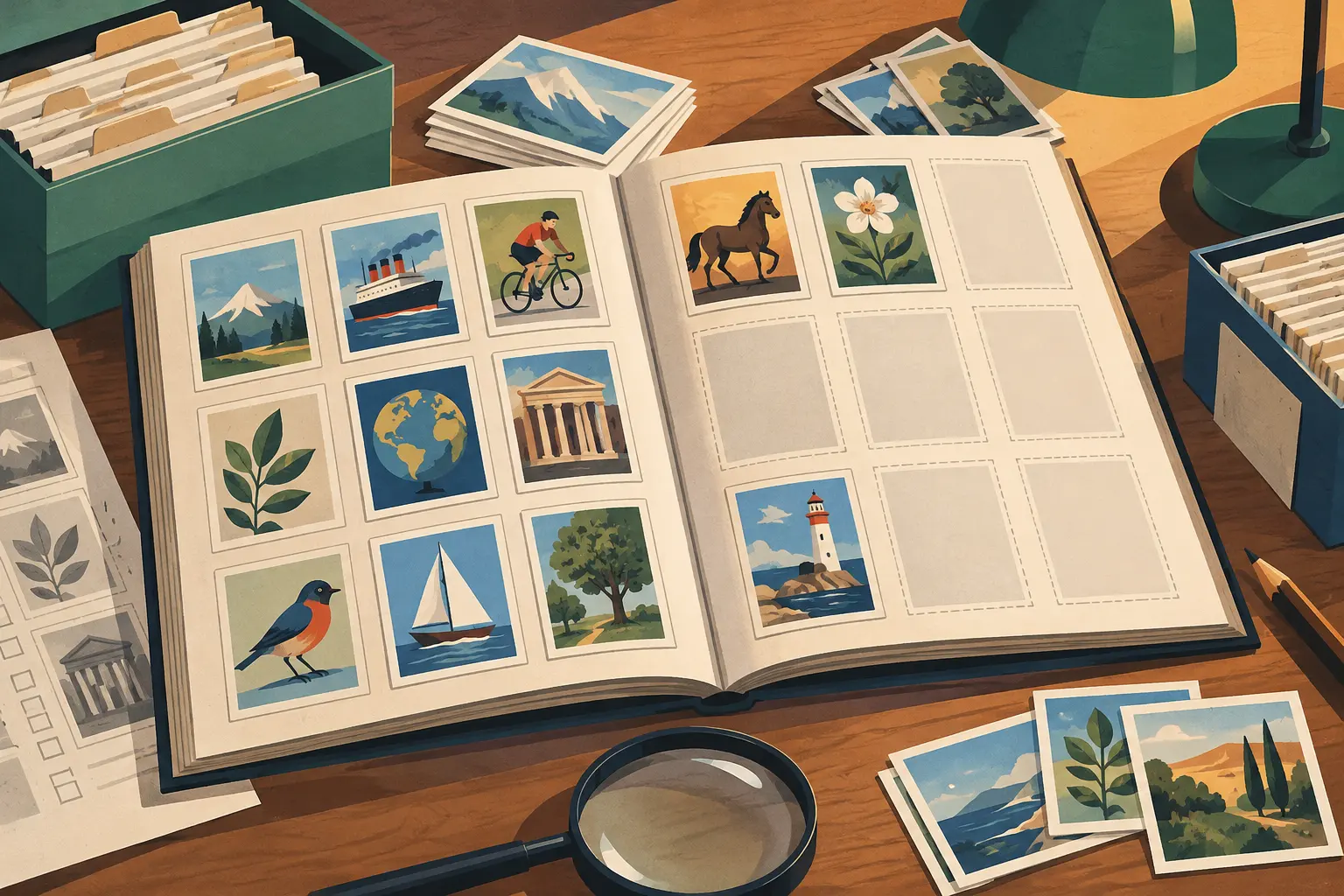
For a collector of picture cards, a useful question is not only what an item might be worth, but what can be stated about it with confidence. A catalogue can provide a starting point: a name, a title, an attribution, or an institution that holds the object. It does not, by itself, turn visual resemblance into a proven variant or an estimate into a historical fact.
A CER.es record brings together several details about a picture-card album: Historia del Circo, document number 1, the attributions to Rosés and Ediciones Ada, both associated with Barcelona in the record, and the Museo del Traje as the institution. This is a specific and useful description, but it has limits: those details do not set out every edition, condition, or difference between copies.
What a record contributes
The record makes it possible to begin identification with verifiable elements. The title provides a name to search for; the document reference and museum place the record; the listed attributions point towards further research. This is a stronger basis than an unsourced identification, provided we remain clear about what the record says and what it does not.
A catalogue is not necessarily a complete list of a commercial series. The available evidence does not give a complete card numbering, the album’s contents, publication dates, or a list of variants. Those gaps should not be filled by analogy with other collections, even if their titles or appearance seem similar.
A variant requires comparison
To support the claim that two copies are variants, objects or documentation would need to be compared so that observable differences and their provenance can be described. As represented in the available evidence, the CER.es record identifies an album; it does not establish a taxonomy of its versions. A single image would not necessarily settle the question either: it might document one copy, but cannot by itself prove that other versions exist.
This caution separates three levels. First, the identification provided by the catalogue. Then, the features directly observable on an item. Finally, an interpretation of why those differences exist or which edition they belong to. Only the first level appears in the supplied description; the others require additional evidence.
Collecting also means exchanging information
The popular sources in the search results present picture cards as objects organised into albums and discuss collections from different periods. They can point readers towards accounts and examples, but they do not replace a collection record or confirm a particular variant on their own. A recollection, a popular article, and a museum record answer different questions.
In an exchange network, a precise description can be more useful than a sweeping claim: the title as it appears on the object, a number when documented, an attribution as given by the source, and visible differences described without overinterpreting them. Information can then circulate without turning a hypothesis about rarity or price into a historical fact.
The limits of the record matter too
Nor does it establish a publication date for Historia del Circo. These gaps should remain visible in the description rather than being obscured by an undocumented chronology or production story.
A careful answer to “which catalogue identifies series and variants?” therefore begins with a verifiable example and a distinction. CER.es identifies a particular album and records certain authorship details and an institutional association. Identifying variants within a series requires records and comparisons that document those differences. The catalogue opens the investigation; it does not finish it, and it certainly does not establish an item’s value by itself.
- Decade
- Contemporary
- Region
- Spain
- Level
- Enthusiast
- Entities
- Museum, Museo del Traje
Sources and references
- Del envoltorio al álbum: cómo los cromos se hicieron ...www.retropause.com · 2026-10-02
- CER.es Colecciones en Red - Resultados de la búsquedaceres.mcu.es · 2026-10-02
- Todo retro: Historia de los cromos en Españawww.youtube.com · 2026-10-02
- Colecciones de cromos míticas de la historia de Españawww.imprentaonline.net · 2026-10-02
- Yo fuí a EGB .Los años 60's y 70's.Álbumes y colecciones ...yofuiaegb.blogspot.com · 2026-10-02
- Una historia de cromos - Pixartprintingwww.pixartprinting.es · 2026-10-02