Analysis · 1980
The NES Makes Sense as Console, Cartridge, and Market
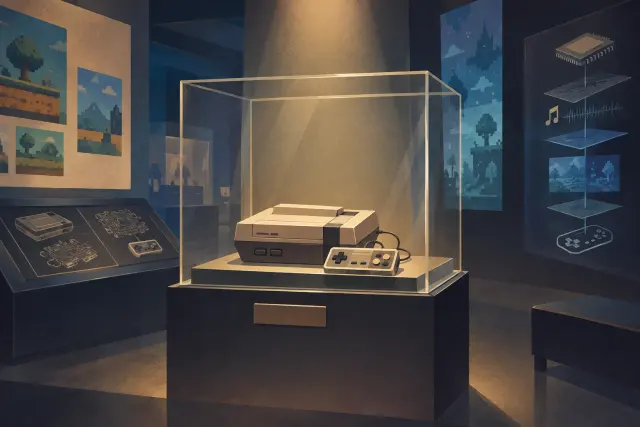
The NES was more than a machine: its architecture, cartridges, and game library form a system whose history also depends on how it is studied and documented.
Open storyCartridges, controllers and shared screens: this journey explores home and handheld machines, the technical choices behind them, and the place they held in the home.
Readings to help you find your bearings.
The NES was more than a machine: its architecture, cartridges, and game library form a system whose history also depends on how it is studied and documented.
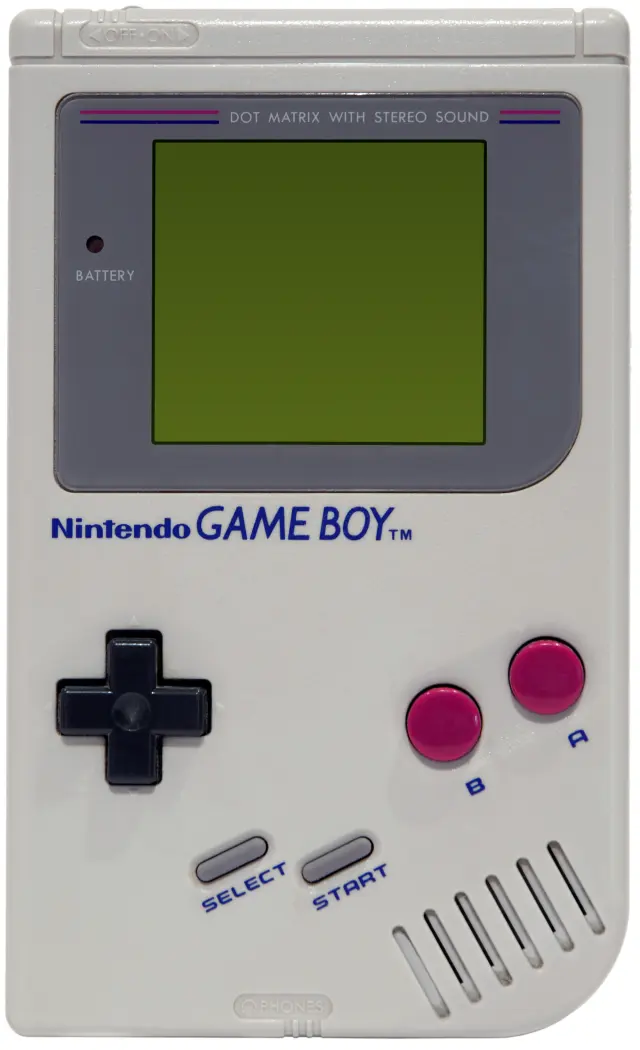
Open storyThe available evidence places Nintendo’s Game Boy launch in 1989 and interprets it as the culmination of an earlier path through electronic games, arcade conversions, and Game & Watch. It also requires a distinction between that verifiable point and a broader history that cannot be claimed here.
Open storyConsole preservation requires moving beyond physical custody to integrate software, peripherals, and social context, transforming the retro object into a cultural historical document.
Open storyA console brings together industrial design, media and a game library. Studying these elements as a whole reveals what each machine made possible, beyond comparisons of specifications.
This topic documents machines and accessories. The games themselves belong in Video Games, while the arcade environment is covered in Arcade.
Three perspectives on the archive.
Machines and accessories gathered around the family screen.
The NES Makes Sense as Console, Cartridge, and Market From Built-In Games to Cartridges: How the Second Generation Changed the ConsoleScreens, batteries and the design of handheld play.
The Game Boy’s 1989 launch marked a turning point for handhelds Game Boy (1989): a historical technical sheet and the limits of the evidenceMedia and connections that shape a game library.
Beyond the hardware: the complexity of preserving the gaming experience Reading Nintendo consoles through their forms and mediaThe 1990s transformed video games without replacing one platform with another overnight. 3D graphics, CD-ROMs, personal computers, and early networked communities broadened the medium, while arcades retained experiences that were difficult to reproduce at home.
Read articleMagnavox put the Odyssey on sale in 1972. The exact launch date is not documented in the sources.
Read articleMagnavox launched the Odyssey, created by Ralph Baer and described in the sources as the first home video game console.
Read articleLa Nación places the launch of Pong, a two-player tennis game, in 1972 and describes it as a notable step in video games’ entry into the consumer market.
Read articleNolan Bushnell and Ted Dabney found Atari, which later plays a prominent role in the early generations of consoles.
Read articleMagnavox launched the Odyssey, a home console that brought electronic games to the living-room television and became an early milestone in home gaming.
Read articleThe 1990s transformed video games without replacing one platform with another overnight. 3D graphics, CD-ROMs, personal computers, and early networked communities broadened the medium, while arcades retained experiences that were difficult to reproduce at home.
The Famicom and NES noise channel handled both gameplay effects and percussion. Joseph Chang’s study of ten soundtracks from 1983 to 1987 shows how different composers turned its limited resources into distinctive musical voices.
Released in 1994, the 32X promised to add 32-bit capabilities to the Mega Drive without replacing it. Its games showcased some new graphical possibilities, but the add-on also made setup more complicated and arrived as Sega was preparing the Saturn as its successor.
Released in Japan in July 1977 alongside the Color TV-Game 15, the Color TV-Game 6 packed six Pong options into a console with no cartridges. Its 9,800-yen price and built-in controls show how Nintendo sought a place in a home market already crowded with rivals.
Launched in 1983, the Famicom did not just overcome the industry crisis; it established a business model based on strict licensing and support chips that transformed the relationship between hardware and software.
Storing hardware does not guarantee access to software. Projects like KEEP and the work of specialized museums demonstrate that emulation, technical documentation, and contextualization are essential for consoles and their games to remain readable and interpretable.
Video game history is more than a succession of increasingly powerful machines. Shared computers, arcades, home systems, and networks encouraged different rhythms and rules, from text-based exploration to repeatable action and persistent multiplayer worlds.
The 1988 launch of the Mega Drive marked a turning point for Sega, seeking to consolidate its position in the home market after its arcade dominance. While its reception in Japan was modest, the console found resounding success in North America and Europe, driven by titles like Sonic the Hedgehog and an aggressive marketing campaign targeting teenagers.
Launched in 1972, the Magnavox Odyssey helps explain a period when playing at home meant working with simple rules and visual elements. The history of this first generation also shows why it matters to distinguish consoles with built-in games from systems that let players change cartridges.
The Magnavox Odyssey (1972) was not just the first console, but a design experiment that solved technical limitations through physical overlays, establishing the foundations of home electronic entertainment.
Beyond chronology, the transition from the Odyssey to the Channel F established the interchangeable hardware standard that allowed industry expansion before the 1983 crash.
Nintendo's domestic hardware debut was not a single device, but a small series of models with built-in games, documented through retro and academic sources.
Editorial review ·