RetroPauseVideo games
Thematic archive · Video games

Video games and the ways of playing that stayed with us

A game might begin with a coin, a tape or a cartridge. We explore games, genres and communities to understand what made those experiences distinctive and how they are remembered today.

Start here

Readings to help you find your bearings.

History · 1960

Spacewar!: how the PDP-1 became a place to play

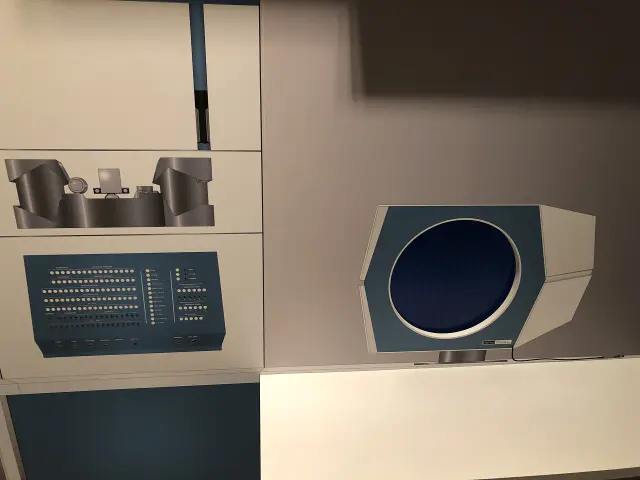
In 1962, Steve Russell and others in the MIT community created Spacewar! for the PDP-1. Its duel between two ships made the university computer more than a calculating tool: it also became a gathering place for competition and experimentation with digital play.

Open story
Video games

A story in context

Video games make more sense when their rules, presentation and playing environments are considered together. Magazines, manuals and personal accounts help distinguish what a game offered from the memories we have built around it.

This section explores games and gaming culture. Consoles brings together the machines, while Arcade looks at the arcade and the ways people played there. A game can connect those worlds without turning their home pages into copies.

Choose your path

Three perspectives on the archive.

Featured dossier

Video Games in the 1990s: New Ways to Play, Tell Stories, and Connect

The 1990s transformed video games without replacing one platform with another overnight. 3D graphics, CD-ROMs, personal computers, and early networked communities broadened the medium, while arcades retained experiences that were difficult to reproduce at home.

Read article

Documented milestones

  1. 1889

    Nintendo begins its history

    According to the company’s own history, Nintendo began its journey in 1889, offering leisure products and experiences.

    Read article
  2. 1962

    Development of Spacewar! at MIT

    Steve Russell and other MIT members developed Spacewar! for the PDP-1 computer, a two-player space combat game using vector graphics.

    Read article
  3. 1971

    Nolan Bushnell begins commercializing Computer Space

    The Universitat Politècnica de Catalunya source identifies 1971 as the year Nolan Bushnell began commercializing Computer Space, described there as a version of Spacewar!.

    Read article
  4. November 1971

    Computer Space reaches the arcade

    Computer Space, an arcade adaptation of Spacewar! associated with Nolan Bushnell, began commercial distribution in November 1971. The machine operated with coins; its status as the first commercial video game is not unanimously established.

    Read article
  5. 1972

    Magnavox markets the Odyssey

    Magnavox put the Odyssey on sale in 1972. The exact launch date is not documented in the sources.

    Read article

Latest additions

2000s

Nintendo DS: How Two Screens Expanded the Possibilities of Play

Launched between 2004 and 2005, depending on the market, the Nintendo DS turned its clamshell design, touchscreen and wireless connectivity into more than technical features: they invited developers to rethink how games could be presented and shared.

Contemporary

Photography and video: how movement turns images into time

Photography and video share composition, framing and lighting, but organize them differently. Drawing on Antoni Marín Amatller’s analysis, this article explores how movement, duration and editing turn static visual tools into a temporal, rhythmic construction.

1960s

Spacewar!: how the PDP-1 became a place to play

In 1962, Steve Russell and others in the MIT community created Spacewar! for the PDP-1. Its duel between two ships made the university computer more than a calculating tool: it also became a gathering place for competition and experimentation with digital play.

2000s

Beyond the Cartridge: Technical Preservation of Video Game Memory

Storing hardware does not guarantee access to software. Projects like KEEP and the work of specialized museums demonstrate that emulation, technical documentation, and contextualization are essential for consoles and their games to remain readable and interpretable.

1970s

The Odyssey and the first games to enter the home

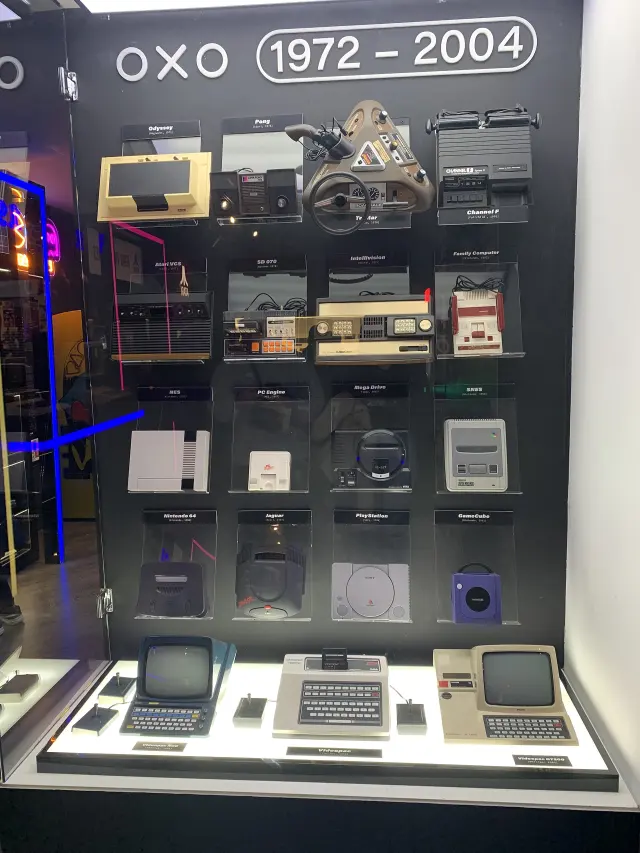
Launched in 1972, the Magnavox Odyssey helps explain a period when playing at home meant working with simple rules and visual elements. The history of this first generation also shows why it matters to distinguish consoles with built-in games from systems that let players change cartridges.

Sources for the selected readings

Editorial review ·