RetroPauseContemporary retro
Thematic archive · Contemporary retro

Contemporary retro and the past in new forms

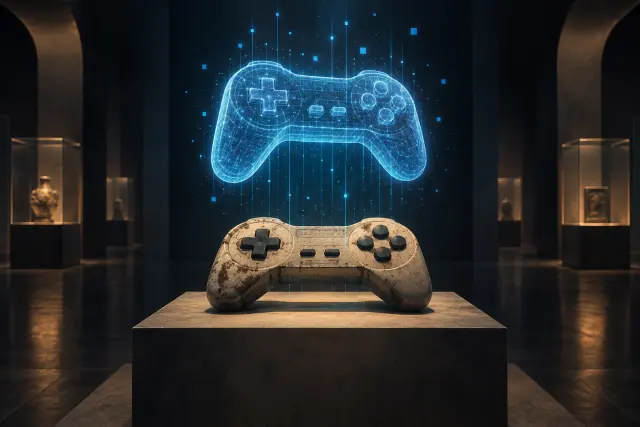
Reissues and contemporary projects look back to the past, but they do not simply reproduce it. We explore what they bring back, what they transform, and how they engage with their references, while keeping the differences between an original work and its reinterpretation in view.

Start here

Readings to help you find your bearings.

Contemporary retro

A story in context

A retro proposal is not the original object: it is a reinterpretation made at a different time. Comparing design, materials, and context helps reveal connections to the reference without erasing the differences between them.

This page focuses on how contemporary projects reinterpret references from the past. Historical categories, by contrast, offer a way to approach those references in their own context and are not treated here as new proposals.

Choose your path

Three perspectives on the archive.

Featured dossier

Contemporary retro design: how to cite the past without mistaking it for the original

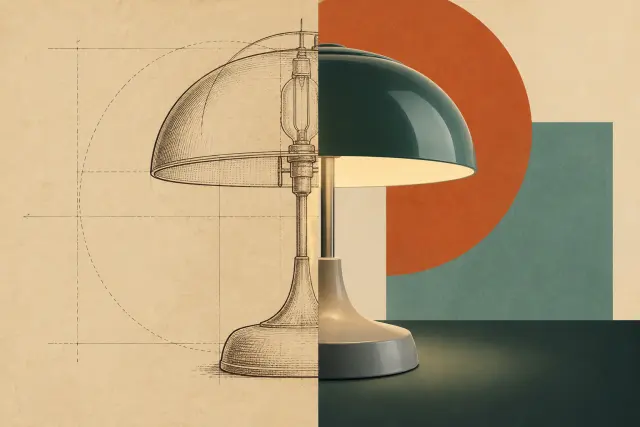
A familiar silhouette can evoke another era without turning a new object into a historical one. A careful reading of retro design compares form, materials and function while considering the contexts that give each design meaning.

Read article

Documented milestones

  1. 1924

    Chiquilín Published in Madrid

    Chiquilín was published in Madrid as an advertising vehicle for Federico Bonet, a manufacturer of children’s pharmaceutical products.

    Read article
  2. 1929

    Construction of the neoclassical building housing the Osorno Municipal Historical Museum

    The neoclassical building that now houses the Osorno Municipal Historical Museum was constructed, hosting collections of everyday life and local heritage.

    Read article
  3. 9 July 1981

    Donkey Kong arcade release in Japan

    Nintendo released the first Donkey Kong game for arcades in Japan on July 9, 1981.

    Read article
  4. September 1984

    Random House launches the Vintage Contemporaries paperback series

    Launched in September 1984, the series paired a shared graphic structure designed by Lorraine Louie with distinct illustrations for each title.

    Read article
  5. 1985

    Launch of the Atari 520ST and Commodore Amiga 1000

    The Atari 520ST and Commodore Amiga 1000, 16-bit personal computers noted for their multimedia capabilities, appeared only about a month apart. RetroMañía 2025’s reference to their 40th anniversary places their launches in 1985.

    Read article

Latest additions

Contemporary

Heisei retro: objects that hold memories and invite new discoveries

Heisei retro brings together objects and practices from Japan between 1989 and 2019, but it belongs not only to those who lived through the era. Tamagotchi, stickers, purikura, anime and music show how a reissue can revive not just a design, but ways of playing, making and sharing.

Contemporary

The Fame: Lady Gaga turned glam theatricality into electronic pop

On her 2008 debut, Lady Gaga connected 1970s glam rock and 1980s electronic pop through danceable songs, deliberate visual theatricality and a participatory idea of fame. The Fame did not reconstruct the past; it adapted it to an increasingly media-driven pop culture.

Contemporary

Heisei retro: remembering not just the objects, but how they were used

Tamagotchi, Tamamori stickers and purikura show that revisiting the past involves more than reissuing its imagery: it also means considering what people did with these objects and how they circulate today. Heisei retro brings together memory and first-time discovery without reducing the era to a single experience.

Contemporary

Sega 32X: the add-on that tried to extend the Mega Drive’s life

Released in 1994, the 32X promised to add 32-bit capabilities to the Mega Drive without replacing it. Its games showcased some new graphical possibilities, but the add-on also made setup more complicated and arrived as Sega was preparing the Saturn as its successor.

Contemporary

Costa Rica’s MADC: A Hybrid Museum of Art, Design and Cultural Policy

Founded in San José in 1994, the Museo de Arte y Diseño Contemporáneo built its identity around the relationship—and tensions—between two disciplines. Daniel Soto Morúa’s study traces the institution’s development and curatorial practices from 1994 to 2019, showing both the regional influence of its model and its structural vulnerabilities.

Contemporary

Designing with the Past: Why Retro Is Not a Replica

Retro design does not reproduce an era intact: it selects forms, references, and memories, then adapts them to present-day uses. Research on retro consumption also shows that nostalgia is only one of several possible motives.

Contemporary

Neo-retro packaging turns the past into a promise

Matte paper, ornate lettering and founding dates can suggest tradition without proving it. Research into neo-retro packaging examines how these visual codes evoke authenticity and craftsmanship—and why a visual quotation should not be mistaken for a brand’s actual history.

Contemporary

Neo-retro design: the past as a visual language, not proof of authenticity

Neo-retro design combines references from different periods to give products an impression of tradition and craft. Research on coffee packaging identifies the devices that create this look—and shows why the associations of authenticity they evoke do not, on their own, establish a brand’s history or a product’s qualities.

Contemporary

Neo-Retro Packaging: Signs of the Past, Brands of the Present

Neo-retro design combines graphic codes from different periods to give contemporary packaging an impression of craft and authenticity. A study of package design identifies the devices behind that effect and explores the associations they evoke—without treating them as proof of a brand’s history or how its products are made.

Sources for the selected readings

Editorial review ·