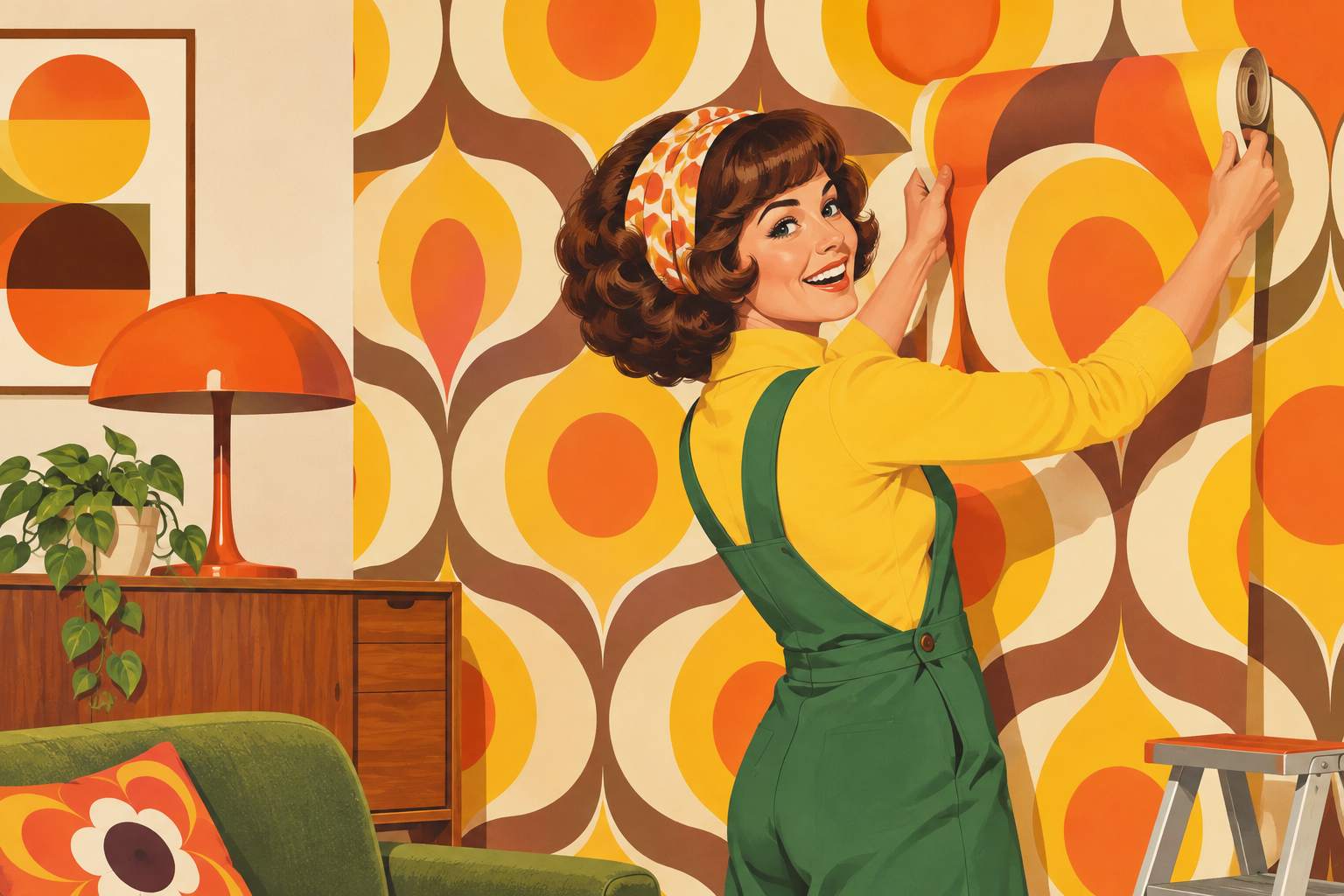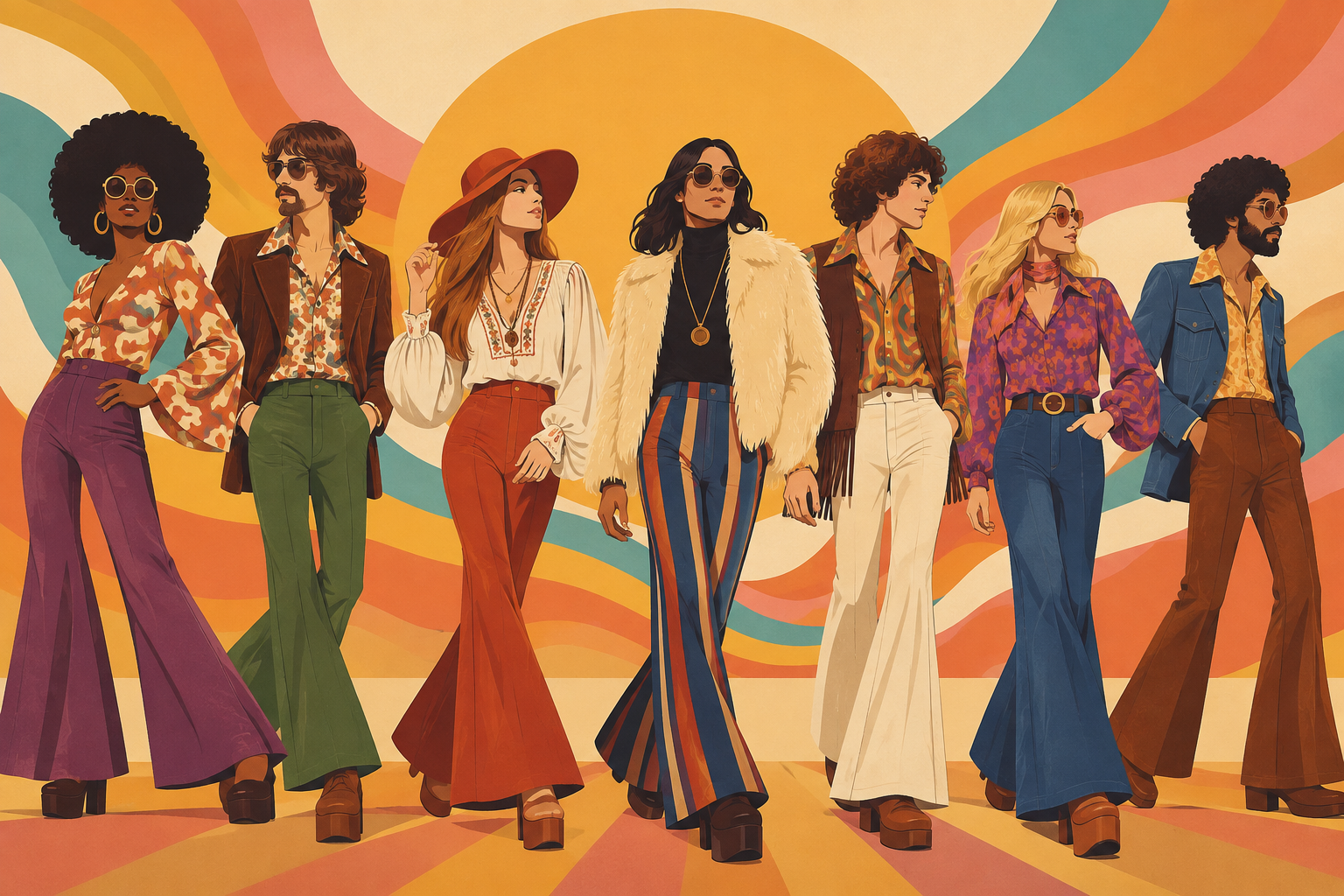
The seventies are often condensed into a dance floor: synthetic fabrics, platform shoes and a striking silhouette. That scene is a useful point of entry, but not a complete portrait. The available references also describe experimentation and diversity, with influences from hippie and punk movements, bohemian styles and an androgynous look. Rather than one fashion, the period appears as a time when different ways of dressing coexisted. To understand it, we should distinguish the trends named by the sources from broader conclusions they cannot support.
The disco floor and its clothes
A CEAC overview associates the seventies with the disco era and names lycra and platform shoes among its defining elements. This is a useful connection: it points to materials and accessories that help identify one strand of the decade’s fashion. It does not show that everyone dressed this way, or that these garments defined every place or social group equally.
The description is valuable for its specificity. Stretch fabric and platform footwear are visible, memorable details; the label “disco era,” however, can turn a particular phenomenon into a complete explanation. Fashion history needs to keep that distinction in view.
More than one current at a time
The same source describes the seventies and eighties as decades of experimentation and diversity. It connects clothing to cultural movements such as hippie and punk, and notes the emergence of bohemian trends and an androgynous look. The information available here does not explain how widely those currents spread or which particular garments belonged to each. It does, however, argue against a one-note account: disco style does not exhaust the decade.
That coexistence matters because clothing is not merely a succession of silhouettes. It can be connected to different cultural scenes and different ways of presenting oneself. This is a general interpretation of the cited material, not a claim about the motives of every person who adopted a particular style.
A view from Madrid
The Community of Madrid’s exhibition on fashion in the city from 1940 to 1970 offers a local and social frame. It considers designers and models, costume designers, dressmakers and anonymous residents of Madrid. The exhibition summary reports that it included 118 photographic reproductions and 76 objects from institutions including the Regional Archive of the Community of Madrid and the Costume Museum.
This approach helps place in context a history that, when told only through famous trends, risks forgetting the people who wore and made clothes. The exhibition reaches the seventies, but its period begins in the postwar years; it should not be treated as a comprehensive catalogue of seventies fashion. Nor does the information available in the summary identify every object or justify assigning one uniform style to the whole city.
The museum and accessories
The Costume Museum describes its fashion and dress collection as including Spanish regional costumes, together with jewellery and accessories. This institutional description is a reminder that accessories are not expendable additions: they form part of what is collected and studied. The cited page, however, does not connect those particular objects to a specific seventies trend.
That distinction matters when discussing retro accessories. An object held in a collection can provide evidence of a garment or technique, but its presence alone does not prove how common its use was. Claims of that kind require specific information about the objects, their provenance and their context.
What can we conclude?
The sources allow for a bounded picture: disco, lycra and platforms appear as notable features; alongside them are experimentation, influences from hippie and punk movements, bohemian styles and an androgynous look. They also offer a way to view fashion through a city and its collections, rather than only through the most recognizable trends.
They do not allow us to measure the popularity of each style, turn them into a definitive chronology or describe how everyone dressed in Spain or elsewhere. The strongest conclusion is also the least sensational: the seventies were not one uniform. Their interest lies precisely in not confusing an iconic image with the variety the sources suggest.
- Decade
- 1970s
- Region
- Europe
- Level
- Introduction
- Entities
- Museum, Museo del Traje
Sources and references
- Historia de la moda - Wikipedia, la enciclopedia librees.wikipedia.org · 2026-09-28
- La moda en la historia - Museo del Trajemuseodeltrajevirtual.com · 2026-09-28
- Así fue... Exposición: En Madrid. Una historia de la moda, 1940-1970 | Comunidad de Madridwww.comunidad.madrid · 2026-09-28
- Moda e indumentaria - Museo del Traje | Ministerio de Culturawww.cultura.gob.es · 2026-09-28
- Historia de la moda: del origen a la actualidad | CEACwww.ceac.es · 2026-09-28
- Todo sobre la historia de la moda y su evoluciónaudaces.com · 2026-09-28