It is not just about the camera
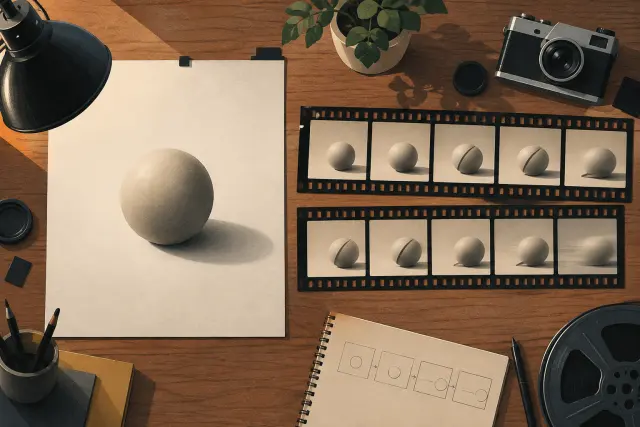
A photograph and a video shot can share framing, composition, lighting and colour treatment. The decisive difference does not necessarily lie in the device, but in how these resources are organized. In his article for Mosaic, Antoni Marín Amatller argues that photography often concentrates its meaning in a single image, while audiovisual work builds an experience that unfolds over time.
Technology makes it easy to switch between still and moving images, sometimes with the same camera. But recording video is not the same as mastering its language: ease of use does not answer how to tell a story through duration, change and rhythm. The question shifts from what each image looks like to how it relates to the images that come before and after it.
From fixed composition to evolving composition
In a photograph, composition is fixed when the image is made, although it can later be adjusted in processing. In an audiovisual shot, the arrangement of elements can change while the take is underway: the subject moves, the camera shifts, or both happen at once. An element may occupy one part of the frame at the beginning and end up elsewhere. Composition becomes not only a spatial arrangement but also a visible transformation.
Shot planning works in a similar way: it involves choosing the size of the shot and the angle from which the subject is filmed. In photography, each image can be made as a wide, medium or close shot; a series may combine these types, repeat one or develop its own logic. In film and video, each shot’s scale also enters into a relationship with the others. Their order and duration help shape the sequence and establish its rhythm.
Scale can also change within a single shot. A camera movement or change in focal length can make a shot begin wide and end closer to the subject. In that case, framing is not a decision completed when recording begins: it unfolds before the viewer.
The unit of meaning: image or sequence
Marín Amatller contrasts two common units of work. Photographers often seek images that can stand on their own. This does not prevent an exhibition, photobook or series from forming a coherent whole; nor does it mean that every photographic practice privileges the isolated image. The article notes projects that organize photographs through repetition, seriality or the creation of larger visual arrangements. The individual image is one possible unit, not a universal rule.
In audiovisual work, by contrast, the sequence is often the working framework: it brings together shots that gain meaning in relation to one another. A shot may establish a place, narrate an action or emphasize an expression, but its function also depends on how it connects to the next shot and how long it lasts. A shot’s value is therefore measured not only by its composition in isolation but also by its role in a larger development.
Light can change, too
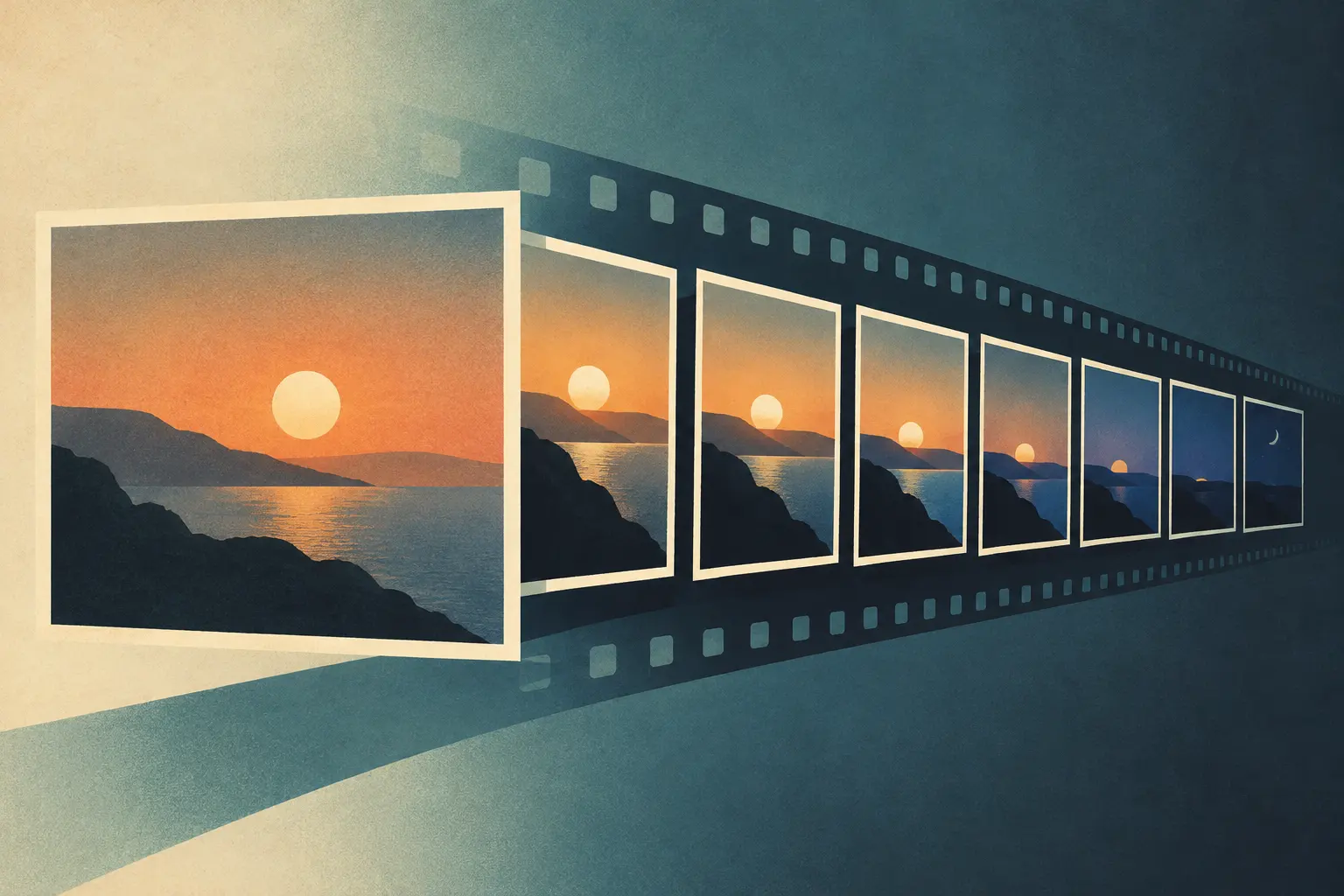
Photography and audiovisual production share principles of lighting, but light can behave differently in each. For a photograph, lighting is arranged to capture an instant and recorded in the image; processing may later alter its characteristics. In a video shot, lighting can also change during the take. Along with camera movements and the movement of filmed elements, that variation shapes the scene’s visual development.
Colour grading and correction add another shared area of audiovisual work: they can help establish consistency between shots and define the look of the whole. Moving images do not leave photographic resources behind; they incorporate them into a logic that includes continuity and change.
Editing organizes rhythm
Audiovisual rhythm depends on more than the duration of each shot. It also takes shape through what happens within the shot: changes in composition, shot scale, lighting and camera movement. Editing selects fragments from the recorded takes and arranges them into a sequence. Post-production can then complete the work through processes such as colour grading, digital compositing and sound.
For this reason, Marín Amatller compares audiovisual work to a musical score: its meaning emerges from temporal organization, not from a mere succession of images. A scene can acquire a different cadence if the duration of its shots, their order or the dynamics within them change. Editing is not simply a technical stage that follows filming; it is a tool for building relationships and rhythm from the recorded material.
Two ways of thinking about images
Photography and video share knowledge of composition, framing and lighting, but put it to work in different ways of organizing experience. Photography can concentrate its force in one image; audiovisual work uses shots that change and gain meaning within a sequence unfolding over time. Understanding the difference helps determine not only what to record, but also what form of storytelling a project calls for.
Based on Antoni Marín Amatller, “El factor temporal y el ritmo como distintivo entre fotografía y vídeo,” published in Mosaic in 2022.
- Decade
- Contemporary
- Region
- Global
- Level
- Introduction
- Entities
- No linked entities
Sources and references
- El factor temporal y el ritmo como distintivo entre fotografía y vídeodoi.org · 2026-10-28
- Modelo multidimensional de los factores que afectan la interacción entre marketing y ventas en el lanzamiento de nuevos productos en Latino Américadoi.org · 2026-10-28
- Fotografía para lanzamientos de marca y producto - eventecheventech.mx · 2026-10-28
- Fotos para eventos de marca y lanzamiento de productoswww.fotofuneventos.com · 2026-10-28
- Foto y video profesional eventos CDMX | Bodas, XVwww.eventplannermexico.mx · 2026-10-28