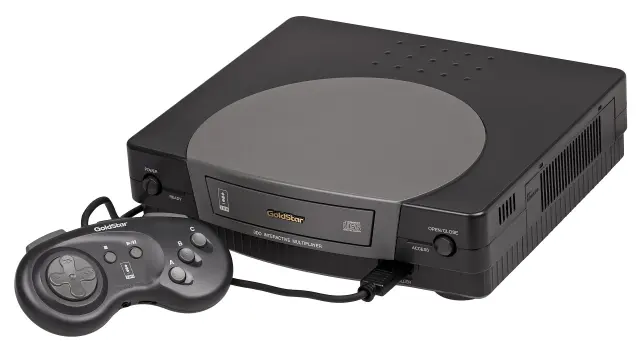
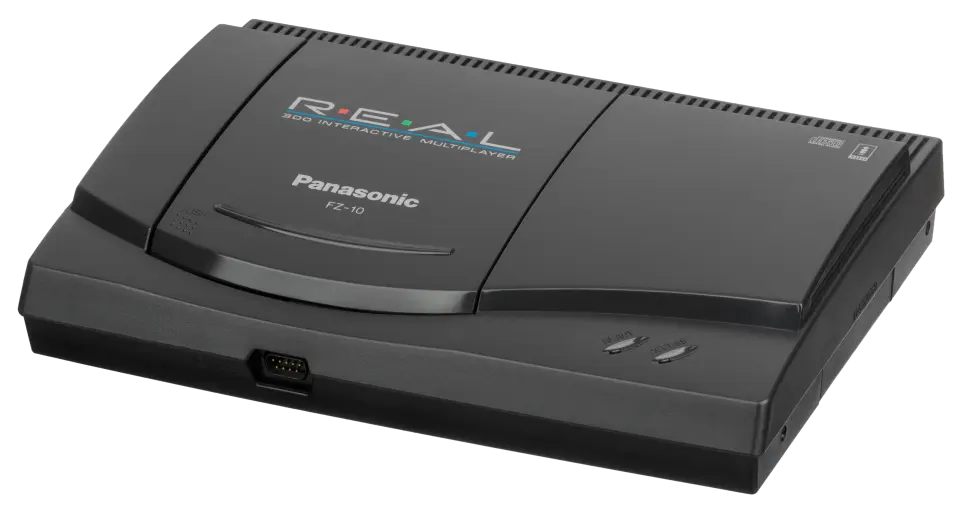
A home console developed by The 3DO Company and conceived by Trip Hawkins. The system was designed as a specification that could be licensed to third parties, rather than as a console manufactured by a single company. Panasonic produced the first models in 1993; GoldStar and Sanyo released later versions in 1994.
Selected excerpts from our archive offer more context on this subject. Each reading links to the original article and its sources.
A console defined by licensable specifications
The 3DO Interactive Multiplayer is notable not only for its hardware, but also for a decision about how production was organized. The available source describes it as a console developed by The 3DO Company and conceived by Trip Hawkins, while clarifying that the company did not manufacture the console itself: it was a set of specifications that third parties could license. That distinction raises a researchable design question: what changes when a platform is defined through shared specifications rather than a single manufacturer?
The 3DO Tried to Be a Standard Before It Was a Console
The 3DO Interactive Multiplayer was introduced in 1993 with an idea that went beyond selling a machine made by a single company. The 3DO Company defined a set of specifications that other manufacturers could license. Panasonic produced the first models; GoldStar and Sanyo later released versions. The system was therefore also conceived as a platform that more than one manufacturer could adopt—a significant departure from the familiar image of a console tied to one brand and one hardware line.
KEY FACTS
- Type
- Console
- Year
- 1993
References
- 3DO Interactive Multiplayeres.wikipedia.org