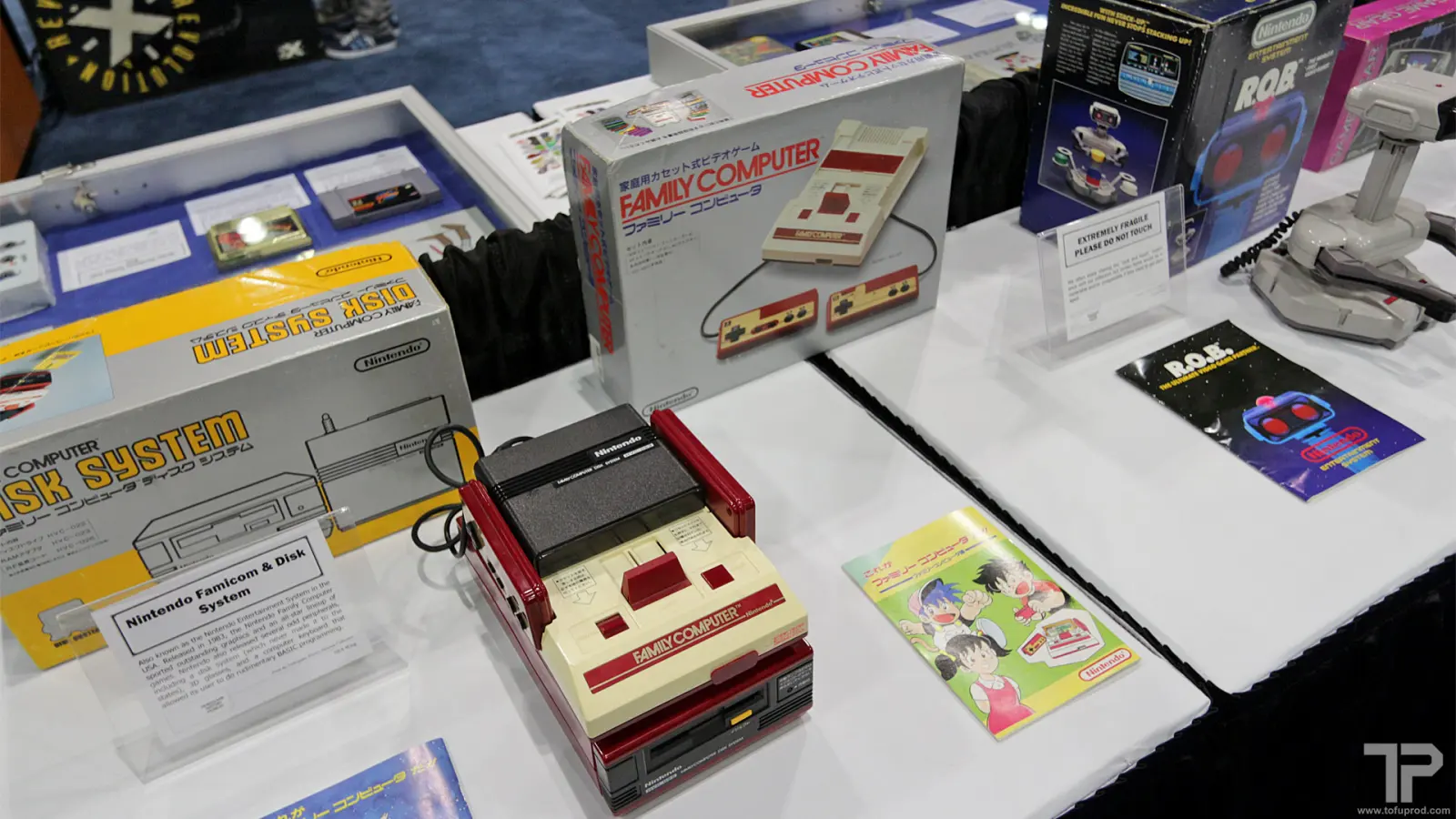
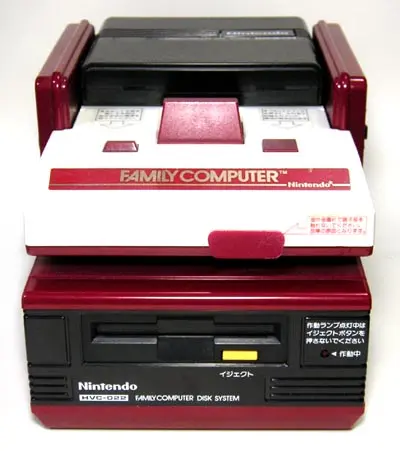
The launch of the Nintendo Family Computer, popularly known as the Famicom, on July 15, 1983, in Japan, marked a turning point in the history of video games. In a context where the Western industry was suffering the consequences of the 1983 crisis, characterized by market saturation and consumer loss of confidence, Nintendo's console not only survived but consolidated a new era for home entertainment. Its success was not accidental, but the result of a technological and commercial strategy that redefined industry standards.
Context of the crisis and the Japanese opportunity
To understand the relevance of the Famicom, it is necessary to analyze the state of the industry in 1983. In the United States, the second-generation console market, led by the Atari 2600, had collapsed due to a lack of quality control, an oversupply of mediocre titles, and competition from microcomputers like the Commodore 64 and the ZX Spectrum. The image of video games had deteriorated, shifting from being family entertainment to being perceived as a waste of time or even a threat to children's mental health.
In contrast, Japan did not experience this crisis in the same way. Japanese society had integrated video games as part of its culture, driven by the popularity of arcade machines and the strong presence of companies like Sega and Nintendo. The Famicom was launched in a mature and receptive market, where electronic technology was already accepted and valued. This cultural and market difference allowed Nintendo to introduce its console without the resistance it faced in the West years later.
Technical architecture and the cartridge model
The Famicom introduced a cartridge-based architecture that, although not new in itself (the Fairchild Channel-F had used it in 1976), was optimized and standardized by Nintendo in a way that defined the third generation of consoles. This format allowed developers to create more complex and varied games, as each cartridge could contain additional hardware specific to improving the game's performance.
One of the key innovations was the use of support chips (or support chips) within the cartridges. Chips like the MMC1, MMC2, and later the MMC3, allowed for expanded memory, improved screen scrolling capabilities, and added sound or sprite control functions that the base console could not offer on its own. This technical flexibility allowed games like Super Mario Bros. 3 or The Legend of Zelda to reach levels of complexity and fluidity that surpassed their predecessors, without the need for users to buy additional hardware.
The console's design was also crucial. Unlike the Western NES, which had a more robust design and a front slot, the Japanese Famicom had a compact design and a top slot, similar to VHS players. This design, along with the controllers designed by Gunpei Yokoi, which became the industry standard, made the console intuitive and easy to use for Japanese families.
Licensing strategy and quality control
The commercial success of the Famicom was not due solely to its technology, but to Nintendo's strict licensing strategy. Unlike the Atari era, where any developer could publish games without supervision, Nintendo rigorously controlled the catalog of games available for its platform. This model, known as the Nintendo licensing system, had several objectives:
- Ensure quality: Nintendo rejected games that did not meet its quality standards, thus avoiding the saturation of mediocre titles that had destroyed the market in 1983.
- Control supply: It limited the number of games each developer could release per year, which encouraged the creation of more careful and higher-quality titles.
- Protect the brand: By associating its name with a reliable gaming experience, Nintendo built a loyal user base that trusted the platform.
This strategy, although often criticized for being monopolistic, was fundamental to regaining consumer confidence and establishing a sustainable business model. Companies like Square, Capcom, and Konami, which initially resisted Nintendo's restrictions, eventually accepted the system, resulting in an exclusive and high-quality catalog that no other console could match.
Cultural impact and global expansion
The Famicom was not only a commercial success but also a cultural phenomenon. In Japan, the console became a central element of the home, changing the perception of video games from being a children's pastime to a legitimate form of family entertainment. The popularity of the Famicom drove the creation of new franchises and genres that would define the industry for decades, such as platformers, RPGs, and action games.
The international expansion of the Famicom, under the name Nintendo Entertainment System (NES), began in 1985 in the United States. Nintendo had to adapt its strategy to overcome the distrust of the Western market. The NES was presented not as a video game console, but as an "entertainment center," including accessories like the R.O.B. robot and the light gun. This approach, along with strict quality control, allowed Nintendo to recover the North American market and establish itself as the global leader in the industry.
Legacy and consequences
The Famicom laid the foundations for the modern video game industry. Its business model based on licensing, its cartridge architecture with support chips, and its focus on software quality became industry standards. The console also marked the shift of the industry's center of gravity from the United States to Japan, consolidating the Asian country as the mecca of video games.
The legacy of the Famicom extends beyond its commercial success. It established the idea that a video game console should be a high-quality product, with a carefully selected game catalog and an intuitive user experience. This model has influenced all subsequent generations of consoles, from the Super Nintendo to the Nintendo Switch.
In conclusion, the Nintendo Family Computer was not just another console, but a tool that transformed the video game industry. Its combination of technical innovation, commercial strategy, and cultural sensitivity allowed it to overcome the 1983 crisis and establish a new paradigm for home entertainment. Its impact is still visible today, in every console and game released on the market.
Documentary gallery
- Decade
- 1980s
- Region
- Global
- Level
- Introduction
- Entities
- Commodore 64, VHS, Atari 2600, Sega, Nintendo, Nintendo Entertainment System, Konami, Nintendo Entertainment System (NES), Nintendo Family Computer, Atari
Sources and references
- Nintendo, la marca del gaming familiar, se aventuró en ...www.facebook.com · 2026-10-26
- Cronología - Memoria del juegogamedesignla.com · 2026-10-26
- Tercera generación de consolas | 100% RETROinfoconsolas.com · 2026-10-26
- Esto sería parte de la evolución de Nintendo.www.facebook.com · 2026-10-26
- La Jornada, 07/15/2016issuu.com · 2026-10-26