A game inside a shared machine
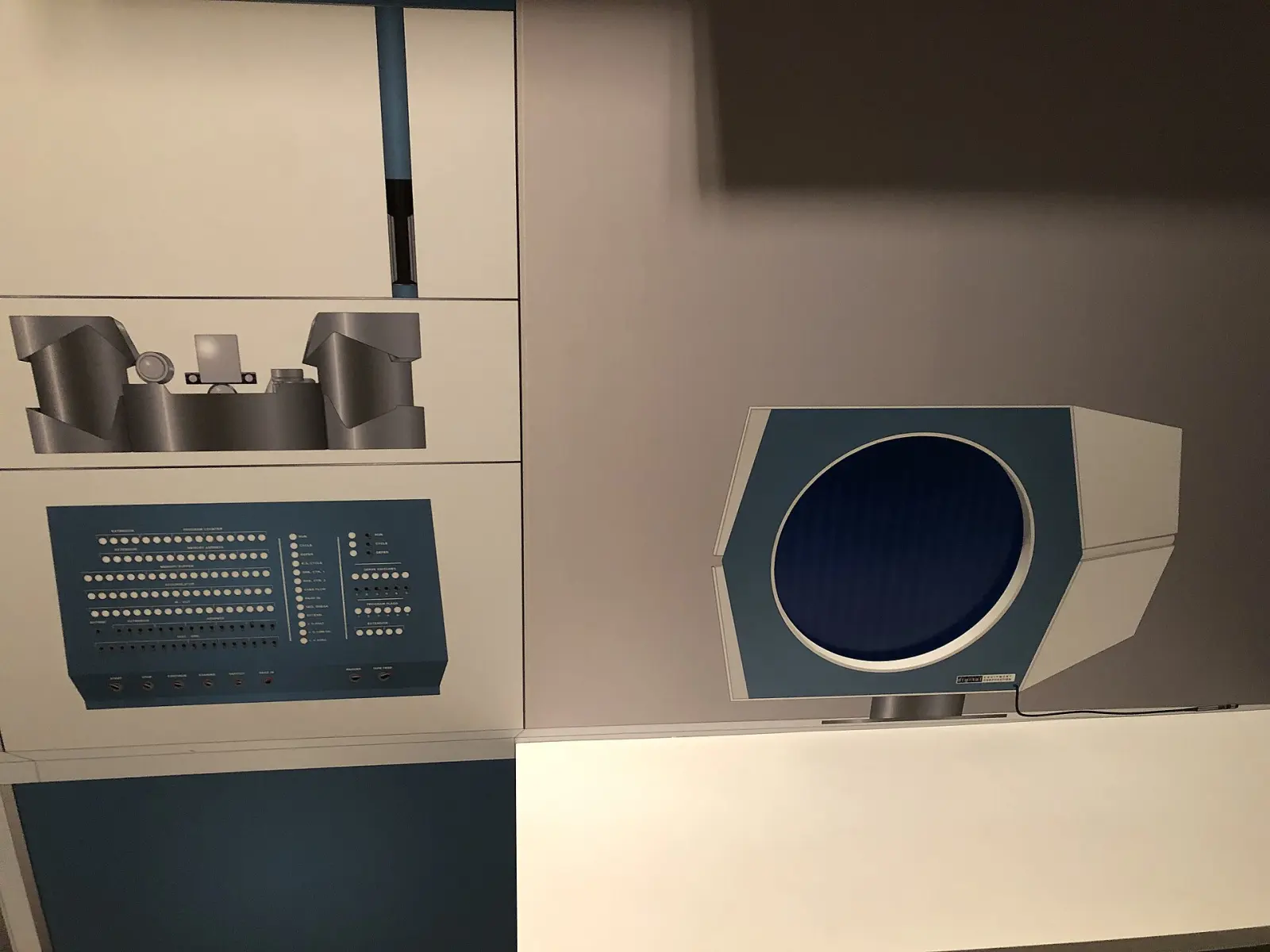
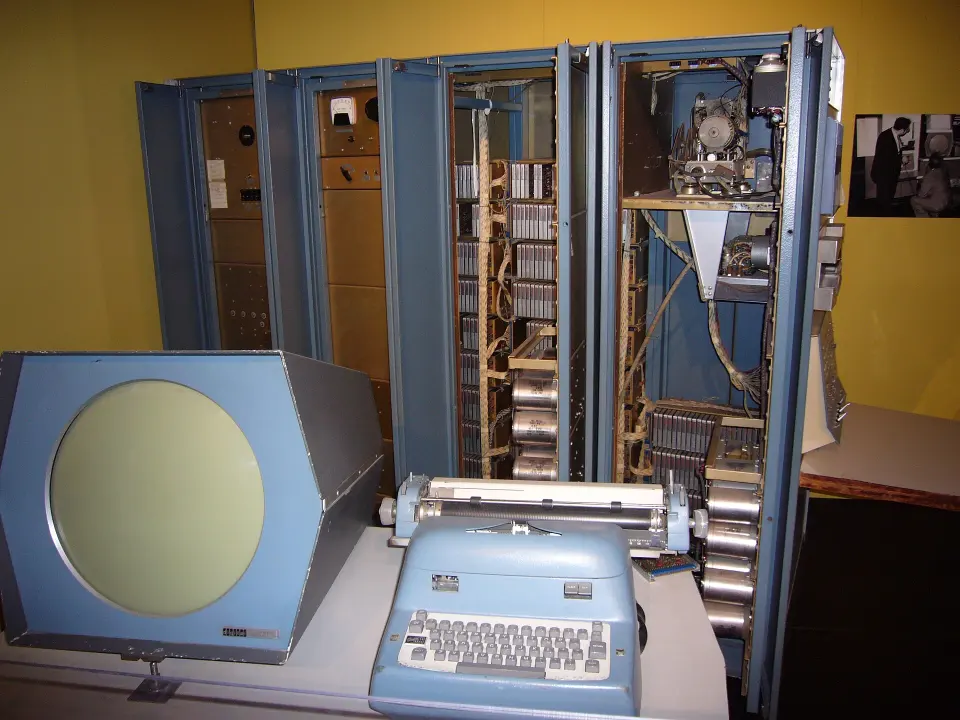
In 1962, Steve Russell and others in the MIT community developed Spacewar! for the PDP-1. Designed for research work, the computer could display vector graphics: figures drawn with lines rather than an image made up of a grid of pixels. The game used that capability to show two opposing spaceships, each controlled by a person.
Play revolved around direct exchange. Players controlled the direction and speed of their ships as they tried to beat an opponent. The mechanics required them to watch the other player’s movement and adjust their own actions. The appeal was not simply the sight of graphics on a computer screen; it was the chance to respond to another person through the machine.
That setting distinguishes Spacewar! from the home games that came later. In the early years of computing, computers were specialised resources installed at institutions and shared by those with access to them. The PDP-1 was not a console built for leisure. Yet the program turned its controls and display into the conditions for a shared activity: a machine used for work could also become a place to meet and play.
The possibilities and limits of the duel
The vector display rendered the contest in luminous lines. It was not a realistic depiction of space, but a graphical solution shaped by the capabilities of the hardware. The rules, in turn, gave players a clear goal without requiring an extended narrative: control a ship and compete against the other participant.
The structure can be read as an early combination of coordination, anticipation, and direct rivalry. That is an interpretation of the game’s described rules, not a claim that Spacewar! invented those ideas by itself. Its historical interest lies in showing how an interactive program could turn the features of a particular computer into a shared form of play.
Having two players also changed the computer’s role. It was not merely running a predetermined demonstration: it processed the actions of participants who watched and responded to one another. The program became part of a social situation, sustained by the people around the machine and their shared game.
A spread tied to universities
The history of Spacewar! is linked to the movement of programs and ideas between computing sites. The Facultat d’Informàtica de Barcelona notes that the game achieved some success, although it was little known beyond universities. HISTORY describes it as one of the first video games playable on more than one computer installation. Together, these accounts support describing its spread between computers, but not mass commercial distribution.
That trajectory matters because it avoids judging the game by later measures such as console sales or arcade presence. Spacewar! circulated in a world where access depended on institutions and technical knowledge. Its spread was not that of a consumer product for the home, but of a program that could travel with the people and computing environments able to run it.
It is also worth avoiding an overly simple label: “the first video game.” Earlier experiments included OXO, created in 1952, and Tennis for Two, from 1958. What qualifies as the first video game depends on how the term is defined and which features are considered essential. The Facultat d’Informàtica de Barcelona describes Spacewar! as a game that achieved some success, while HISTORY emphasises that it could be played on multiple installations. Those contributions describe its place in history more precisely than an absolute claim of priority.
From an academic experience to an amusement game
The Facultat d’Informàtica de Barcelona connects Spacewar! with Computer Space, which Nolan Bushnell began marketing in 1971 as a version of the game. The link marks a significant step: an experience that emerged in an academic setting could provide a point of reference for entertainment on a dedicated arcade machine.
But the relationship was not a simple continuation. Computer Space was a commercial adaptation, with different hardware and different conditions of access and play. Spacewar! belonged to a shared university computer; the arcade machine moved the idea to a device designed specifically for gaming. The connection traces an influence without erasing the differences between their contexts.
The cultural significance of Spacewar! lies in this particular relationship between program, machine, and players. The PDP-1 shaped how the ships looked and were controlled; in turn, the game gave people a reason to gather around the computer. It did not single-handedly inaugurate the entire history of video games. It did show, at an early stage, that a general-purpose computer could also serve as a gaming platform and a setting for shared competition.
Documentary gallery
- Decade
- 1960s
- Region
- North America
- Level
- Enthusiast
- Entities
- Computer Space, Computadora, Spacewar!
Sources and references
- Historia de los videojuegoswww.fib.upc.edu · 2026-10-26
- Historia de los videojuegos: cronología y datostranslate.google.com · 2026-10-26
- Como nacieron los videojuegos C2 SPACEWAR ...www.instagram.com · 2026-10-26
- Videojuegoes.wikipedia.org · 2026-10-26
- Arcadees.wikipedia.org · 2026-10-26