Video games did not begin on a single platform
Video game history is often told as a succession of machines and generations. That chronology is useful, but it does not by itself explain how play changed. A shared computer in a research institution, an arcade cabinet in a public venue, and a console connected to a television organized different experiences: access, session length, controls, and the ways people competed or explored all varied.
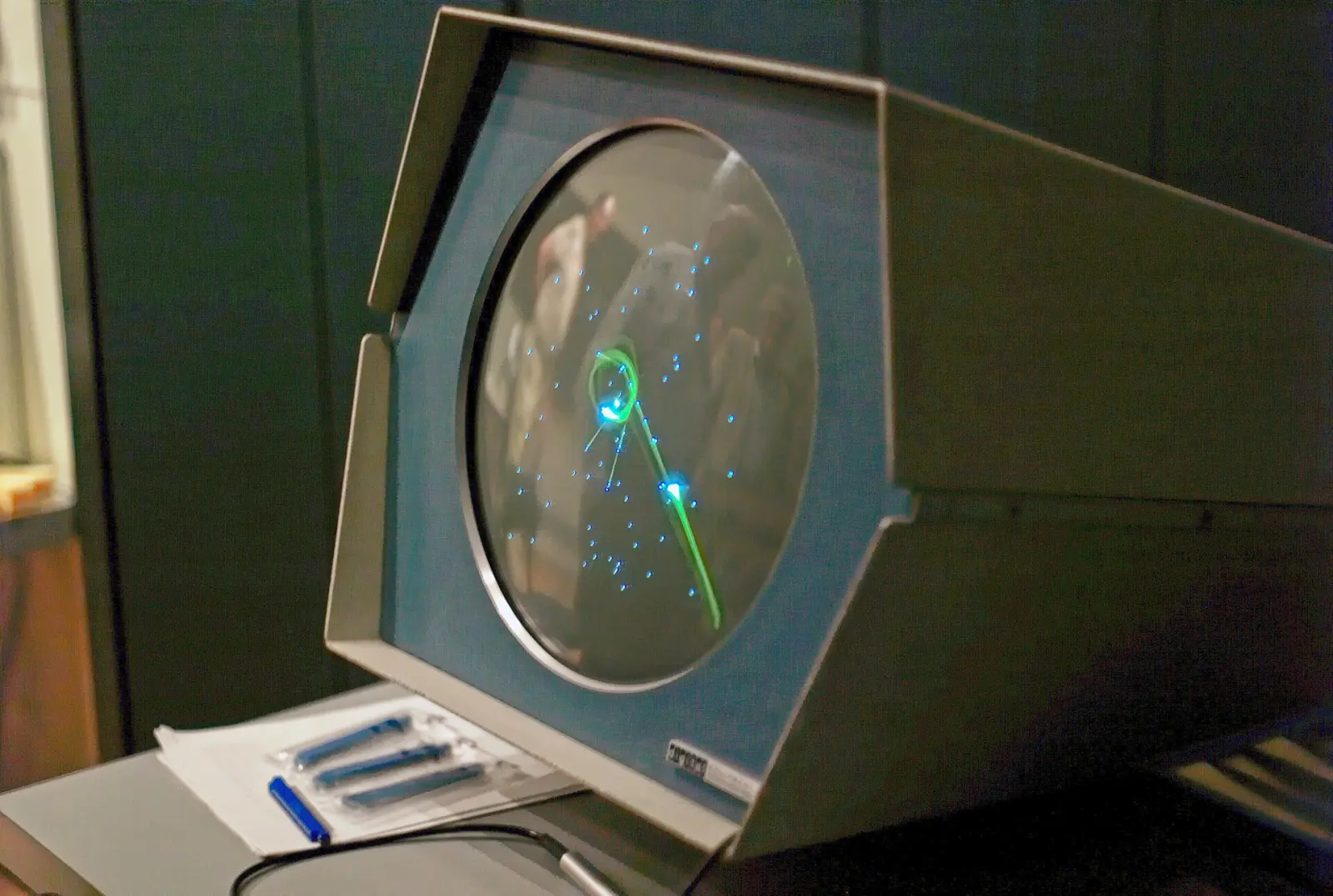
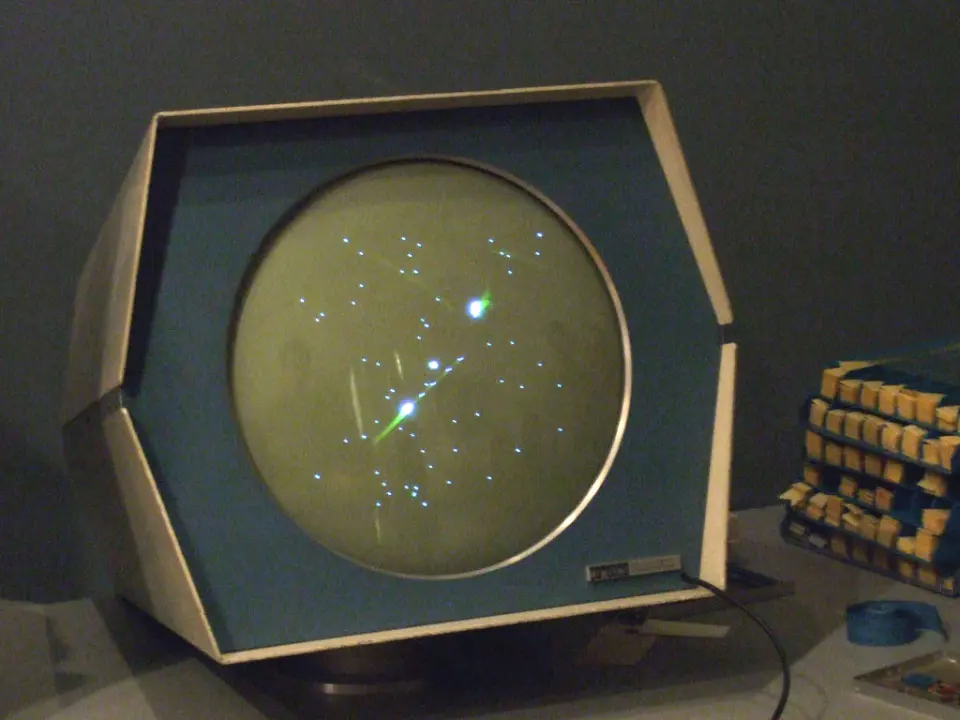
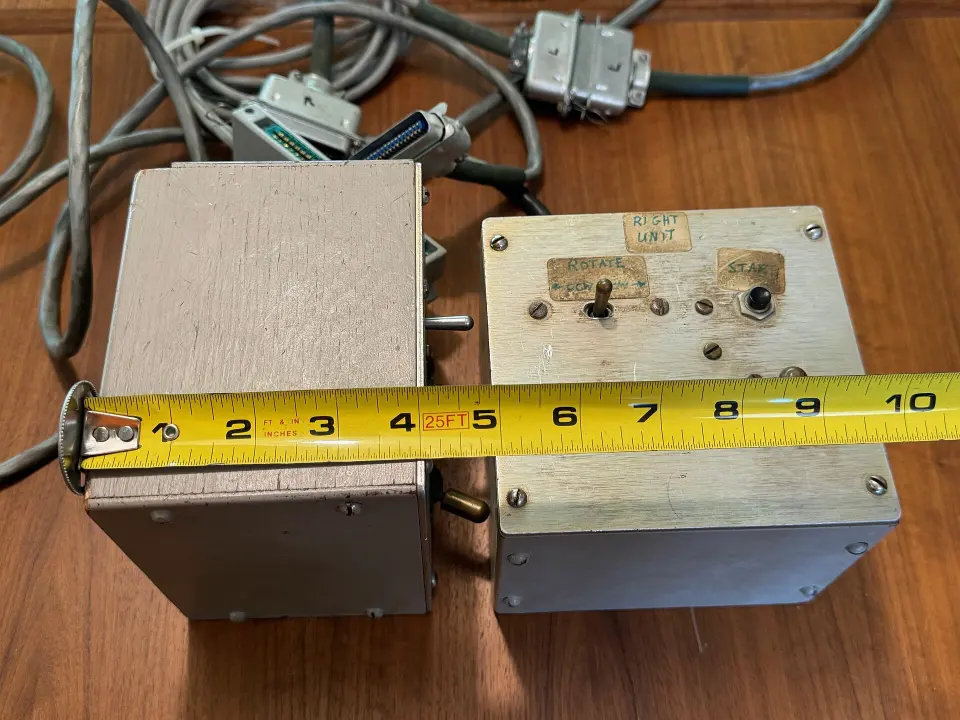
Spacewar! (1962), created at MIT for the PDP-1 computer, became one of the first widely shared computer games. Two players piloted ships in a space duel, and the program circulated among institutions with compatible machines. Its spread depended on user networks and large, expensive computers: it was not a household product but an experience tied to a technical community.
On those systems, limits on display and computing capacity favored forms of play that did not depend on fast action. Colossal Cave Adventure, begun by Will Crowther and expanded by Don Woods, built its world through text, explorable locations, and puzzles. Players progressed by reading descriptions, interpreting clues, and trying commands. It was not simply an action game without images: it offered a different pace and made interpretation central to the mechanics.
From shared computers to arcades and the home
In the early 1970s, electronic games began to occupy two different commercial settings. Computer Space (1971) adapted Spacewar! for a coin-operated cabinet. In 1972, Pong turned a simple paddle-and-ball contest into an arcade hit. That same year, Magnavox released the Odyssey, designed by Ralph Baer, bringing interactive games to the home television. Its images could be supplemented with accessories and overlays placed on the screen.
Arcades and homes imposed different conditions. In public venues, short games, visible scores, and the chance to start again suited payment per play and the presence of other players. At home, the first dedicated consoles offered a limited selection but brought games into domestic routines. Programmable cartridges for systems such as the Fairchild Channel F and Atari VCS changed that relationship: one console could run different games, and software became a defining part of the experience.
Rules also responded to these settings. Space Invaders (1978) structured its challenge around waves of enemies, rising difficulty, and scores that encouraged repeated play. Pac-Man (1980) made maze navigation, pursuit, and collection the heart of its design. Both offered mechanics that were easy to recognize and try again, while each created its own rhythm and space. Scoring was not an add-on: it shaped how people played and how skill could be displayed to others.
The home computer as a place to create
Personal computers opened a different relationship with games. Through programming magazines and books, as well as tapes and disks, users could obtain programs, write them, copy them, and modify them. In the United Kingdom, machines such as the ZX Spectrum and Commodore 64 helped foster a home-development culture; elsewhere, the Apple II and IBM-compatible computers supported their own libraries and communities.
The ability to intervene in software blurred the boundary between playing and creating. That did not mean every user developed games, or that computers were the same in every country. It did offer an alternative to the commercial console: programs could circulate with instructions or source code, and technical experimentation became part of computer use. Limits on memory, sound, or display did not merely restrict what could be made; they also influenced design choices.
From text adventures to three-dimensional worlds
During the 1980s, adventure games developed forms of play centered on exploration, collecting objects, and interpreting clues. Zork built its world chiefly through words, while Mystery House combined text and images. Over time, graphic adventures popularized point-and-click interfaces, allowing players to perform visible actions without relying as heavily on typed commands.
In the 1990s, CD-ROM expanded the space available for music, video, and longer narratives. At the same time, three-dimensional representation changed the relationship between player and environment. Virtua Racing and Virtua Fighter brought real-time polygon graphics to arcades; Wolfenstein 3D and Doom established first-person perspective as a familiar mode on personal computers. This was not just a matter of more complex images: camera, movement, and orientation within a level began to organize action and became part of the rules.
Consoles also adopted 3D play. The CD-ROM used by PlayStation offered an alternative to cartridges and made it possible to distribute games with more audiovisual content. But media were not neutral: they involved different decisions about cost, manufacturing, production time, and distribution. Competition between platforms depended on their capabilities as well as their libraries, business models, and ways of presenting games to the public.
Networks change who can share a game
In the late 1990s and through the 2000s, the Internet widened the possibilities for connected play. A game could bring together people who did not share a room or a machine. On PC, Ultima Online and EverQuest organized persistent worlds around player communities; on consoles, online connectivity was gradually incorporated into platform services.
Practices that transformed games from within also became more visible: modifications, user-created content, and digital distribution. Some players could expand worlds or change rules as well as take part in them. Browser and social games, which spread during the 2000s, made brief sessions and forms of play mediated through friendship networks more familiar. They did not replace console games, personal computers, or local multiplayer; they coexisted with them and broadened what a play session could be.
A history of rules, places, and practices
Looking at video games through their settings helps explain why the medium’s history is not a linear march toward better graphics. Arcades favored public repetition and high-score competition; home computers made room for amateur programming, strategy, and adventure; consoles linked commercial libraries to the television; networks added communities and shared worlds.
Technology opened possibilities, but it did not determine on its own which games would be made. Rules, controls, distribution media, and players’ practices also shaped the medium. Understanding a historical video game means looking both at what happens on screen and at the material and social conditions that made playing it possible.
Documentary gallery
- Decade
- 1990s
- Region
- Global
- Level
- Enthusiast
- Entities
- Commodore 64, Salón recreativo, Computer Space, Fairchild Channel F, PlayStation, Doom, Internet, Space Invaders, Pong, Atari
Sources and references
- El videojuego histórico como forma de memoriaopenalex.org · 2026-10-25
- Historia de los videojuegostranslate.google.com · 2026-10-25
- Historia de los videojuegos - Wikipedia, la enciclopedia librees.wikipedia.org · 2026-10-25
- Videojuego de aventuraes.wikipedia.org · 2026-10-25
- Género de videojuegoses.wikipedia.org · 2026-10-25