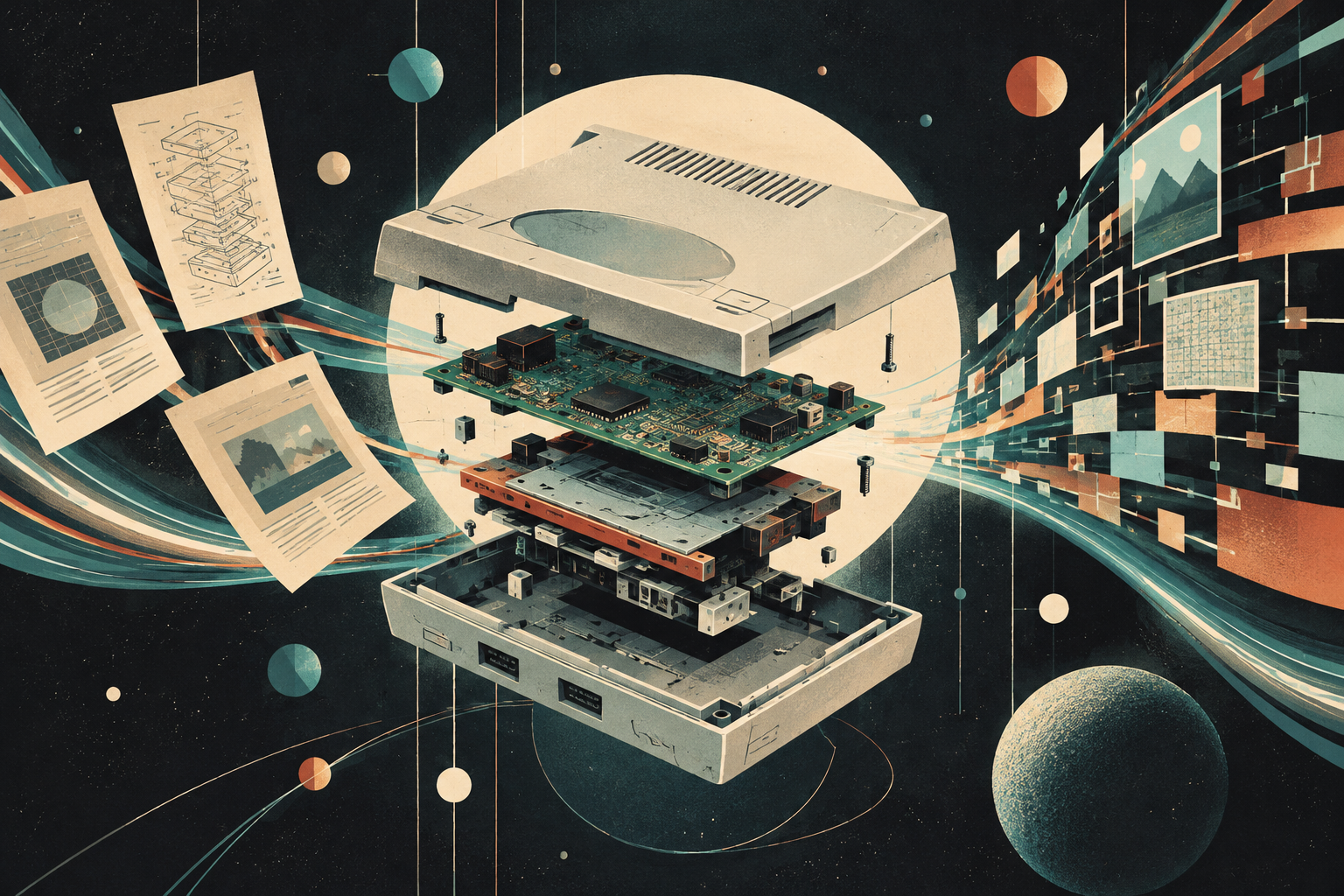
The perception of the console as a static object has given way to a more complex understanding. It is not just an electronic device, but a node within a network of cultural, technical, and social practices. This redefinition forces a rethink of how the history of the medium is archived. Available evidence suggests that effective preservation is not limited to storing the machine, but implies keeping the experience of use alive. This approach transforms the console from a dead artifact into a living system that requires continuous attention.
Playability as a conservation criterion
I Harkai’s study, published in 2022, introduces a fundamental distinction in the debate on digital heritage. According to this research, the goal of preservation is not only to conserve the game as a static cultural asset. There is a second critical dimension: maintaining playability. This stance challenges the idea that storing data is enough to ensure the medium’s survival. If the game cannot be run, its cultural value is compromised. Playability thus becomes a health indicator for the archive, not just a technical feature.
The archive ecosystem
The Video Game Museum offers a practical model of this systemic vision. Its archive is not composed exclusively of cartridges or discs. It includes hardware, publications, documentation, and audiovisual material. This diversity of media allows for the reconstruction of the console’s usage context. Documentation, for example, helps understand original instructions, while audiovisual material captures the social reception of the medium. By bringing these elements together, the archive ceases to be a simple storage facility and becomes a study space where relationships between objects can be analyzed.
Limitations of technical evidence
It is crucial to recognize the limits of what can be asserted with current information. The reviewed documents do not specify concrete hardware models nor detail technical restoration procedures. There are no documented cases in the provided evidence describing how a specific console is repaired. This absence of technical details does not invalidate the importance of the debate, but it prevents generalizing about conservation practices. A specific policy cannot be attributed to a brand or institution without more data. Prudence is necessary when interpreting the current state of technical preservation.
Video games as a cultural industry
The rise of video games as a cultural industry has accelerated the need for preservation. Recent studies point to a vertiginous technological, economic, and social growth. This status as a massive industry implies that the medium has a profound impact on society. Preservation, therefore, is not just an act of nostalgia, but a public duty. The values sought to be preserved are numerous and often include aspects that go beyond entertainment, touching identity and collective memory. The recognition of video games as cultural heritage is part of an expanding global debate.
Documentation as an interface
Documentation plays a key role in the interpretation of the console. Without manuals, magazines, or audiovisual records, the machine is an isolated object. Documentation acts as an interface that connects the hardware with its historical context. It allows researchers and the public to understand how the console was used, what it meant to its users, and how it was perceived in its time. This layer of information is as important as the device itself. Ignoring it would mean losing an essential part of the cultural experience associated with the medium.
The challenge of accessibility
Conservation is not enough if the material is not accessible. The stated goal by institutions like the Video Game Museum includes making the archive accessible. This implies overcoming technical and physical barriers. Accessibility allows heritage to be not just for experts, but for the general public. However, the evidence does not detail specific methods of digital or physical accessibility. It is known to be a goal, but not how it is achieved in practice. This information gap underscores the need for more research on strategies for disseminating digital heritage.
Conclusion: beyond the shell
Console preservation is a multidimensional process. It requires balancing the technical conservation of hardware with the documentation of cultural context and the guarantee of playability. Available evidence supports the idea that the console should be seen as part of a system, not as an isolated object. The limits of current information remind us that there is still much to discover about best conservation practices. The future of the video game archive will depend on its ability to integrate these elements in a coherent and accessible manner. The console, in the end, is much more than its shell; it is a witness to a cultural era that deserves to be understood in its entirety.
- Decade
- Contemporary
- Region
- Global
- Level
- Enthusiast
- Entities
- Museum, Museo del Videojuego
Sources and references
- Punto de control: estado de las políticas de conservación ...www.academia.edu · 2026-10-16
- Preservación de los videojuegos y su papel como patrimonio ...translate.google.com · 2026-10-16
- Museos y videojuegos. La renovación de los espacios ...www.researchgate.net · 2026-10-16
- Qué hacemos | Museo del Videojuegowww.museodelvideojuego.com · 2026-10-16
- La importancia de conservar los videojuegos con Artemio ...www.diariodemexico.com · 2026-10-16