From the single image to the image that changes
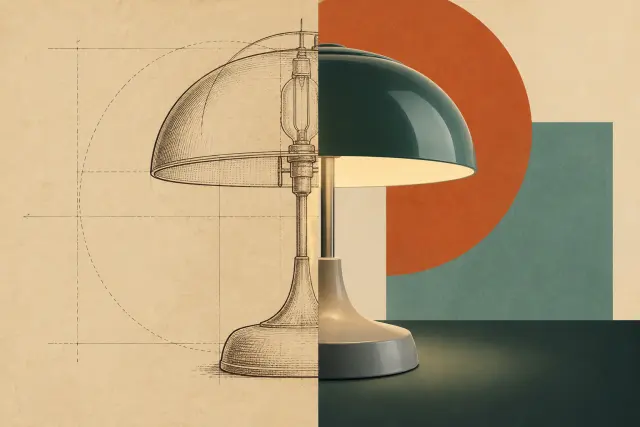
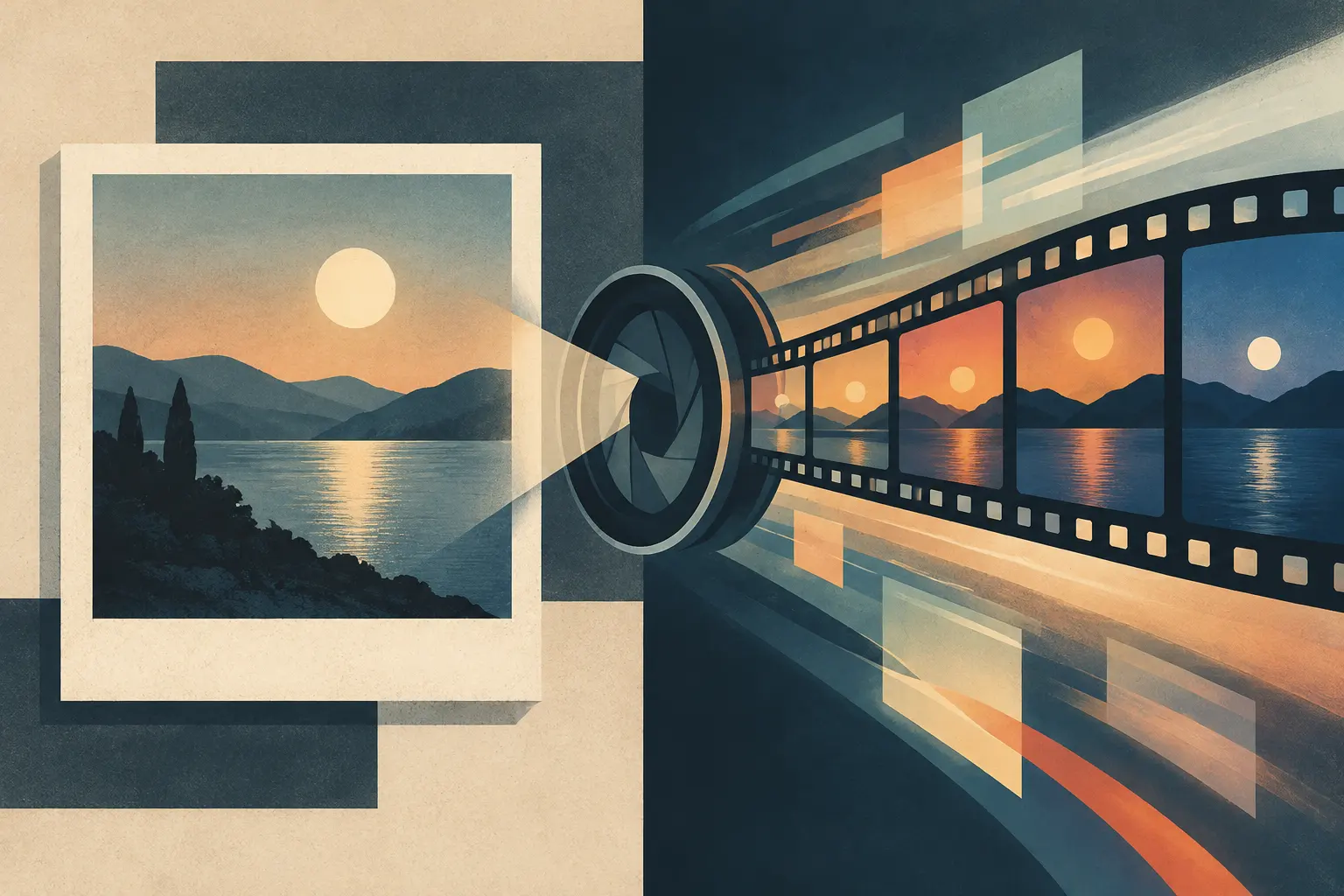
Photography and video share visual tools, but they do not organize images in the same way. A photograph fixes a composition in an instant; in video, that composition can change during a shot and gain meaning within a sequence. In his article for Mosaic, Antoni Marín Amatller identifies time and rhythm as a fundamental difference between the two forms.
This is not an absolute dividing line. Today’s cameras make it easy to switch between stills and video, and both media use composition, shot planning, lighting and colour treatment. But technical convenience is not the same as mastering each medium’s narrative choices: what is shown, how it changes and when it connects with other images all matter.
Composition and framing in motion
In a photograph, elements are arranged within a bounded image. The photographer chooses the subject’s position, the framing and the light, and may later adjust the image in post-production; the result remains a still composition. In video, by contrast, composition can vary within a single shot. The subject moves, the camera moves, or both alter the relationship between figures and space.
Shot planning—the choice of shot size and angle—works differently too. In photography it is usually decided image by image. An exhibition, for instance, may include wide, medium and close shots, while each photograph retains its own organization. In audiovisual work, shot sizes are often combined, and their order and duration help shape rhythm. A shot can also change as it unfolds: it may begin wide and move closer to the subject through camera movement or a change of focal length.
Light can evolve as well. Photography and video may use similar lighting setups, but in a still image the light is recorded as part of one moment. In video, lighting can change during a shot, just like framing or composition. The moving image does not merely show an image; it can show that image transforming.
The sequence as a unit of work
Marín Amatller also distinguishes between the individual photograph and the audiovisual sequence. In photographic practice, an image often aims to carry significance on its own, even when it belongs to an exhibition, photobook or series. The larger work creates coherence and relationships between images without necessarily erasing each image’s individual value.
The author cites Galerna, by Jon Cazenave, as a project that partly departs from the priority given to the autonomous image, working instead with seriality, repeated patterns and larger visual arrangements. The qualification matters: photography can also create meaning through relationships and sequences. The distinction is a tendency, not an exceptionless rule.
In audiovisual work, the unit is often the sequence, made up of several shots. Each shot serves a function within the whole and may make less sense in isolation than a photograph designed to stand on its own. Lighting and colour treatment, for example, can be organized to give visual coherence to a sequence or to the entire work.
Rhythm is composed and edited
Audiovisual rhythm is not simply a matter of how long each shot lasts. It also depends on changes within the shot: camera and subject movement, shifts in framing and composition, and variations in light. The combination of these dynamics with the order and duration of shots shapes a work’s rhythm.
Editing turns the footage into a structure. A production may record several takes of the same situation; afterward, editors select the usable passages and order them to create relationships between shots. Post-production can complete the work with colour adjustments, digital compositing and sound. Duration, then, is not just a frame around the action: it is one of the choices that organizes the viewer’s experience.
Marín Amatller compares audiovisual construction to a musical score: it is not merely a chain of images, but a way of shaping development through time. The comparison helps explain why a camera that can take photographs and record video does not replace an understanding of both languages. Photography concentrates its organization in an image; video can create meaning through change, duration and the relationship between shots.
- Decade
- Contemporary
- Region
- Global
- Level
- Introduction
- Entities
- No linked entities
Sources and references
- El factor temporal y el ritmo como distintivo entre fotografía y vídeodoi.org · 2026-11-01
- Fotografía para lanzamientos de marca y producto - eventecheventech.mx · 2026-11-01
- Fotos para eventos de marca y lanzamiento de productoswww.fotofuneventos.com · 2026-11-01
- Los 8 mejores vídeos de lanzamiento de productos que ...translate.google.com · 2026-11-01
- Generador de videos de producto con IAwww.heygen.com · 2026-11-01