The preservation of video game history faces a technical paradox: the physical object that contains the experience, whether a console or a cartridge, is fragile and obsolete, while the digital content that defines it requires execution conditions that often disappear over time. Keeping a machine in a display case does not ensure that its games can be played or studied in the future. This reality has driven the development of methodologies that go beyond physical storage, integrating emulation, data extraction, and technical documentation as fundamental pillars of digital preservation.
The Challenge of Technical Obsolescence
The European project KEEP (Keeping Emulation Environments Portable), funded by the European Union and completed in 2012, directly addressed this issue. Its coordinator, Elisabeth Freyre from the Bibliothèque nationale de France, noted that relying on obsolete hardware to run old software is unviable, as hardware is itself a past artifact that ages and breaks. The proposed solution was not simply to copy data, but to ensure that emulators—which are software and thus also subject to obsolescence—were "time-proof."
KEEP's approach distinguished between two levels of preservation: the extraction of binary data from physical media (floppy disks, cartridges, discs) and the creation of a portable execution environment. To this end, it developed the MTTF (Multimedia Transfer Toolkit), a tool for creating digital images of legacy media, storing content in a platform-independent form. This allowed software to be accessible from any modern operating system, breaking the dependency on original hardware.
Emulation as a Preservation Tool
Emulation is not a simple backup; it is a functional recreation of an old system's behavior. However, traditional emulators can become obsolete if not designed with an abstract architecture. KEEP proposed a virtual machine capable of running emulation software and adapting to unknown future computer architectures. The goal was to demonstrate that the source code of an existing emulator, such as one for the Commodore 64, could be recompiled to run natively on this new virtual machine, thereby ensuring long-term access.
A key component of this framework was TOTEM (Trusted Online Registry of Technical Environment Metadata), an online registry that collects metadata about the technical environments required to use digital objects. This metadata describes the hardware, operating systems, plug-ins, and software libraries required. This information is crucial for archivists, as it allows them to identify the appropriate emulator for a specific disk image and ensures interoperability in digital preservation.
The Role of Museums and Contextualization
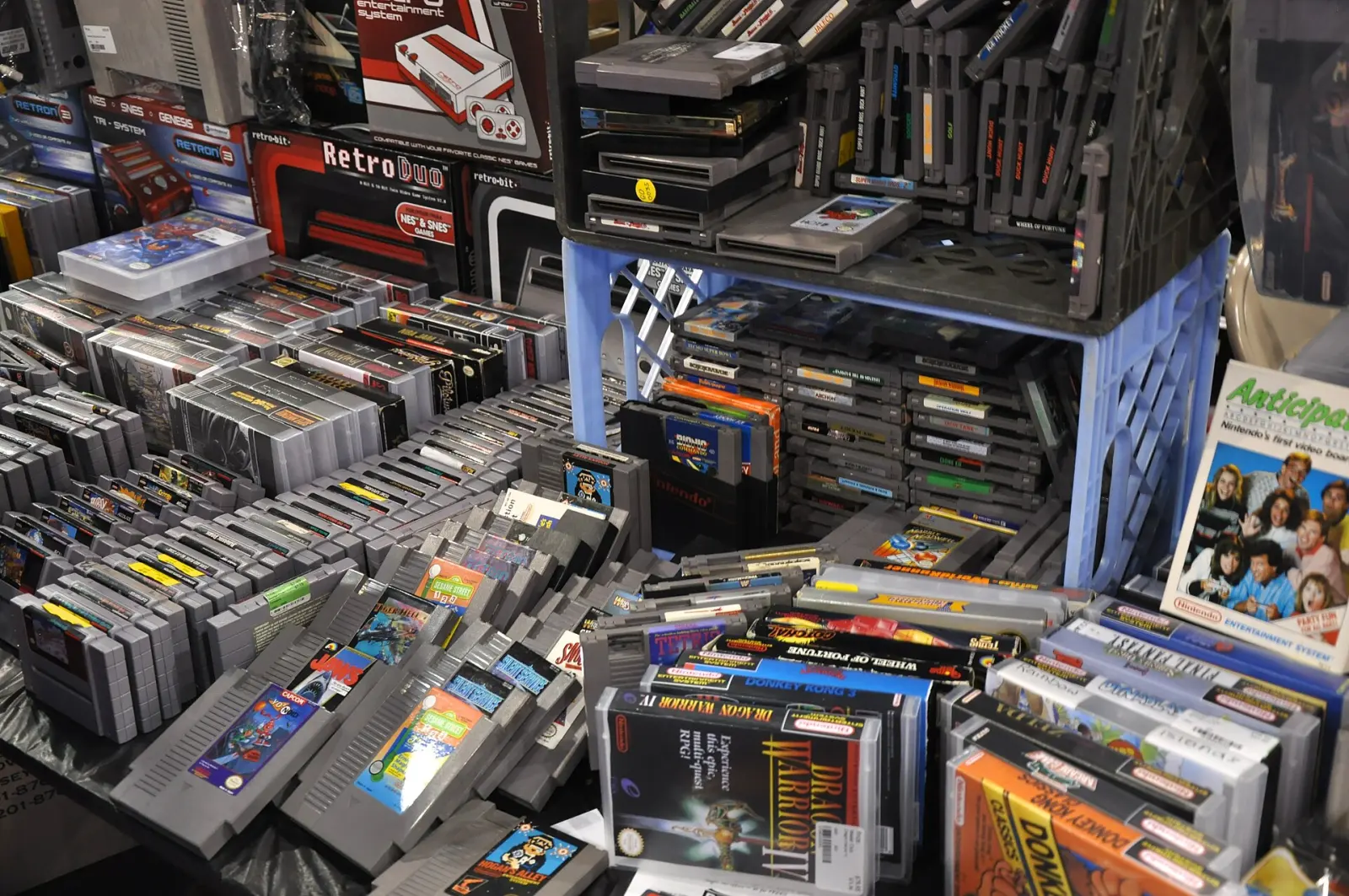
Technical preservation must be accompanied by documentation and contextualization work. The Video Game Museum, active since 2000, exemplifies this integrated approach. Its archive includes over 26,000 documented video games, hundreds of consoles and computers, as well as an extensive digital archive of manuals, catalogs, and audiovisual material. The institution emphasizes that "preservation is not just storage"; it involves identifying, describing, and placing each object within its historical context.
The museum's records link systems to their titles, versions, regions, dates, developers, and publishers. Additionally, they connect physical objects with associated documents, such as magazines and publications that documented how video games were presented and received in their time. This network of relationships allows for the reconstruction of the industry's cultural and technical history, preventing consoles from being reduced to mere technical specifications.
Preservation and Access: Limits and Ethics
Digital preservation also raises legal and ethical questions. KEEP developed guidelines on legal issues related to copying and preserving software, acknowledging the complexity of copyright in this field. The Video Game Museum, for its part, clarifies that preserving material does not necessarily mean publishing it. Certain collections may be maintained for documentary, historical, or research purposes without being part of public access, thus protecting the integrity of the collection and respecting the rights of holders.
Together, these strategies demonstrate that video game memory does not reside solely in physical objects, but in the ability to keep them accessible, interpretable, and contextualized. Emulation, technical documentation, and museum work form a necessary ecosystem for future generations to not only see but also understand and experience the history of video games.
- Decade
- 2000s
- Region
- Europe
- Level
- Enthusiast
- Entities
- Commodore 64, Museum, Museo del Videojuego
Sources and references
- Reportaje - Mantener vivo nuestro patrimonio cultural digitalcordis.europa.eu · 2026-10-25
- Desarrollo y conservación del patrimonio cultural-natural en el contexto neoliberal y nuevas tecnologíasdoi.org · 2026-10-25
- Qué hacemos | Museo del Videojuegowww.museodelvideojuego.com · 2026-10-25
- Resuelto:Lectura 10 — Arte y tecnología: Conservación de ...www.gauthmath.com · 2026-10-25
- Preservación de videojuegos: por qué importa el formato ...www.tiktok.com · 2026-10-25