The standard narrative of video game history often focuses on release dates and brand names. However, the period between 1972 and 1983 was not merely a succession of devices, but a fundamental re-engineering of how software was delivered to the user. The key to this transformation does not lie in the raw power of early processors, but in the adoption of the cartridge as a distribution medium. This technical shift allowed the console to cease being a closed machine with limited built-in games and become an open, albeit controlled, platform for an emerging industry.
Origins in limitation
The Magnavox Odyssey, released in 1972, is recognized as the first home video console. Its design, however, was functionally restrictive. Games did not exist as complete digital software, but as circuit boards that required physical overlays on the television screen and other accessories to be playable. This reliance on external components limited the experience and versatility of the system. While it introduced the concept of playing at home, the Odyssey did not establish a sustainable business model based on the sale of digital content. It was a cultural prototype rather than a mature technological platform.
The Channel F revolution
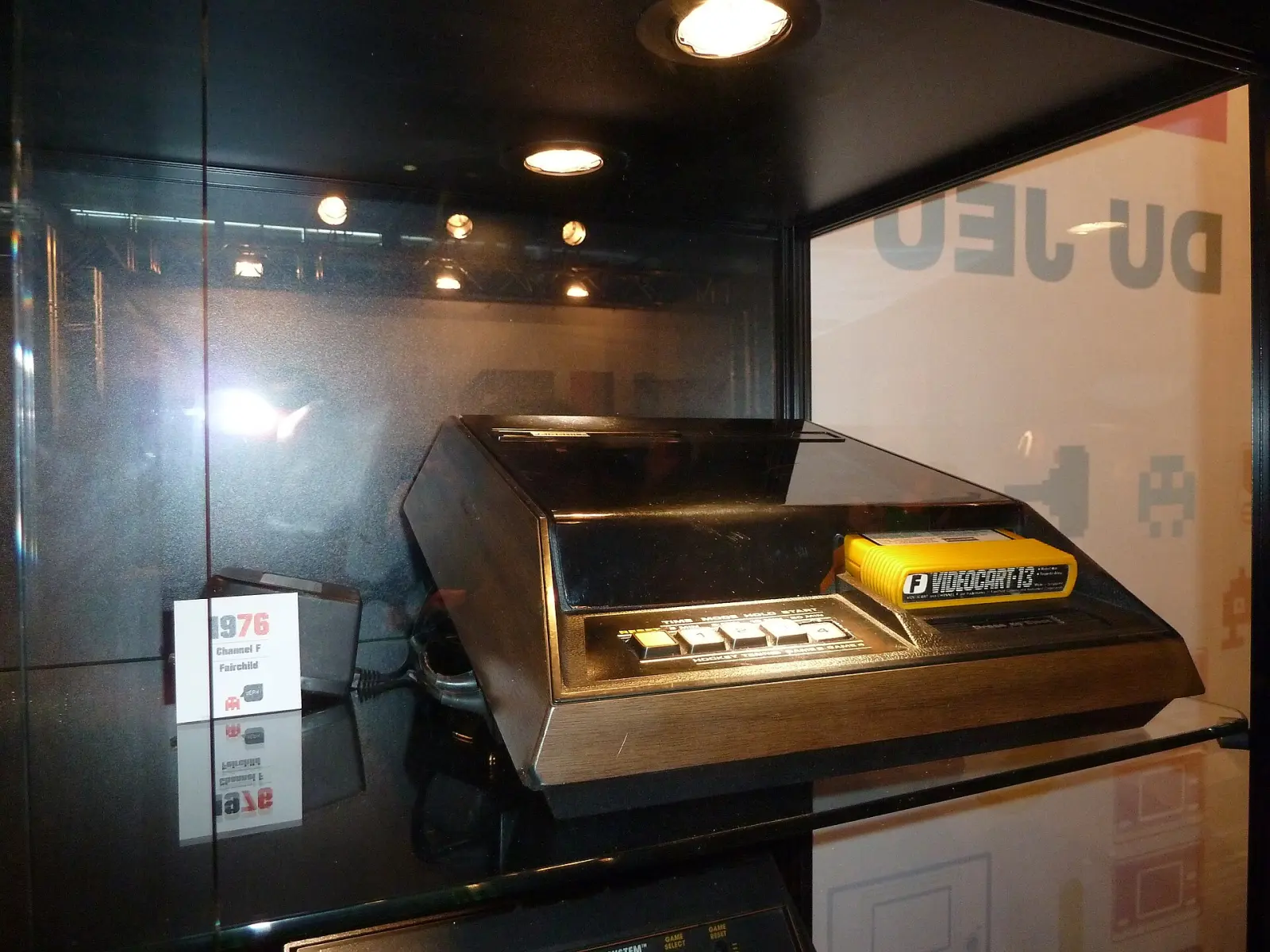
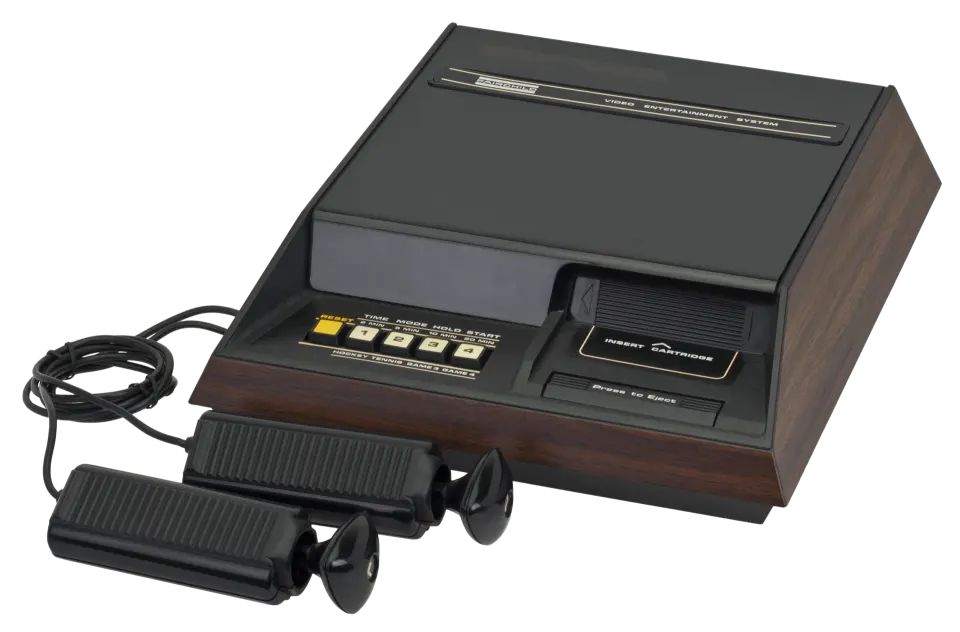
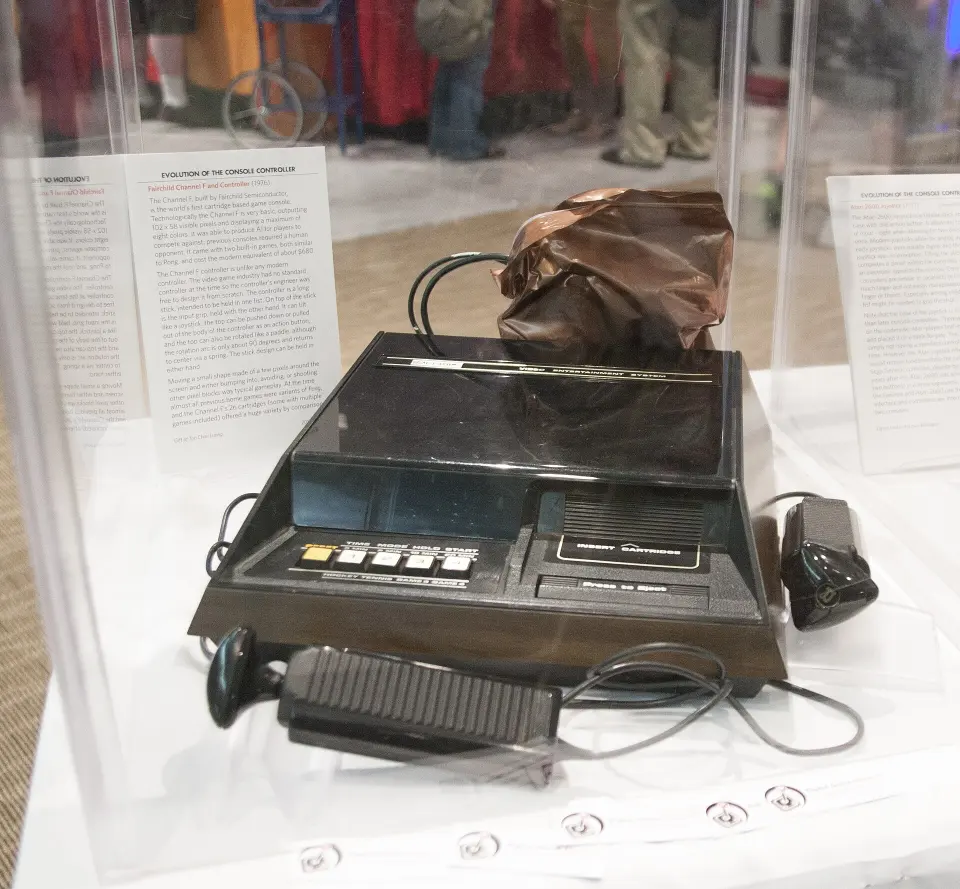
The turning point arrived in November 1976 with the Fairchild Channel F. This system introduced two critical innovations: the use of a dedicated microprocessor and interchangeable cartridges that contained the entire game experience. Unlike the Odyssey, the Channel F did not require screen overlays. The cartridge became the basic unit of content, a decision that would define the industry for decades. This driving technology allowed consoles to store and execute programs autonomously, laying the foundations for what is known as the 4-bit era.
Consolidation of the second generation
The second generation of consoles, spanning from 1976 to 1982, saw the proliferation of systems that adopted this new standard. The Atari 2600, released in 1977, became the most influential system of the era, combining powerful hardware with a growing library. It was followed by the Magnavox Odyssey² in 1978 and the Intellivision in 1980, each offering improvements in graphics and audio. By the end of the era, there were more than 15 different consoles, including the ColecoVision and Atari 5200, all released in 1982. This diversity marked a period of maximum innovation and popularity for the medium.
The arcade connection
The second generation coincided with the golden age of arcade video games. This relationship was symbiotic: the popularity of cabinet games drove demand for home versions. Space Invaders, released in 1980 for the Atari 2600, is cited as the first "killer app" arcade game to be ported, although Atari had ported its own earlier games. Coleco packaged Nintendo's Donkey Kong with the ColecoVision in August 1982. These ports demonstrated that home hardware could offer experiences comparable to arcade machines, validating consumer investment.
The rise of external developers
The cartridge architecture changed not only the hardware but also the industry structure. In 1979, Activision was created by ex-Atari programmers, becoming the first external video game developer. This milestone broke the vertically integrated model where the console manufacturer also produced the software. The possibility for third parties to create content for the platform expanded the game offering and fostered competition, although it also introduced new risks regarding quality and control.
Saturation and collapse
The success of the second generation brought about an overabundance. In 1982, toy store shelves were overflowing with a proliferation of consoles and exaggerated game releases. The entry of new external developers, often with little market knowledge, resulted in a flood of low-quality titles. This oversaturation, combined with competition from home personal computers, caused the industry to collapse in 1983. From December 1982 and throughout 1984, the North American market suffered significant disruptions, with developer closures and a scarcity of new releases.
Legacy and limits of evidence
The second generation officially ended on January 1, 1992, with the discontinuation of the Atari 2600. However, its cultural and technical impact was immediate. The cartridge-based console model persisted until the arrival of optical discs in the 1990s. It is important to note that while sources cite the 1983 crash as a defining event, full market recovery did not arrive until the third generation. The available evidence does not allow for detailing exact sales figures for each individual system, but it does confirm the general trend of growth followed by a sharp correction. The main lesson of this era is not the technology itself, but ecosystem management: the need to balance openness to third parties with content quality to maintain consumer trust.
Documentary gallery
- Decade
- 1970s
- Region
- Global
- Level
- Introduction
- Entities
- Fairchild Channel F, Magnavox Odyssey, Televisión, Atari 2600, Nintendo, Space Invaders, Arcade game, Atari 5200
Sources and references
- Historia de los videojuegos - Wikipedia, la enciclopedia librees.wikipedia.org · 2026-10-21
- La historia de Nintendo | Hardwarewww.nintendo.com · 2026-10-21
- Repasamos la historia del videojuego para traeros 10 ...www.facebook.com · 2026-10-21
- Videoconsola portátiles.wikipedia.org · 2026-10-21
- Videoconsolas de segunda generaciónes.wikipedia.org · 2026-10-21