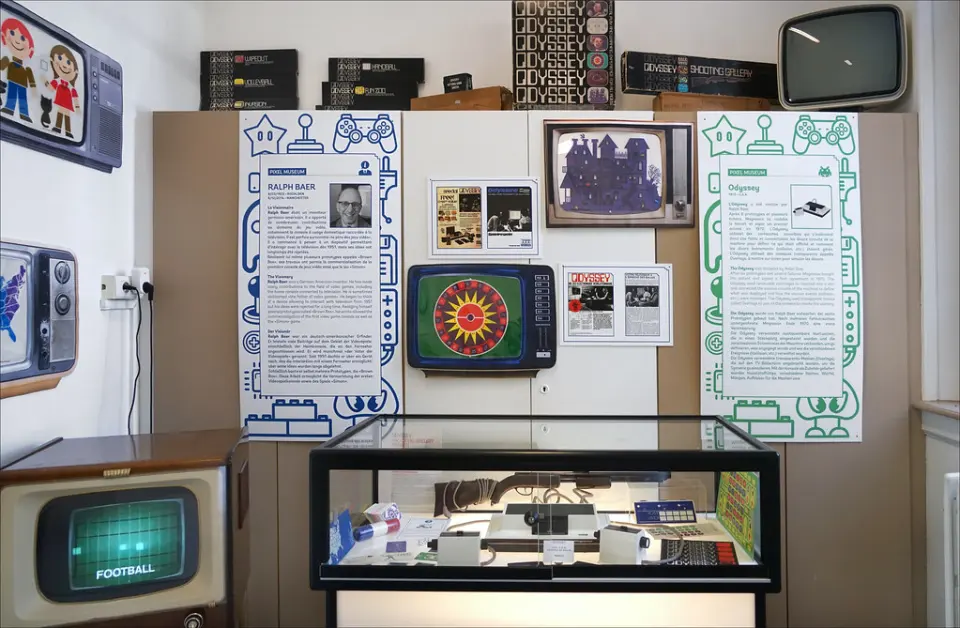
The transition of electronic gaming from recreation halls to the domestic space was not an immediate technological leap, but a reconfiguration of the user experience. The Magnavox Odyssey, released in 1972, represents the starting point of this migration. Its historical relevance does not lie solely in being the first device of its kind, but in how it addressed the constraints of the era to make the concept of a console viable as a mass consumer object.
The context of the 1970s
The 1970s marked a milestone in the video game industry, a period during which the first commercial systems were developed. Before the Odyssey, electronic gaming was confined primarily to arcade machines like Pong, which were gaining popularity in bars and recreation centers. The Odyssey sought to move that direct interaction to the living room, a private space where the user controlled the environment. This spatial distinction is fundamental to understanding the medium's evolution: gaming ceased to be a public, shared experience to become an intimate and family activity.
Technical limitations and practical solutions
The Odyssey's design reflected the technological limitations of the time. The system lacked the capacity to generate complex graphics or detailed textures on the television screen. Instead of attempting to overcome these barriers with advanced hardware, engineers opted for a pragmatic solution: the use of plastic overlays. The player had to place these transparent sheets over the television to define the playing fields, lines, and visual elements necessary to understand the action. This technique turned the screen into a neutral surface that the user physically customized.
The control interface
Interaction with the system was performed through controls based on knobs, known as 'paddles'. These devices offered a simple but effective mechanic, allowing the player to move objects on the screen through linear movements. The included games, such as table tennis, were specifically designed to leverage this movement limitation, transforming the technical constraint into a clear and accessible game mechanic. The simplicity of the interface was key to the initial adoption of the device, as it did not require a complex learning curve.
Validation of the home market
The commercialization of the Odyssey demonstrated that there was a viable market for electronic gaming outside of recreation halls. By validating the concept of the console as a cultural and technological artifact, the device laid the foundations for the home console industry. It was not just about selling a machine, but about introducing a new consumption habit in the home. The Odyssey functioned as a market prototype that tested consumers' willingness to pay for interactive electronic entertainment in their own home.
The transition to the second generation
Although the Odyssey was a pioneer, its lifecycle was short compared to the platforms that followed. The second generation of consoles, which included devices like the Fairchild Channel F and the Atari 2600, introduced significant improvements in processing power and game variety. However, the Odyssey established the design and consumption patterns that would define consoles for decades. The transition from the 70s to the 80s consolidated this trend, transforming the console from a technical curiosity into a central element of popular culture.
Legacy and cultural relevance
The Odyssey's legacy transcends its technical obsolescence. Its design, which combined hardware limitations with physical solutions, offers a lesson in adaptability in product development. The Odyssey did not try to be perfect; it tried to be functional. This pragmatic approach allowed the video game medium to find its place in everyday life. Today, the Odyssey is studied not only as a collectible object but as a case study in the history of interaction design and the economy of attention.
Conclusions on early design
The Magnavox Odyssey illustrates how constraints can drive innovation. By accepting the limitations of the era's technology and designing around them, the Odyssey's creators achieved a product that, while basic, fulfilled its fundamental purpose: bringing electronic gaming to the home. Its success was not absolute in terms of immediate mass sales, but it was decisive in terms of conceptual viability. The Odyssey demonstrated that the future of electronic gaming lay in the domestication of technology, a principle that remains valid in the current industry.
Documentary gallery

- Decade
- 1970s
- Region
- Global
- Level
- Introduction
- Entities
- Fairchild Channel F, Magnavox Odyssey, Atari 2600, Pong, Atari
Sources and references
- el impacto histórico de las consolas clónicasecos.cide.edu · 2026-10-20
- Década de 1970 | Wiki de ventas de videojuegos | Fandomtranslate.google.com · 2026-10-20
- La evolución de las consolas de gaming 🔥www.facebook.com · 2026-10-20
- La Evolución de las Plataformas de Videojuegoswww.facebook.com · 2026-10-20
- 10.2: La evolución de los juegos electrónicosespanol.libretexts.org · 2026-10-20
- Historia de los videojuegos - Wikipedia, la enciclopedia librees.wikipedia.org · 2026-10-20