The standard narrative regarding Nintendo's early entry into video games often simplifies the moment the company transitioned from chance games and cards to domestic electronic entertainment. However, available sources suggest that this leap was not realized in a single iconic product, but in a small family of devices. The distinction between the Color TV-Game 6 and the Color TV-Game 15 is fundamental to understanding the company's initial strategy, which opted to offer variants with different numbers of built-in games rather than relying on a single standard model.
The duality of the first launch
According to 100% Retro documentation, Nintendo's first console was not a singular object, but two specific models: the Color TV-Game 6 and the Color TV-Game 15. This duality indicates that the late 1970s Japanese market was experimenting with different value propositions. Instead of launching a generic machine, Nintendo presented two options differentiated by their internal content. The Color TV-Game 6, as its name suggests, contained six games, while the Color TV-Game 15 offered fifteen. This early segmentation reveals a practical understanding of consumer preferences, allowing users to choose between a more limited or a broader experience without needing to buy additional cartridges, a technology that was not yet the norm in that context.
Beyond the two main models
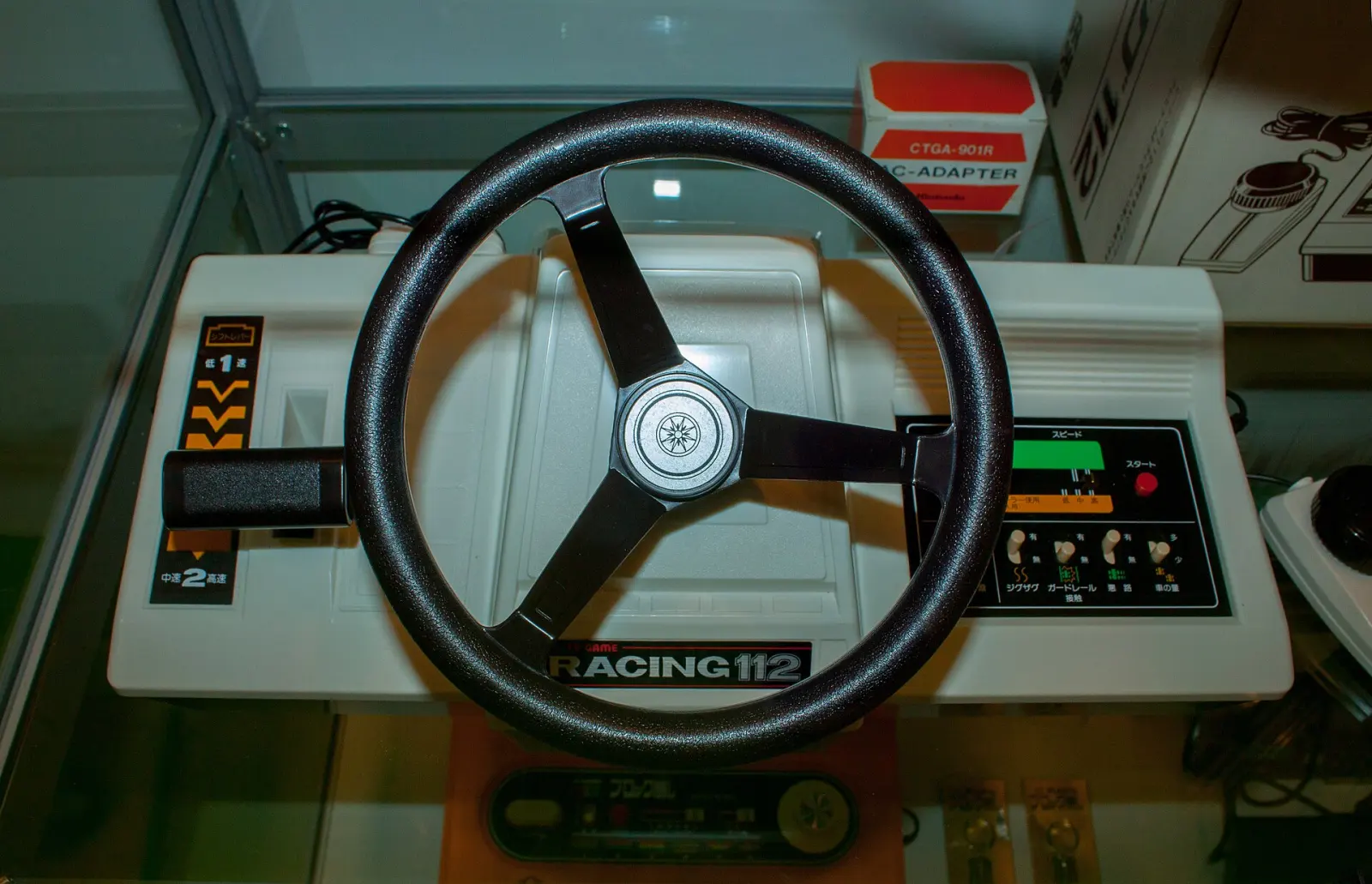
Academic documents, such as those by Aida Navarro Redón, expand this view by mentioning other variants within the same product line. The Racing 112, Block Breaker, and Computer TV Game are cited. The existence of these additional models demonstrates that the Color TV-Game 15 was not an isolated experiment, but part of a series of consoles with built-in games. This product line shared a common design philosophy: the total integration of software into hardware. By listing these variants, academic sources provide a richer context than the simple 6/15 binary, showing a range of options spanning from racing games to block simulations, all under the Color TV-Game brand umbrella.
The Sharp XG-115 variant
A concrete detail provided by the 20th Century Video Games source adds a layer of complexity to this story: the Sharp XG-115. This model, dated 1978, is described as a CTG-15 variant licensed by Sharp. The collaboration with Sharp, a Japanese electronics manufacturer, suggests that Nintendo not only produced its own units but also licensed its technology to other market players. The Sharp XG-115 was manufactured exclusively in Japan and was associated with a Pong-type video game. This license is an early indicator of Nintendo's influence in the industry, allowing its design to reach more homes through an established partner, albeit under a different brand.
Historical context of built-in games
The era of built-in games was a crucial transitional phase in video game history. Before the standardization of cartridges, consoles came with a fixed number of games burned into the motherboard. This limited the product's longevity but reduced the entry cost for the consumer. The Color TV-Game 15, with its fifteen games, represented an attractive proposition in a market where variety was scarce. The comparison with the Sharp XG-115, which focused on a Pong-type game, shows the diversity of approaches within this same category. While Nintendo offered a varied collection, other variants specialized in a specific genre, reflecting the widespread experimentation of the industry at that time.
Limitations of available evidence
It is important to note that the consulted sources do not provide sales figures, exact prices, or precise launch dates for the original Color TV-Game 15. The documentation focuses on the identification of models and their relationships, rather than commercial data. This lack of quantitative information limits the ability to measure the immediate commercial success of these devices. However, the consistency in mentioning these models in retro and academic sources validates their existence and their role in Nintendo's history. The absence of financial data does not diminish the historical significance of these devices as the company's first steps in entertainment hardware.
Cultural relevance and legacy
The legacy of the Color TV-Game 6 and 15 lies in their role as precursors to the modern console. They established the foundation for what was to come, including the Famicom and the NES. Nintendo's decision to integrate multiple games into a single device was a response to the technological and market limitations of the era. This strategy laid the groundwork for the brand's relationship with consumers, who would associate Nintendo with quality and variety in electronic entertainment. The existence of variants like the Racing 112 and Block Breaker shows a rapid adaptation capacity, allowing the company to test different genres and see what resonated with the Japanese public.
Conclusion
Nintendo's first foray into domestic consoles was a multifaceted effort, not a single event. The Color TV-Game family, composed of the 6, the 15, and other variants like the Racing 112, represents the company's first serious attempt to compete in the electronic entertainment market. The Sharp XG-115 license adds an industrial collaboration dimension to this story. Although specific commercial data is scarce, available documentation allows for a clear map of these devices and their importance in industry evolution. These models were not just products, but the foundations upon which Nintendo's video game empire was built.
- Decade
- 1970s
- Region
- Japan
- Level
- Introduction
- Entities
- Nintendo, Pong, Mappa, Color TV-Game 15
Sources and references
- Color TV-Game 6 y Color TV-Game 15 | 100% RETROinfoconsolas.com · 2026-10-20
- Nintendo Virtual Boy.oa.upm.es · 2026-10-20
- 20th Century Video Gameswww.20thcenturyvideogames.com · 2026-10-20
- GAMESPACE. ENTRE EL ESPACIO MATERIAL DE LA ...oa.upm.es · 2026-10-20
- Espacios Virtuales y Arquitectura | PDF | Videojuegoses.scribd.com · 2026-10-20