RetroPauseEveryday life
Thematic archive · Everyday life

Everyday life and the small things that shaped the rhythm of the day

School, shopping and encounters carry history just as larger objects do. This section places everyday practices and memories in context through their sources, without assuming that everyone experienced them in the same way.

Start here

Readings to help you find your bearings.

Analysis · 1990

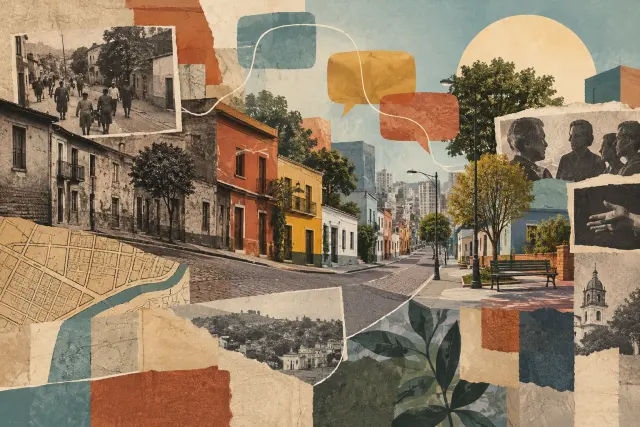
Oral Memory and Neighbourhood History: Reconstructing Everyday Life Without Erasing Difference

Personal testimony can reveal everyday experiences missing from official records, but no single voice speaks for an entire neighbourhood. Drawing on Mauricio Archila Neira and Pedro Molano, this feature explores how to compare memories with documents and material traces, notice who is left out of interviews, and share reconstructed histories with the communities they concern.

Open story
Everyday life

A story in context

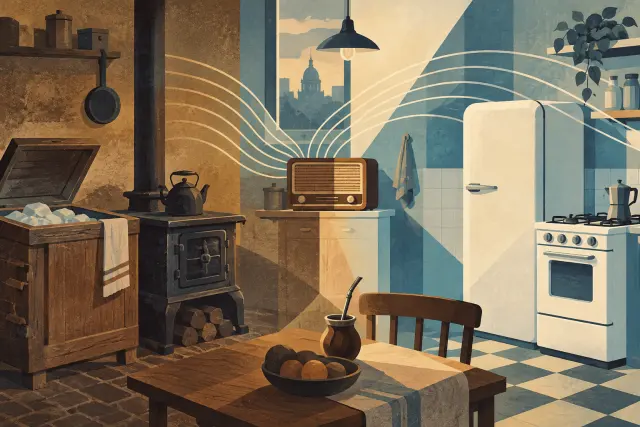
Habits vary by place, generation and household. Photographs and testimonies help put them in context without suggesting that everyone lived in the same way.

This section connects social practices. Objects and products are explored in their specialist categories, keeping them distinct from the customs and settings of everyday life.

Choose your path

Three perspectives on the archive.

Featured dossier

Contemporary retro design: how to cite the past without mistaking it for the original

A familiar silhouette can evoke another era without turning a new object into a historical one. A careful reading of retro design compares form, materials and function while considering the contexts that give each design meaning.

Read article

Documented milestones

  1. 1100

    Start of the Late Intermediate Period and development of the Chancay Culture

    The Chancay Culture develops on Peru's Central Coast from 1100 CE, a period in which funerary practices with anthropomorphic masks are documented.

  2. 1776

    Goya paints *The Picnic on the Banks of the Manzanares*

    A source identifies Goya’s painting, also called *The Picnic*, as a work from 1776 and says it was inspired by a play of the same name. The scene documents an artistic depiction of a merienda, not everyday practice in itself.

    Read article
  3. 1815

    The Spanish peineta arrives in Buenos Aires

    The Spanish peineta was introduced in Buenos Aires around 1815 and became a precursor to the Río de la Plata peinetón.

    Read article
  4. 1820

    Start of documented use of the peinetón in Buenos Aires

    The documented period of use of the peinetón, a monumental hair ornament, among women in Buenos Aires begins, extending until 1837.

    Read article
  5. 1824

    Interest grows in larger, more elaborate combs

    From 1824, interest in larger, more elaborate models began to grow, a development that led to the peinetón.

    Read article

Latest additions

Before 1950

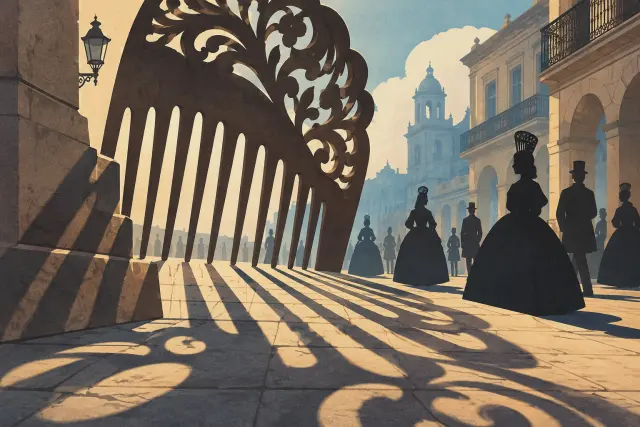
The Peinetón and the Contest over Public Space in the River Plate

In Buenos Aires and Montevideo, the peinetón turned an ornamental comb into a sign of fashion, status and belonging. Its manufacture, imagery and controversies reveal how dress made women visible—and brought their presence in the streets into question—in the 1820s and 1830s.

1990s

Email, Usenet and chat: social life online before social media

Before profiles and feeds, online social life took shape through email, mailing lists, Usenet groups, chat and personal websites. Each tool set a different pace and pattern of participation, while the Web coexisted with services that were already connecting communities across distance.

2000s

Photographs, Inventories and Objects: Reconstructing Life at Home

A historic interior cannot be reconstructed from a single photograph or inventory. Images, documents and surviving objects offer different clues about how a home was arranged, used and inhabited, while also revealing the gaps and choices that shape what can be known today.

1970s

Pong and the arcade cabinet: controls that turned a game into a social encounter

In Pong, two rotary controls and a shared cabinet made the duel easy to see—and gave people waiting for a turn a reason to watch. The game’s path from a prototype tested in a Sunnyvale bar to home versions shows how controls and setting could reshape the experience even when the basic mechanics remained familiar.

1960s

When television came to Mar del Plata, the home changed with it

Television arrived in Mar del Plata in 1960, after viewers in Buenos Aires had already encountered the medium, but households still had to decide where the set belonged and who could watch. Inés Pérez’s oral-history study traces a transition marked by children visiting neighbors to see programs, televisions appearing in kitchens as well as living rooms, and different expectations across generations.

Before 1950

A Bourgeois Berlin Home, Read Through 355 Objects

Donated by Wulf Köpke to Madrid’s National Museum of Anthropology, a collection of 355 objects offers a way to explore rooms in a bourgeois Berlin home from the early twentieth century. Its value lies in the furniture and utensils, but also in the relationships between objects, documents and museum decisions that make it possible to reconstruct a domestic space without claiming to reproduce it completely.

1980s

SEAT Between Fiat and Volkswagen: Industry, Autonomy and a Change of Scale

Founded in 1950 with state participation and technical support from Fiat, SEAT moved from licensed production to seeking greater autonomy after its break with the Italian company, before joining the Volkswagen Group. Its history comes into focus through industrial agreements, factory changes and models such as the Ibiza—not simply as a succession of cars.

Sources for the selected readings

Editorial review ·
