A match built around the cabinet
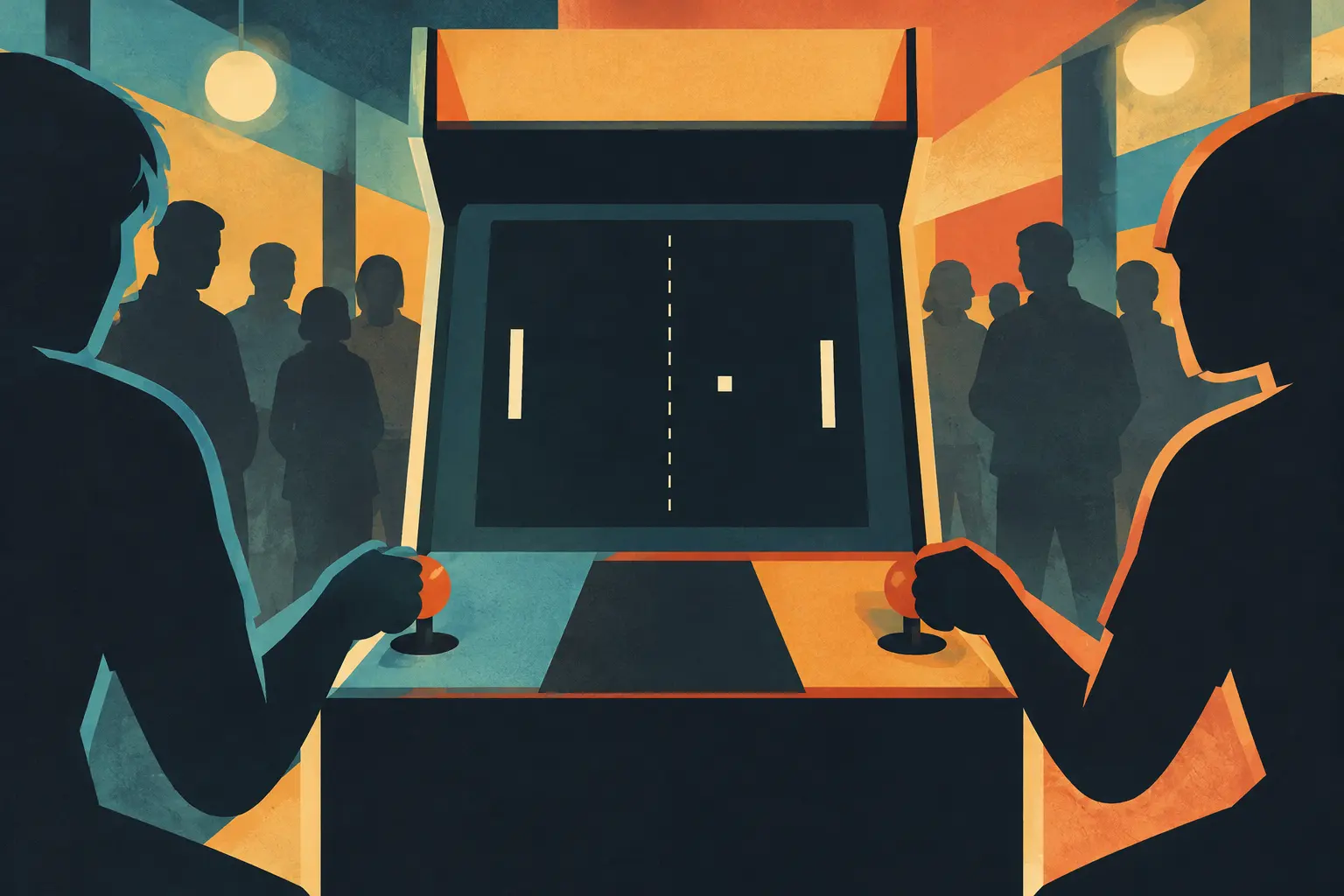
Pong turned a simple interaction into a game for two. In Atari’s 1972 arcade release, each player controlled a vertical paddle on one side of the screen and tried to return the ball. The first to reach eleven points won; a point was scored when the opponent failed to send the ball back. The match could be understood after only a brief look, but playing well demanded reflexes, anticipation, and precise movement.
The cabinet itself shaped how the game was played. Each participant had a rotary knob to move a paddle up or down, and the opposing positions divided the space clearly. There were no button combinations or lengthy instructions to learn: the control suggested the action, while the cabinet showed where to stand. The machine was more than a screen. It was also a structure that brought two people together and made their competition visible.
That clarity had social potential. Someone waiting could watch a rally, understand the objective, and get ready to play. This does not mean every match unfolded in the same way, but the format made a cycle of playing, waiting, and watching possible around a single machine.
Simplicity did not remove skill
The rotary knob translated a player’s intention into continuous paddle movement. The action was easy to learn, but success depended on timing and position. In Alcorn’s design, the return angle changed according to where the ball struck the paddle; the ball also accelerated during a rally. The basic rule—return the ball—therefore created quick decisions about where to move and when to adjust.
From the sidelines, Pong was legible: the ball, paddles, and score made the action easy to follow without knowledge of complex conventions. That clarity helped spectators learn by watching and made the contest between two people immediately understandable. The controls did not merely enable play; they helped turn a match into a short, comprehensible spectacle that others could share.
A public test in Sunnyvale
Allan Alcorn created Pong at Atari as a training exercise assigned by Nolan Bushnell. Bushnell had played the tennis game on the Magnavox Odyssey, a home console introduced in 1972, and that experience was part of the project’s background. Alcorn developed the idea and added features to its mechanics, including the changing return angle and the ball’s acceleration during rallies.
In August 1972, Atari installed a prototype at Andy Capp’s Tavern, a bar in Sunnyvale, California. The machine stood among the venue’s other amusements, including pinball games and Computer Space, another Atari title. Its placement made it part of the bar’s public space: people could approach, watch, and try it. Accounts of the test say that the coin mechanism eventually jammed after too many coins had been inserted. Beyond its anecdotal quality, the episode suggests that the game could attract attention in a venue where people shared other forms of leisure.
Atari announced Pong on November 29, 1972, and began manufacturing units for arcades and other venues. Initial demand exceeded the company’s assembly capacity, prompting it to reorganize production. The game helped establish Atari and encouraged other companies to release titles with similar mechanics. The resulting wave of imitators helped make direct competition and simple controls familiar features of a growing form of public electronic entertainment.
From shared venue to living-room television
The arcade game and Home Pong shared a basic logic, but not the same conditions of play. In a venue, the cabinet was a shared object; a match was connected to payment per game, the presence of other customers, and the possibility of watching before taking part. The controls were attached to the machine, with players facing one another across the screen.
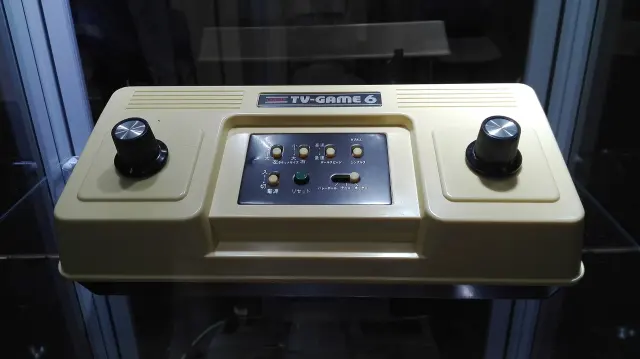
The home version moved the game to a television and into domestic routines. Atari developed Home Pong after the arcade game succeeded; Sears began selling its Tele-Games version toward the end of 1975, before Atari marketed its own branded version. The mechanics could remain familiar, while access, setting, and the presence of other people changed. Pong’s history is therefore not simply a story of the same machine continuing in a new place: the setting was part of the experience.
A social format, not a universal rule
Nolan Bushnell later described Pong as a form of social interaction: two people shared a screen, could talk and challenge each other, and each played with one hand. The game’s layout fits that description. Still, it should not be turned into a claim about every player or venue. A machine could draw both players and onlookers, but the atmosphere of a particular establishment and the relationships among its visitors shaped how it was used.
Pong was not the first electronic game, nor did it appear without predecessors. The Odyssey was an influence on its development, and other electronic tennis games existed before its release. Its historical significance lies in how Atari turned a simple, recognizable interaction into a commercial arcade product capable of drawing players and spectators. The controls were essential to that format: they made the game quick to learn, made competition visible, and organized two people around the same cabinet.
- Decade
- 1970s
- Region
- North America
- Level
- Introduction
- Entities
- Computer Space, Magnavox Odyssey, Arcade game, Pong, Atari
Sources and references
- Pongtranslate.google.com · 2026-11-08
- Historia Archivoswww.capitalvideogames.com · 2026-11-08
- Homosexualidad en el videojuego: el tabú irresolublecintilatio.com · 2026-11-08
- Pongs:1103www.20thcenturyvideogames.com · 2026-11-08
- Sunnyvale (California)es.wikipedia.org · 2026-11-08