A reference is not the original object
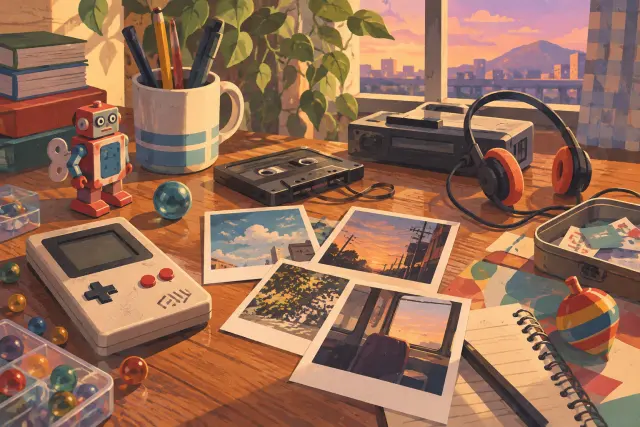
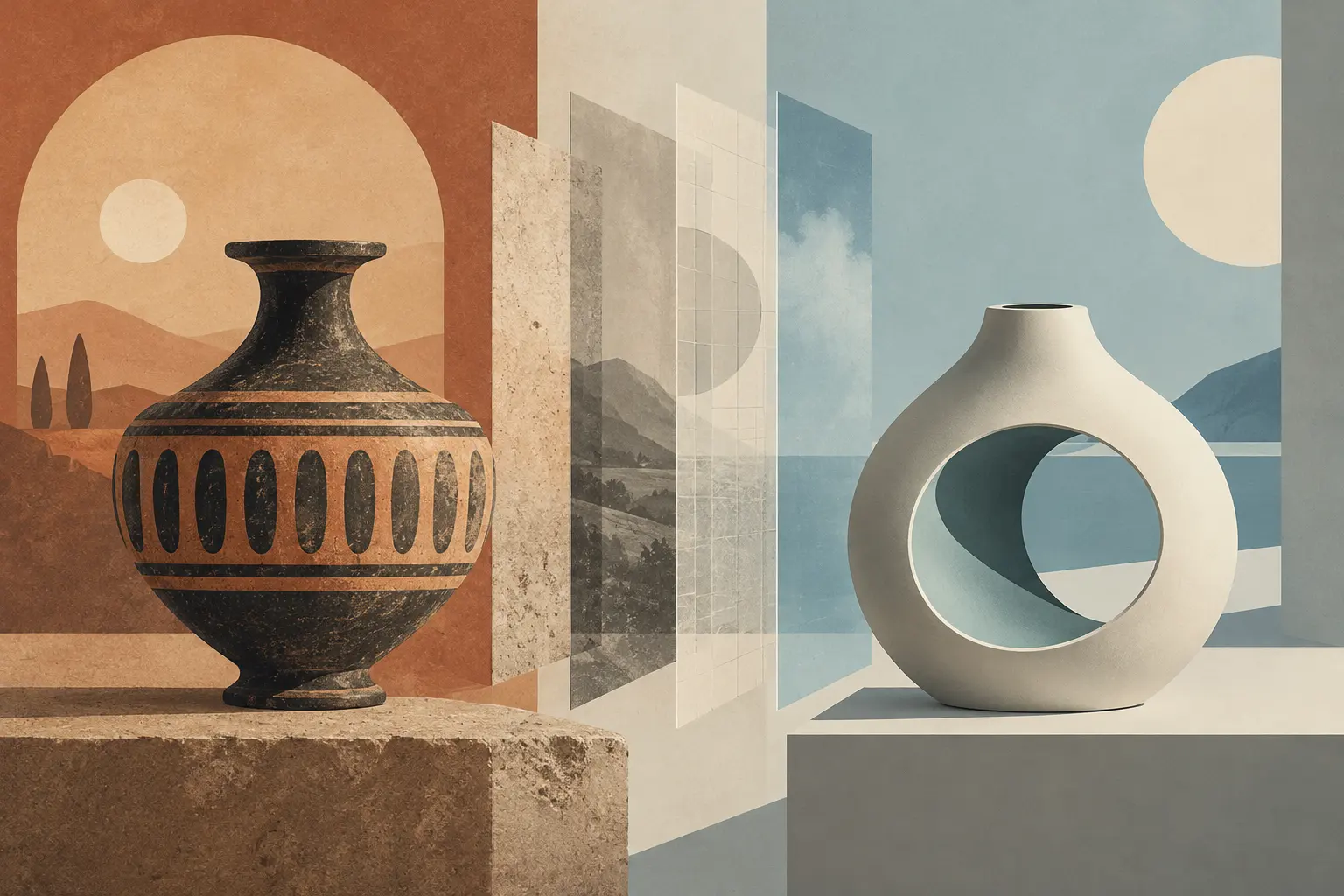
Contemporary retro design takes features associated with earlier periods—a silhouette, a colour scheme, an interface or a way of presenting a product—and rearranges them for the present. It is neither the historical object it evokes nor an automatic continuation of that object’s material life. Comparing the two is useful when their distance remains clear: it lets us distinguish what is borrowed, what changes and what meanings emerge in the new setting.
This distinction connects present-day design with heritage conservation without confusing their purposes. Conservation attends to the material, history and care requirements of specific objects. Analysis of contemporary design asks how a new creation cites or transforms earlier forms, and what those references do in its current use and reception.
Form, materials and function
Visual resemblance is a starting point, not a complete explanation. At least three dimensions are worth considering:
- Form: which outlines, proportions, colours or graphic devices are revived.
- Materials: whether an older appearance is produced with new components, and whether texture, manufacture or finish also changes.
- Function: whether the present-day object serves the same purpose as its reference, adapts its use or turns the reference into an aesthetic quotation.
These aspects do not always align. A piece may clearly recall an earlier design while meeting contemporary needs. It may also adopt a historical look without sharing the original’s construction or setting of use. The label “retro” does not resolve these differences by itself: some features are visible, while others require historical or technical information.
Context is part of design, too
Objects acquire meaning in relation to the institutions, practices and audiences around them. Daniel Soto Morúa’s study of Costa Rica’s Museum of Contemporary Art and Design examines how the institution brings art and design together within a specific regional and cultural-policy context. Its history involves tensions between disciplines and shifts in curatorial strategy. The case is a reminder that a reinterpretation does more than look back to an earlier form: it also enters a contemporary cultural field.
Conservation shows from another angle that material and institutional conditions are not just background. A study by Leire Escudero and Cristina Bausero examines the reorganisation of storage at the Juan Manuel Blanes Museum in Montevideo for a three-dimensional collection of modern and contemporary art. The museum occupies a former nineteenth-century house that presented limitations for present-day storage and care; works had even been kept in shared spaces and corridors. The project led to the creation of a dedicated storage area and the reorganisation of the collection using the RE-ORG system.
That case is not about retro design, but it helps challenge a narrow view of material history. Objects and collections depend on spaces, conservation decisions and ways of organising them. Treating the past solely as a decorative image leaves those concrete conditions out of view.
Nostalgia and evidence
Nostalgia can make a reference recognisable, but it cannot take the place of analysis. When considering a reinterpretation, we can ask what memory it activates, which audience it appears to address and which parts of the original context it leaves out. It is also important to distinguish a documented relationship from an interpreted resemblance: visual similarity alone proves neither a direct connection nor a particular intention.
Museums and archives can help maintain that distinction when they identify objects separately and explain what is known about them. The FutureMuseum project brings together contributions from museum professionals on participation, authenticity, access and the public role of collections. Its contributors offer varied perspectives rather than a single formula. For retro design, one practical implication is to explain both the reference and the choices that turn its visual language into a new creation.
Comparing without erasing differences
Displaying a historical object beside a contemporary reinterpretation can make continuity and change visible, provided the two are not presented as equivalent. Documentation should identify each item separately and specify its date, materials and context where these are established. Resemblance then opens up an inquiry instead of taking the place of history.
Contemporary retro becomes culturally interesting when its relationship with the past can be described precisely: what it borrows, what it changes and what it contributes in its new setting. Conservation reminds us that material memory is not a neutral store of styles ready for reuse. It is a situated history, and every reinterpretation enters into dialogue with it from the conditions and concerns of its own time.
- Decade
- Contemporary
- Region
- Global
- Level
- Enthusiast
- Entities
- Museum, Museo de Arte y Diseño Contemporáneo
Sources and references
- Conservación del patrimonio y sostenibilidad en museosdoi.org · 2026-11-09
- De casa quinta a Museo. Plan de conservación preventiva para una colección de arte moderno y contemporáneo en el Museo Blanesdoi.org · 2026-11-09
- Museo de Arte y Diseño Contemporáneo: orígenes, desarrollo institucional y contexto de un museo en movimientodoi.org · 2026-11-09
- Museo de Arte Costarricense - MACwww.facebook.com · 2026-11-09
- El proyecto FutureMuseum: ¡Aporta tu voz al futuro de los ...translate.google.com · 2026-11-09