A new appliance, a shared experience
In 1960s Mar del Plata, the arrival of television did not immediately turn the set into a private object with a fixed place in the home, used only by the family. For a time, watching television could mean going to a neighbourhood club, a local community association or, often, a neighbour’s house. Historian Inés Pérez reconstructs this period in her study of television’s everyday uses between 1960 and 1970, drawing on interviews with city residents and the local press.
Mar del Plata shows that the now-familiar association between television and home has a history. Viewing practices depended on more than technology: the price of a set, the availability of broadcasts, neighbourhood relationships, generational differences and the organisation of domestic work all mattered. In those early years, television could be a public novelty, a prestigious purchase and a reason to cross someone else’s threshold.
Television arrived at different times
Argentine television began broadcasting in Buenos Aires in 1951, but for years reception was limited to the capital. In 1960, Canal 12 in Córdoba and Canal 8 in Mar del Plata began operating, bringing television to some cities beyond Buenos Aires. The time lag gave Mar del Plata’s experience a distinctive character: practices that had unfolded in succession in the capital—watching in public places and later at home—overlapped there with the spread of television purchases and the formation of a local audience.
Canal 8’s arrival prompted anticipation, although owning a set did not guarantee access to local programming. In one family’s account recorded by Pérez, the television had been bought about six months before the channel began broadcasting. While waiting, its owners tried to pick up signals from Buenos Aires and, occasionally, Uruguay or Brazil. The story shows that a set could be purchased before it had a regular use: it was also a promise of modernity and a wager on a technology not yet fully available in the city.
Visiting to watch
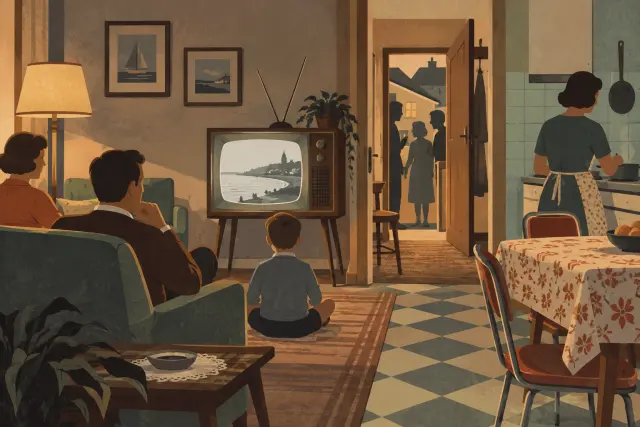
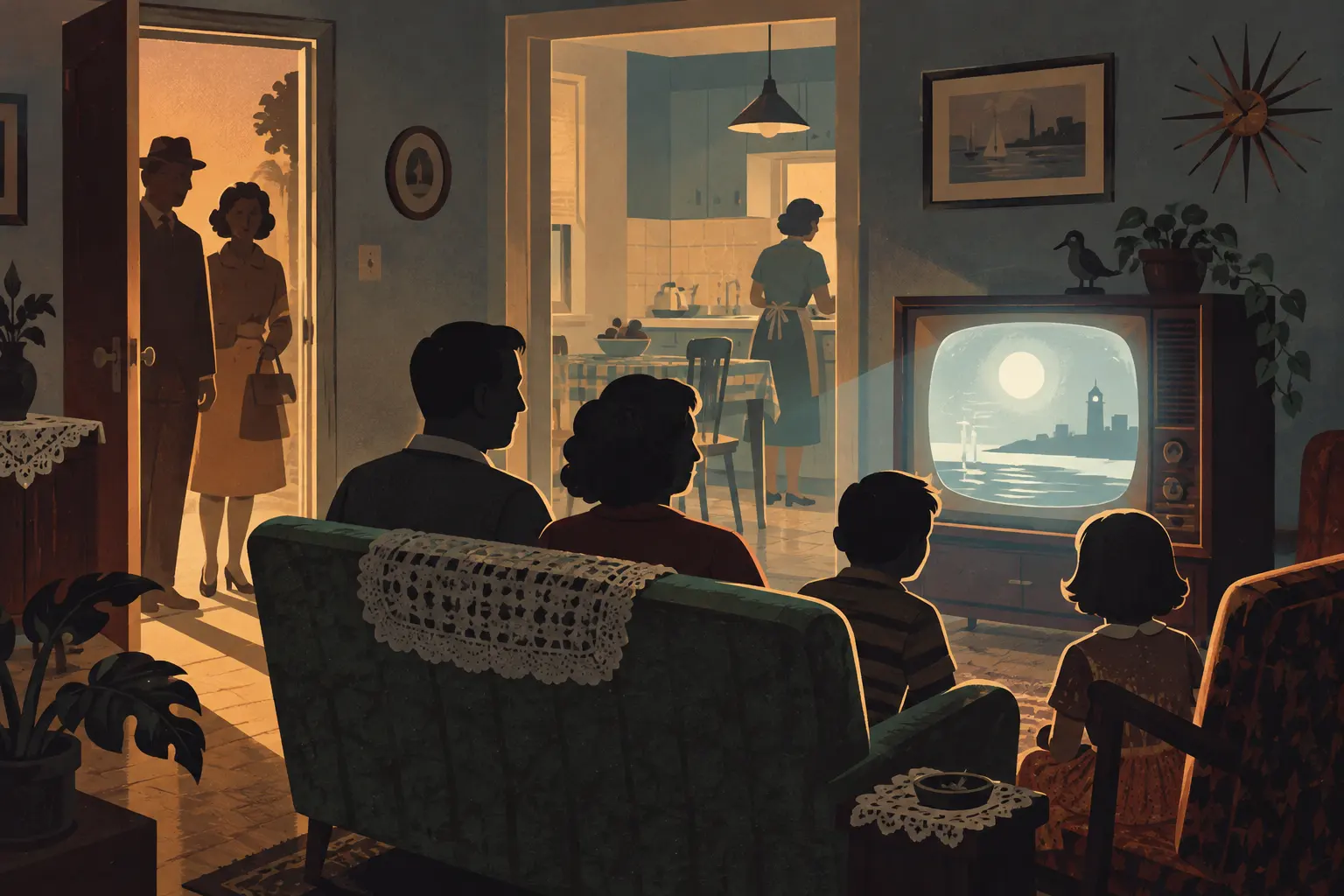
The price of television sets restricted access, although credit sales helped more households buy one. In the early years, many people watched at clubs, neighbourhood associations or neighbours’ homes. Pérez’s interviews describe a social practice, not merely a stopgap for households without a set: visits involved hospitality, routines and particular ways of remembering who welcomed whom.
In these accounts, children appear as those most likely to cross the boundary between their own home and someone else’s. Adults tended to visit less often or on special occasions; younger people, by contrast, might regularly go to a neighbour’s house to follow the programmes. Pérez connects this mobility to children’s anticipation of the new medium and to more flexible uses of space. For children, the boundaries between inside and outside, and between one home and another, could be more permeable than they were for adults.
The memories do not, however, produce a single account. One family that had bought a set early remembered crowds of neighbourhood children coming to watch; neighbours interviewed by Pérez did not necessarily place themselves in that scene. The difference does not invalidate the accounts. It shows how memories of the same practice vary according to the narrator’s position, relationships between households and the meanings attached to hosting or visiting.
The television could also become a status symbol. One family recalled buying an imported Philips set, chosen by the father despite costing considerably more than other models. Still kept by one of his children, the television represented a visible and prestigious investment in the family’s story. For some households, being among the first to acquire one became part of a narrative of advancement; for others, waiting or watching on borrowed sets marked a different experience.
Where the set went inside the home
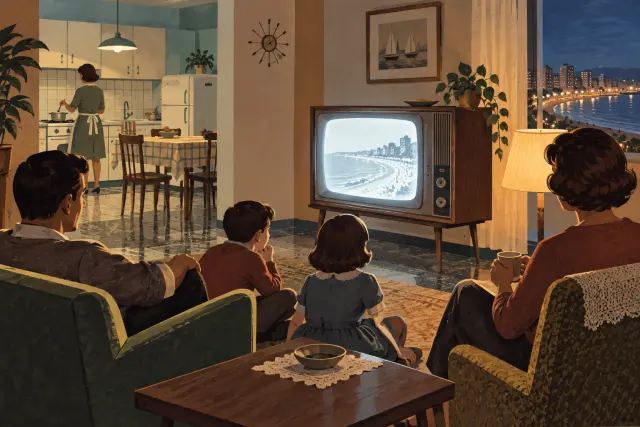
When a television entered a household, the living room or combined living-dining room was a common place for it. These were shared spaces used by family members and visitors alike, and they kept the set in view. At a time when it could still be regarded as a luxury item, its location also conveyed something about the home and its occupants.
But the living room was not the only destination. Pérez found many accounts of first sets placed in the kitchen, a choice that did not map neatly onto a particular social class. There, television could accompany domestic tasks, allowing people to watch and cook at the same time. The kitchen itself was changing: throughout the twentieth century, decorating advice and technical innovations helped present it as practical, comfortable and appealing, and more fully integrated into family life.
The set’s location shows how objects enter existing routines rather than determining how people live on their own. A television in the kitchen could make intermittent viewing possible during chores; in the living room, it could bring relatives and visitors together around a screen. Where no household set was available, television moved to someone else’s home and became a neighbourhood experience.
Leisure, domestic work and gender
Local newspapers from the 1960s include judgements that cast television viewing as a waste of time, particularly when it was associated with tasks assigned to women. Pérez’s interviews reveal the distance between those prescriptions and everyday life. Some women recalled having no time to watch because they worked and also carried family responsibilities. Television entered homes where domestic work still organised time and shaped who could sit down to watch a programme.
This tension helps explain why a television in the kitchen cannot be understood simply as a decorating preference. Watching while doing other tasks made it possible to fit television into a day that did not stop. The appliance offered leisure, but its use took place within an unequal division of work and gender expectations that new technology did not undo.
Domestic life has a history
Pérez asks us to see the domestic interior as a space shaped by changing practices and meanings. The television did not begin with a natural place or a single way of being used: it could bring neighbours together, serve as a prestigious purchase on display, sit in a kitchen or be eagerly awaited by children before local broadcasts were available.
Interviews recover experiences and uses, but they are memories told decades later. Contemporary newspapers provide another record, with their own ideals and judgements about family, leisure and work. Read together, these sources show that television’s incorporation into the home was uneven and that the image of the set as an obvious part of domestic life took shape over time.
Mar del Plata’s history is not simply a later version of Buenos Aires’s. The overlap between public and private viewing, the importance of children’s visits and the presence of sets in kitchens belong to a local trajectory. Following these uses makes clear that an appliance does not arrive with a way of life already determined: its place is made through the relationships, routines and decisions of the people who bring it into their homes.
- Decade
- 1960s
- Region
- Latin America
- Level
- Enthusiast
- Entities
- Televisión, Buenos Aires, Argentina, Inés Pérez
Sources and references
- Comer y beber en compañía. Una historia de bares y cafeterías en Madrid, España (1875-1970)openalex.org · 2026-11-08
- La proyección artística de Pascual Blanco en Italia: grandes proyectos e hitos expositivosopenalex.org · 2026-11-08
- La domesticación de la “tele”: usos del televisor en la vida ...journals.openedition.org · 2026-11-08
- La Terceraes.wikipedia.org · 2026-11-08
- Historia de la modaes.wikipedia.org · 2026-11-08