An accessory that occupied space
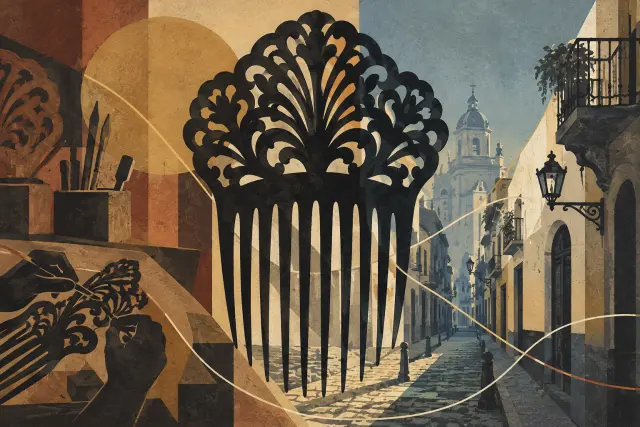
From the late 1820s to the mid- or late 1830s, the peinetón became a conspicuous feature of women’s dress in Buenos Aires and Montevideo. It was a one-piece ornamental comb, usually made of tortoiseshell, whose decorated body could reach extraordinary dimensions. Its popularity makes it possible to study fashion not simply as a succession of silhouettes, but as a practice connected to urban life, consumption and disputes over visibility.
Portraits by Charles Henri Pellegrini and other artists show peinetones of different sizes and ornamentation. César Hipólito Bacle’s lithographs, published in Trages y costumbres de la provincia de Buenos Ayres, place them in urban scenes and distinguish morning dress from clothes for going out. That distinction matters: an image records a choice or convention being represented, not what the entire female population wore.
From peineta to peinetón
The accessory was related to the Spanish peineta, introduced to the Río de la Plata around 1815. From 1824, interest grew in increasingly large and elaborate combs. Local designs have been described as combining Spanish and French influences, including high hairstyles and tortoiseshell combs popular in Europe. Rather than crediting one person with its creation, some studies understand the peinetón as the result of demand, commercial competition and the local adaptation of foreign references.
Manuel Mateo Masculino, a maker who arrived from Spain in 1823, was an important figure in its production and promotion. He opened a shop in Buenos Aires in 1825, and other traders imitated his designs. His prominent role does not establish that he invented the accessory: the sources show his work as a maker and merchant, while other interpretations treat the peinetón as a product developed collectively by the market and its wearers.
Making one required specialized skills. Tortoiseshell sheets were softened, cut and joined, then shaped through processes including piercing, engraving and polishing. Cheaper materials, such as horn, were also used. Research on the subject notes that workshop labour included people in different social positions, among them enslaved or formerly enslaved workers, women and children. The accessory’s material history therefore points to a complex production chain that the finished object alone does not reveal.
Distinction, politics and public presence
The cost of tortoiseshell and the work involved made the peinetón a luxury item. Sources and academic interpretations do not fully agree, however, about who could afford one or how often it was worn. Portraits of elite women document visible use; other representations and accounts suggest wider consumer aspirations. The accessory’s appearance in varied images does not prove that it was within everyone’s reach.
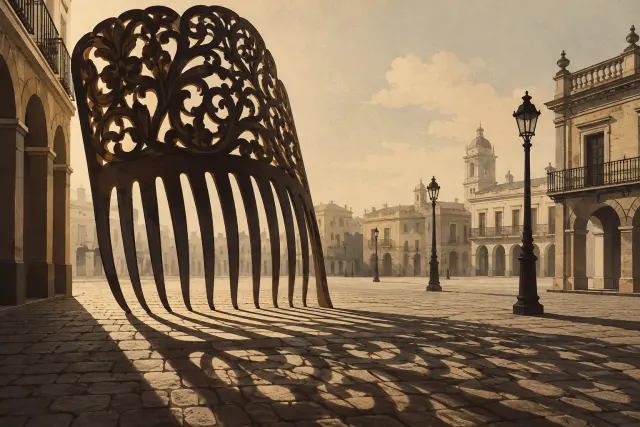
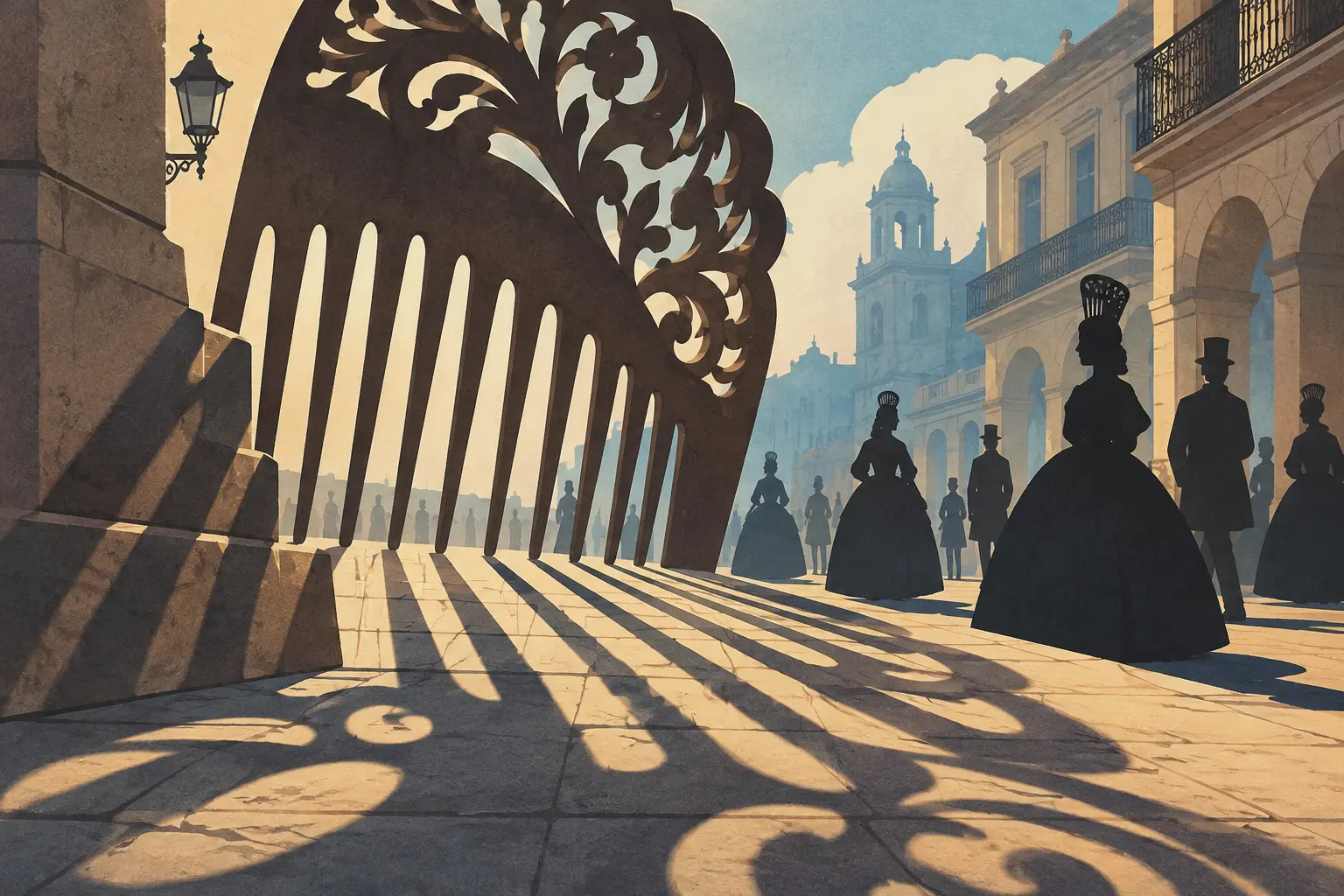
Its size also changed the experience of the street. Chronicles and caricatures made the peinetón’s dimensions a subject of discussion and satire. A police rule governing pedestrian traffic is also recorded in connection with narrow pavements. Some historians interpret this physical occupation of public space as a way for women to assert their presence in public life. Others stress the contradiction: the accessory made women visible but could restrict movement and fuel criticism of their role beyond the domestic sphere.
The peinetón also acquired political meanings. During Juan Manuel de Rosas’s government, some designs incorporated Federalist portraits and slogans, and the accessory came to be associated with Federalist women. That does not make every piece a political emblem: its motifs and contexts of use need to be examined individually.
Images, newspapers and surviving objects
Period sources offer different kinds of evidence. An advertisement speaks to selling and promotion; a caricature reflects a dispute and exaggerates for effect; a portrait records a particular representation and its conventions. Travellers’ accounts describe what caught their authors’ attention, not the results of a survey. Read together, these materials make it possible to reconstruct uses and debates without turning the fashion of a visible group into the dress of an entire society.
Peinetones are now held in several Argentine public collections, including those of the Museo Nacional de Bellas Artes, the Museo Histórico Nacional and the Museo Histórico Cornelio de Saavedra. Alongside lithographs and newspapers, the objects make it possible to study materials, techniques and ornament as well as the meanings attributed to them. The peinetón’s historical significance does not depend on every woman having worn one: it lies in how a specific object made the connections between production, class, gender, politics and urban space visible.
- Decade
- Before 1950
- Region
- Latin America
- Level
- Enthusiast
- Entities
- Peinetón, Buenos Aires, Peinetón rioplatense, Trages y costumbres de la provincia de Buenos Ayres
Sources and references
- Conservación y Restauración del Patrimonio Cultural en soporte Papel - Museo Jesuítico Nacional de Jesús Maríadoi.org · 2026-11-07
- La moda como herramienta performativa en el museo contemporáneoopenalex.org · 2026-11-07
- Los tejidos en las colecciones de los museos españoles, una larga historia de valoración y conservaciónopenalex.org · 2026-11-07
- Museos de moda del mundo: por qué son archivos vivosinstitutodemoda.com · 2026-11-07
- Explorando el papel de los archivos de moda: Preservar y ...translate.google.com · 2026-11-07
- Peinetónes.wikipedia.org · 2026-11-07