Peinetones were oversized ornamental combs that attracted attention in Buenos Aires and Montevideo during the 1820s and 1830s. More than striking accessories, they offer a way to examine how fashion connected consumption, craft labour, social hierarchies and women’s presence in the streets. Portraits, lithographs, newspapers and travellers’ accounts provide different perspectives on that history, though no single image represents the clothing of an entire population.
From peineta to peinetón
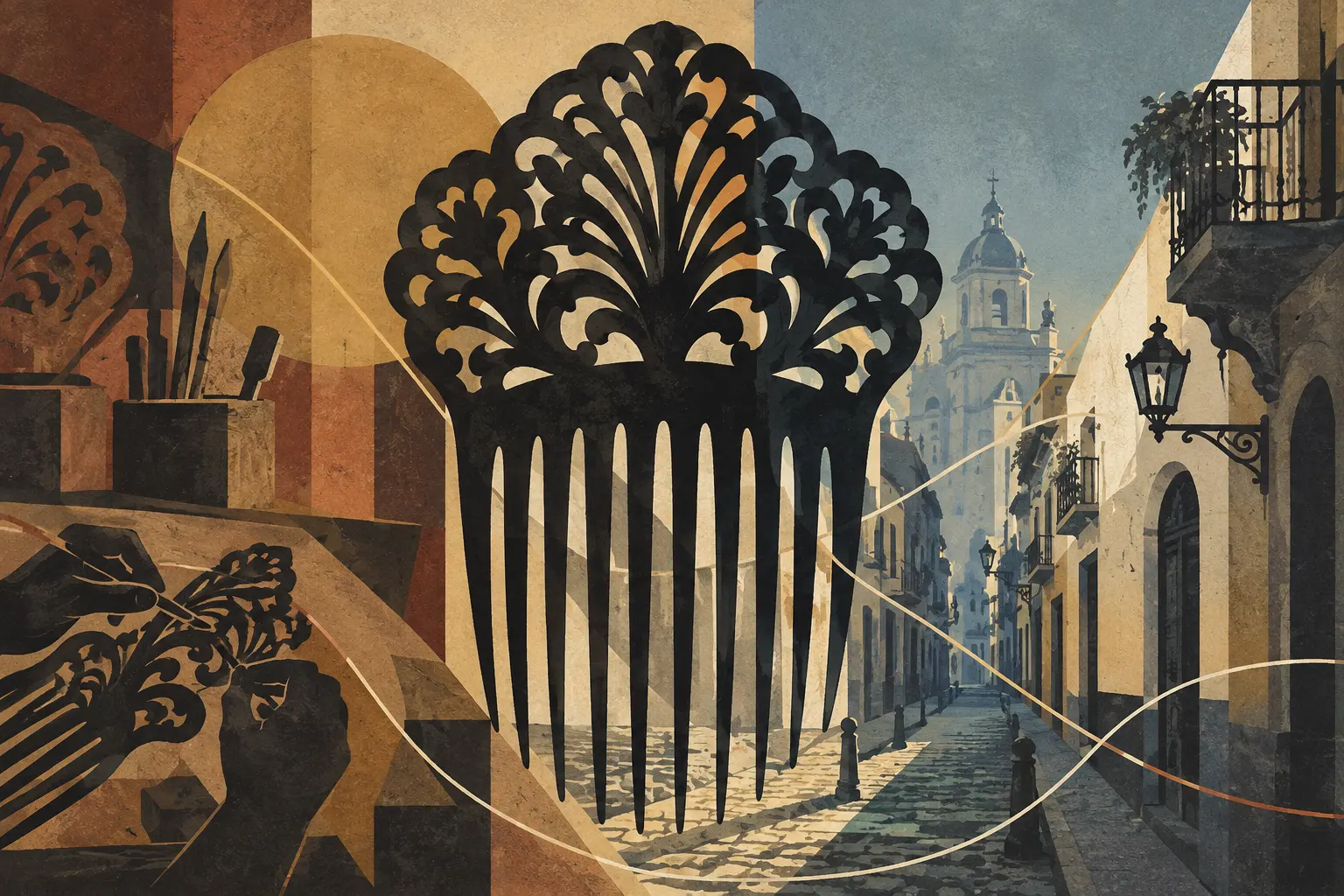
The peinetón developed from the Spanish peineta, introduced to the Río de la Plata around 1815, but took on much larger forms and was made locally. Tortoiseshell was the principal material; horn was also used when tortoiseshell was scarce or too expensive. Plates were cut, heated, joined, pierced and polished. Decoration could include plant, animal and geometric motifs, as well as political inscriptions on some examples.
The evidence does not allow the invention to be attributed confidently to one person. Manuel Mateo Masculino was among the most prominent makers and helped popularise designs, but the fashion may also have grown out of competition among workshops and demand from wearers. The peinetón is better understood as the product of a network of production, trade and consumption than as the exclusive creation of a single artisan.
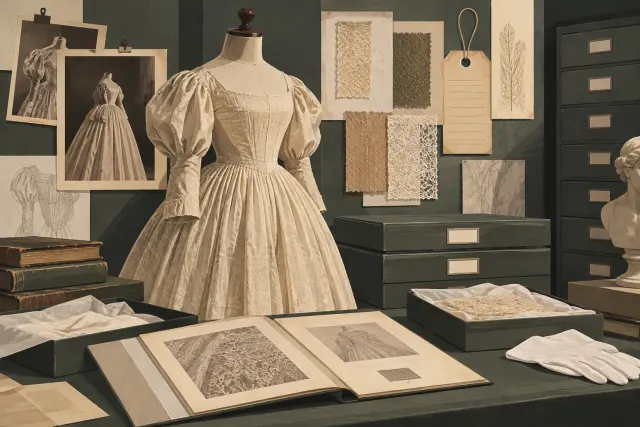
Its development coincided with women’s fashions influenced by Europe, including fitted waists, voluminous sleeves and elaborate hairstyles. The accessory, however, acquired its own scale and presence in the Río de la Plata. This combination of external references and local making makes it possible to understand fashion as adaptation rather than simple imitation.
Portraits, prints and observers
Portraits by Charles Henri Pellegrini and other artists show peinetones with dresses featuring defined waists and full sleeves. They allow comparisons of size, shape and hairstyles, but often depict women from affluent circles. César Hipólito Bacle’s costumbrista lithographs offer a different record: they depict urban scenes and types, and in some prints the comb’s scale becomes a source of humour or criticism.
The distinction between these genres matters. A portrait may emphasise the social standing of its sitter; a print may exaggerate a feature for effect. Travel accounts, such as those by Alcide d’Orbigny and Arsène Isabelle, record foreign observers’ impressions of porteño fashion. They are situated testimonies, not neutral descriptions of society as a whole. Read alongside advertisements and commercial records, they help reconstruct use and circulation with greater care.
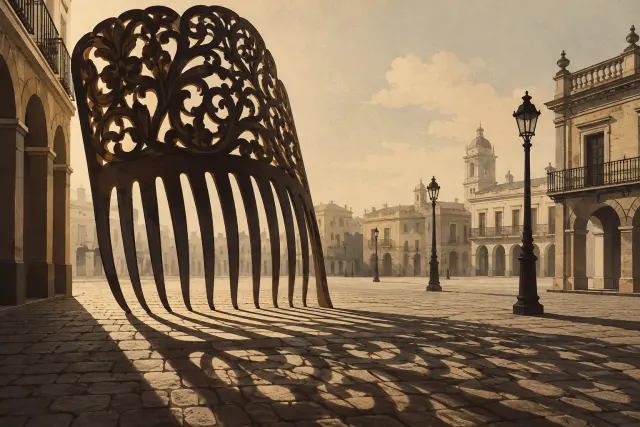
Some images make visible the contrast between the peinetón and the narrow streets. Newspapers also published praise and mockery of its size. These images and comments show that the accessory attracted public attention; they do not prove that every woman wore one or that depictions faithfully recorded every everyday encounter.
Luxury and the labour behind the ornament
Imported tortoiseshell and skilled workmanship made the peinetón an expensive object. Some sources record aspirations to wear one among women from different social groups, but wanting one was not the same as being able to afford it. Surviving imagery gives particular visibility to affluent women; testimony about workers, shopkeepers and Afro-Argentine women broadens the picture without turning unequal access into a universal custom.
Manufacture also reveals the period’s labour and racial relations. Studies of workshops describe a division of labour in which free men could serve as owners or foremen, while enslaved or formerly enslaved people, including women and children, performed craft work. The ornament in portraits of elite women thus depended on a process of production that those images rarely showed.
The significance of this production went beyond the value of the finished objects. The peinetón connected the supply of materials, workshop techniques, retail and consumer demand. Following those relationships shifts attention from the accessory as an aesthetic curiosity to the people and work that made it possible.
Scale, gender and public space
For several scholars, the peinetón offers a way to study the relationship between gender and the city. Its size made women’s bodies more conspicuous in the street; criticism of that presence could express unease about forms of participation that extended beyond domestic boundaries. This is a historical interpretation, not a demonstrable intention shared by every wearer.
The same volume that could confer distinction could also provoke discomfort, satire and scrutiny. Caricatures depicting the comb as an obstacle on the pavements reveal a dispute about the use of urban space, though they should be read as satire rather than literal records. In this case, fashion was not merely an aesthetic choice: its presence became a public matter of debate.
Some peinetones incorporated effigies or Federalist slogans associated with Juan Manuel de Rosas’s government. Not every model bore this decoration, and it does not establish the political position of every woman who wore one. It does show that certain objects could carry partisan signals amid political conflict.
A history assembled from different sources
Peinetones left traces in portraits, lithographs, newspapers, travel accounts, advertisements and inventories; surviving examples are now held in Argentine museums. Each kind of source answers different questions: an object reveals materials and techniques; an image shows how it was represented on a body; an advertisement records trade and promotion; a travel account conveys an observer’s perspective. None, on its own, demonstrates how the entire population dressed.
By comparing object, image and text, the peinetón becomes a productive case for studying nineteenth-century fashion in the Río de la Plata. Its history brings together the adaptation of European references, consumption and social hierarchy, the organisation of craft labour, and debates over who occupied the streets. Its meaning depended on who made, wore, observed or criticised it: the same accessory could signify luxury, labour, distinction and controversy.
- Decade
- Before 1950
- Region
- Latin America
- Level
- Enthusiast
- Entities
- Peinetón, Buenos Aires, Peinetón rioplatense
Sources and references
- La moda como herramienta performativa en el museo contemporáneoopenalex.org · 2026-11-05
- Los tejidos en las colecciones de los museos españoles, una larga historia de valoración y conservaciónopenalex.org · 2026-11-05
- Museos de moda del mundo: por qué son archivos vivosinstitutodemoda.com · 2026-11-05
- Explorando el papel de los archivos de moda: Preservar y ...translate.google.com · 2026-11-05
- Peinetónes.wikipedia.org · 2026-11-05