The Automobile as Archive: What Motor Museums Preserve
A reading of automotive preservation as a cultural practice: vehicles, engines, chassis and manuals, together with their social contexts, explain far more than technical evolution.
Open storyPreservation does not always mean making an object look new. This topic explores how diagnosis, documentation and intervention criteria can help keep the history of everyday objects legible.
Readings to help you find your bearings.
Identifying materials and damage comes before intervention. Documenting an object's condition helps distinguish maintenance from repair and alteration, and makes the decisions behind each approach easier to understand.
This topic looks at conservation criteria, not hazardous instructions without context. Machines and objects can also be explored through their specific categories, where their particular characteristics are considered.
Three perspectives on the archive.
Explore sources and diagnostic criteria before deciding how to intervene.
The Automobile as Archive: What Motor Museums Preserve Before Switching It On: Documenting an Arcade Machine as HeritageConsider the limits and implications of different kinds of intervention.
The archive as memory: conservation and documentation at Turin's National Automobile Museum Functional design as a conservation strategy in museumsRecord the decisions made during a repair, restoration or maintenance task.
The material archive: why restoration begins with observation What Restoration Reports Reveal About the Museo del PradoCels, drawings, and other intermediate materials reveal production decisions hidden by the finished work. The National Film Archive of Japan’s experience shows how preserving them depends on cataloguing and access as well as collaboration with a global intellectual-property industry.
Read articleThe Prado Museum was founded as the Royal Museum of Paintings; the history of its restoration workshops is studied from that year through archival documentation.
Read articleThe chronology of images held by the Photo Library of the Spanish Cultural Heritage Institute begins in 1844.
Read articleThe National Archaeological Museum’s photographic archive has its own collections dating from the museum’s founding in 1867, alongside materials acquired through donations and purchases.
Read articleThe Osorno Municipal Historical Museum is founded in Chile, an institution that would later evolve to include records of everyday life and local heritage memory.
Read articleFilmoteca Española, a key institution for preserving Spain’s film heritage, was founded on 13 February 1953.
Read articleCels, drawings, and other intermediate materials reveal production decisions hidden by the finished work. The National Film Archive of Japan’s experience shows how preserving them depends on cataloguing and access as well as collaboration with a global intellectual-property industry.
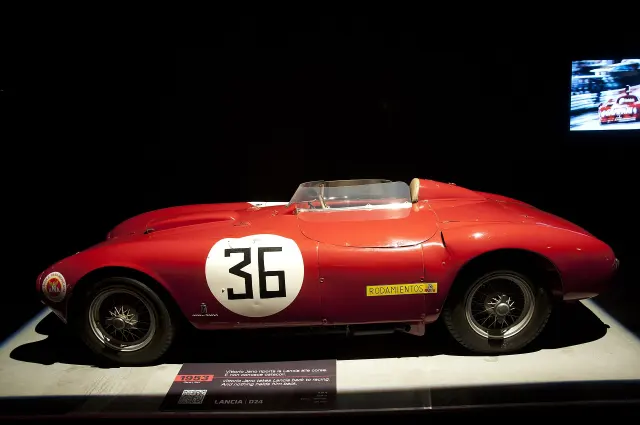
Turin's MAUTO integrates vehicles, archives and restoration workshops to preserve historical authenticity. Its approach demonstrates that conserving a car depends as much on its material condition as on the documentation that contextualizes its origin and use.
The care of decorative arts does not begin or end in the display case. Documentation, access and the ongoing review of objects shape what a museum can show and communicate.
Records of work at the Prado, the Cerralbo Museum and the National Archaeological Museum show how documentation and institutional coordination form part of conservation history, although the available sources do not describe the techniques used in detail.
Analyzes how ergonomics, lighting, and low-impact materials are integrated into museography to balance the physical protection of objects with their interpretive accessibility.
Museum garments preserve more than design. Their materials, traces of use and social context make textile conservation an interpretive task as well as a matter of physical care.
We analyze how prior documentation and historical context determine the ethics of intervention in heritage, preventing repair from erasing the object's memory.
Comics have moved beyond their status as ephemeral products to become recognized cultural heritage. This analysis examines the technical and museum challenges institutions face in preserving originals and archives, highlighting the need for specific criteria for a medium that combines art, history, and a delicate physical support.
Digitalization has not buried physical film but created a productive tension between material preservation and mass access, redefining the role of film archives.
Film preservation brings together two distinct tasks: conserving the materials and keeping films accessible within their social context. Digitization can widen access, but it does not replace physical conservation or, by itself, solve questions of continuity and cultural meaning.
Analyzes how institutions like the NMAH and the Osorno Museum transform everyday objects into heritage, expanding the concept of the archive to include human experience and domestic cultural resistance.
It analyzes how Nintendo's policies and specialized museums manage the physical and digital integrity of the NES, transforming a commercial device into verifiable cultural heritage.
Editorial review ·