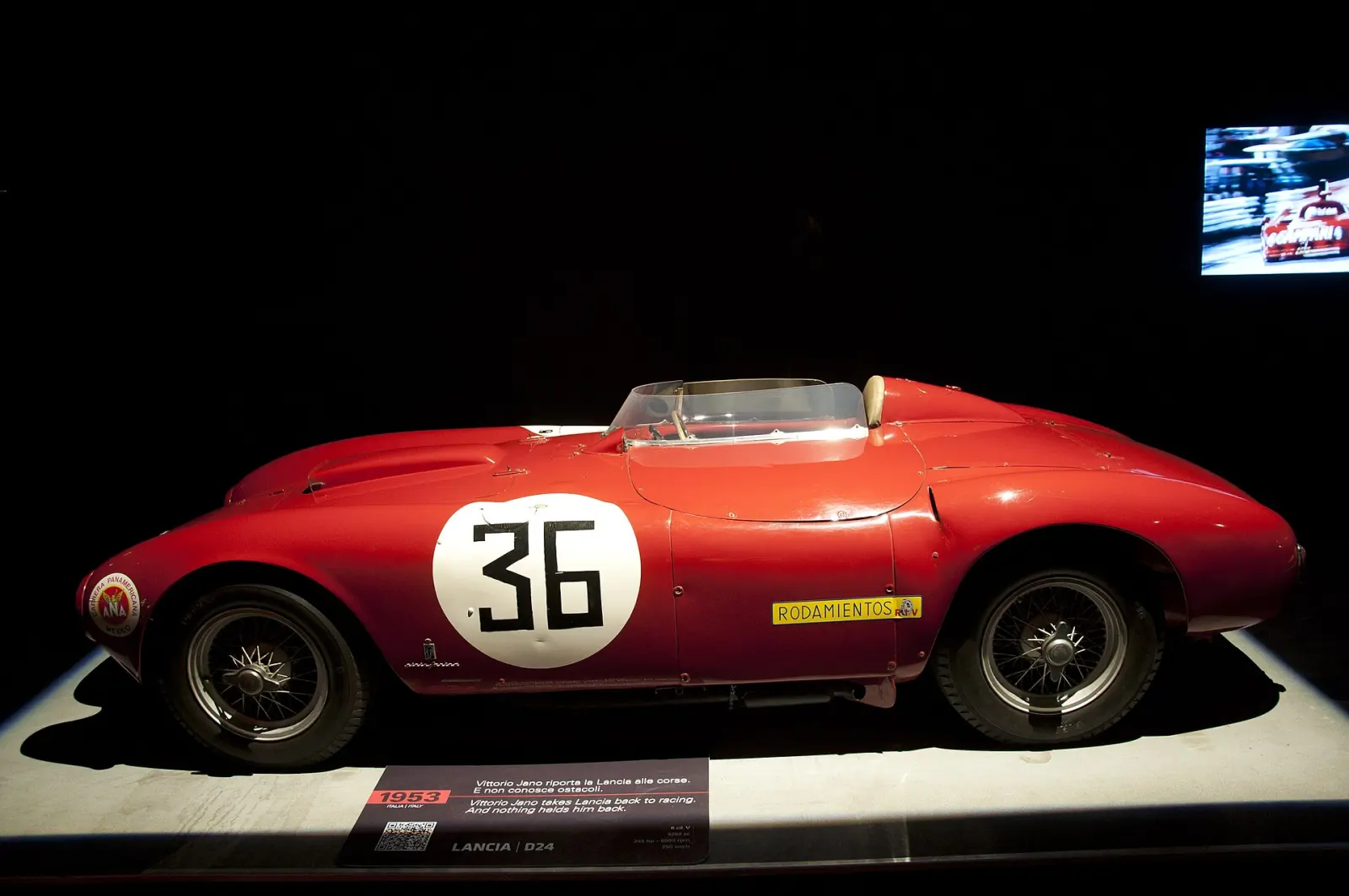
The preservation of a historic car goes beyond mere mechanics. At Turin’s Museo Nazionale dell’Automobile (MAUTO), conservation is understood as an integral process that links the physical object with its documentary context. This institution, one of the oldest automobile museums in the world, has evolved from a collection of pieces into a research center that combines vehicle exhibition with archive management and technical restoration.
Origins and institutional evolution
The museum’s roots date back to 1933, when Carlo Biscaretti di Ruffia, son of Roberto Biscaretti di Ruffia, organized the first exhibition of historic automobiles at the Milan Motor Show. This initiative led to the official creation of the “Automobile Museum” by the City of Turin, which granted the institution the title of National. The first headquarters, located in the Municipal Stadium, opened in 1939 with a collection of 181 pieces, although only 73 were exhibited due to a lack of space.
The search for an adequate headquarters led to the construction of the current building on corso Unità d’Italia, designed by architect Amedeo Albertino. Inaugurated in 1960, the new space allowed the collection to be expanded, which then included 106 vehicles from 50 brands, as well as chassis, engines, motorcycles, and bicycles. In parallel, thanks to the relationships established by Biscaretti with automotive companies and figures in motorsport, a unique documentary collection was formed, composed of books, magazines, photographs, technical designs, and illustrations.
The documentary collection as a pillar
MAUTO’s Documentation Center, formed by a Library, Newspaper Archive, and Archive, holds one of Europe’s most important collections on the history of motorized transport in the 20th century. This documentary fund is not a complement but a fundamental pillar for the interpretation of the exhibited vehicles. Technical documentation helps understand the engineering solutions and specific characteristics of each model, while period photographs and publications offer a view of how the automobile was represented and used in its social context.
The coexistence of objects and sources is essential because a preserved car does not tell its entire history on its own. The archive provides elements to distinguish documented facts from inherited reputations, allowing for a more rigorous reading of the heritage. This contextualization function is key to maintaining the historical authenticity of the vehicles, which is not limited to their mechanical condition but encompasses their origin, evolution, and cultural significance.
Conservation and restoration: beyond aesthetics
MAUTO’s Conservation and Restoration Center applies traditional techniques and advanced methods, similar to those used in the restoration of works of art, to preserve the authenticity of the vehicles. The goal is not to return each piece to an idealized factory condition, but to make informed decisions that respect the material history of the object. When an intervention modifies or replaces components, documentation is essential to contextualize the work and keep the vehicle’s history legible.
Authenticity depends on the relationship between the preserved car and the available evidence about its history. The archive and the workshop fulfill complementary roles: one preserves and organizes testimony, while the other prevents deterioration and acts directly on the objects. This synergy ensures that conservation does not erase time but preserves it in an intelligible way for future generations.
The automobile in social context
MAUTO’s exhibition route organizes the history of the automobile in relation to the political, economic, artistic, and social events of the 20th century. The exhibition does not treat vehicles solely as machines, but as objects linked to scientific research, innovation, design, travel, and competition. It also devotes space to the people who designed, built, drove, or simply appreciated the vehicles, humanizing the history of the automobile.
The museum has renewed its route on several occasions, most recently in 2025, when galleries were reorganized, exhibition texts were rewritten, and modern and contemporary artworks were integrated into the permanent collection. These decisions reflect the evolution of the museum narrative, which seeks to broaden the connections between cars, their history, and the present. The current collection includes more than 200 original vehicles from 80 brands, from late 19th-century steam cars to prototypes and designs from the 1950s.
A reference model
The combination of exhibition, documentation, and specialized care at MAUTO offers a reference model for the conservation of automotive heritage. The vehicle provides material evidence, archives help to read it, and conservation keeps that reading open for the future. This integral approach, which values both material authenticity and historical context, demonstrates that the preservation of a historic car is an act of cultural memory, not just a technical one.
- Decade
- Contemporary
- Region
- Europe
- Level
- Enthusiast
- Entities
- Museum
Sources and references
- Desarrollo y conservación del patrimonio cultural-natural en el contexto neoliberal y nuevas tecnologíasdoi.org · 2026-10-25
- Conservación y Restauración del Patrimonio Cultural en soporte Papel - Museo Jesuítico Nacional de Jesús Maríadoi.org · 2026-10-25
- Museos de los religiosos: El Museo San Agustín de Manilaopenalex.org · 2026-10-25
- El MAUTOwww.museoauto.com · 2026-10-25
- El MHAS, primer museo de España en obtener la ...www.aytosalamanca.es · 2026-10-25