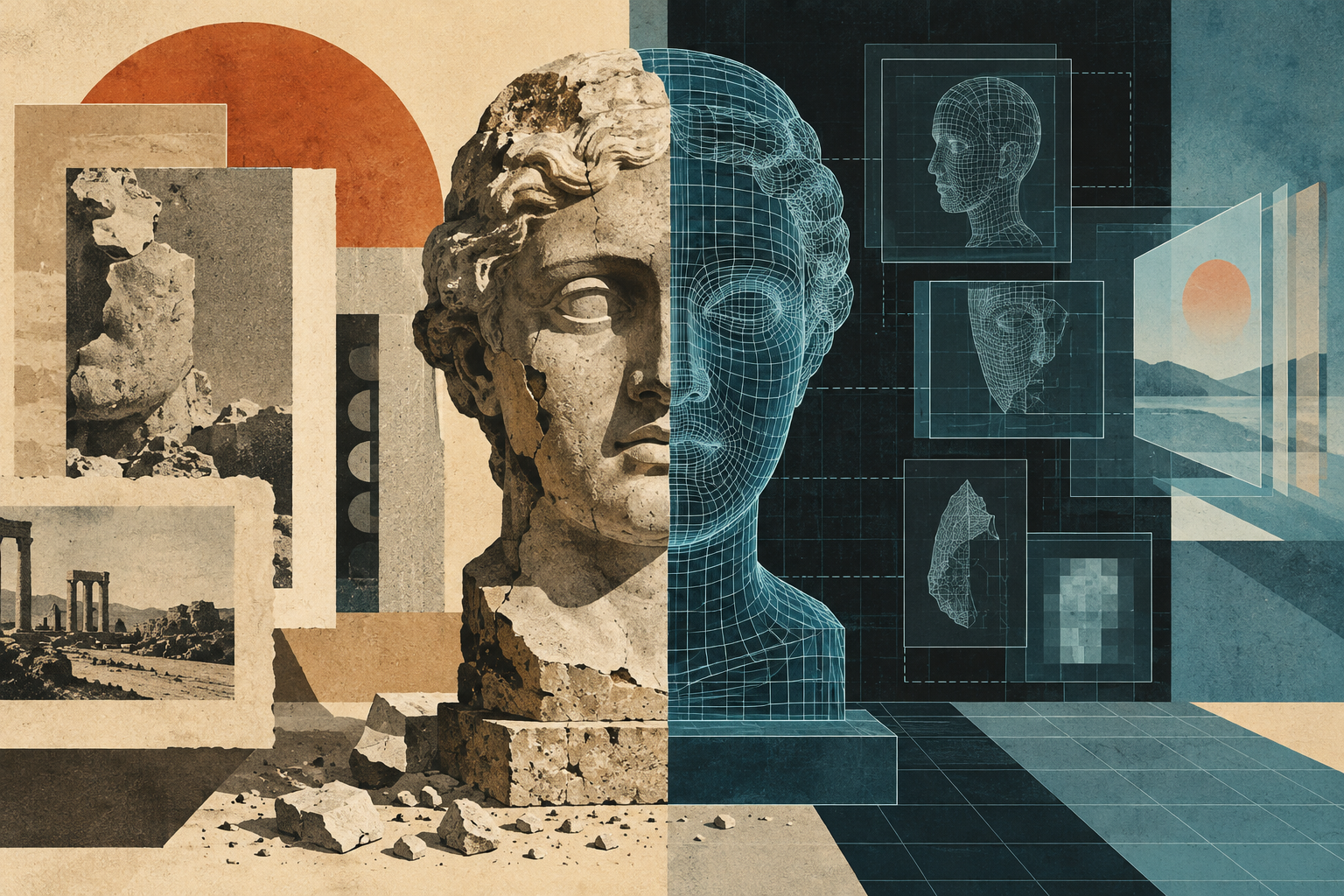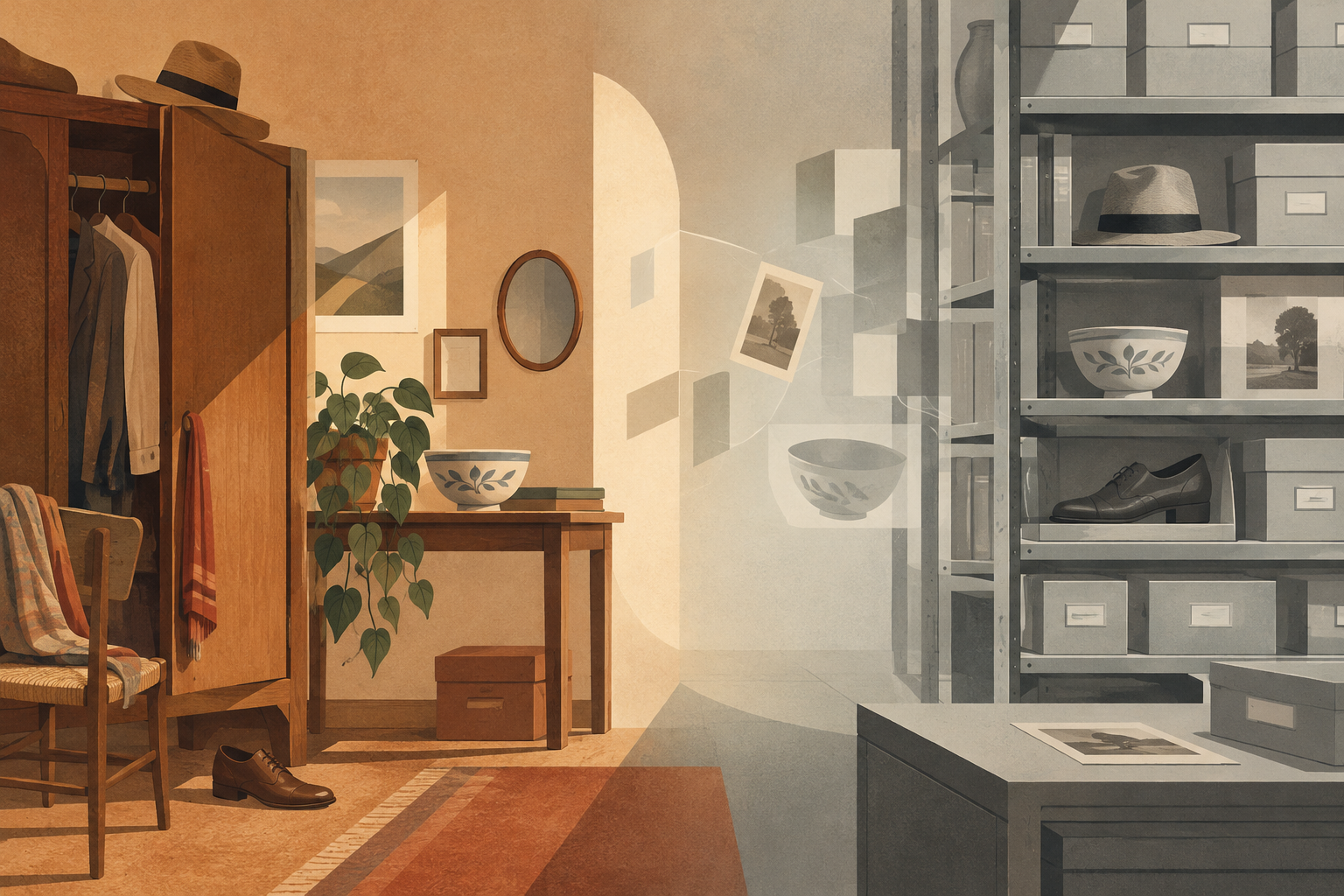
Domestic life has ceased to be an opaque territory to become a rigorous field of study. What was once considered a private and ephemeral space is now an object of institutional conservation and analysis. This transition is not merely aesthetic; it represents a structural change in how we understand history. It no longer limits itself to major political or economic milestones but embraces everyday experience as a valid source of knowledge. The domestic object, from a ceramic piece to a graduation photograph, has become a material witness to the identities and communities built in the home.
The expansion of the archive concept
Traditionally, the archive was associated with public records, official documents, and government acts. However, contemporary evidence shows a significant expansion of this concept. The archive now refers to the entire corpus of human experience, including the intimate and the domestic. This redefinition allows cultural institutions to collect not only objects but also the narratives and forms of life these objects embody. It is an acknowledgment that history is also written in the kitchen, the bedroom, and family celebrations.
The National Museum of American History case
In the United States, the National Museum of American History (NMAH) exemplifies this trend. Its collections span from the 17th to the 21st century, representing the everyday life of a diverse population. The museum does not limit itself to items of high economic value but includes ceramics, glass, textiles, costume, and domestic life objects. This diversity reflects a clear curatorial intention: to document social reality through its most common materials. The inclusion of ethnic, educational, and religious collections adds layers of complexity, showing how private life intersects with broader social structures.
The perspective from Chile: Osorno
In the Southern Hemisphere, the Osorno Municipal Historical Museum in Chile offers a complementary perspective. Founded in 1946, this museum has evolved to include not only prehistoric vestiges and colonial objects but also records of the everyday life of local communities. Its inclusive and participatory approach seeks to connect domestic objects with the city's heritage memory. The institution has managed to project itself beyond the simple safeguarding of ancient objects, developing a pedagogical line that invites reflection on local identity. This demonstrates that the musealization of the everyday is a global phenomenon, adapted to specific local contexts.
Cultural resistance and domestic creativity
Domestic objects are not just functional tools; they are vehicles of cultural resistance and creativity. In marginalized communities or contexts of oppression, domestic life can become a space for preserving knowledge and traditions. The conservation of these ethnographic goods requires an approach that respects their materiality and social context. It is not about extracting the object from its environment to display it in a vitrine, but about understanding how that object functioned within a network of human relationships. Musealization must avoid stripping the object of its original meaning, preserving the agency of the communities that created and used it.
Challenges of ethnographic conservation
Conserving ethnographic material presents unique challenges. Unlike classical artworks, domestic objects often lack clear authorship, and their value lies in their use and context. Heritage intervention must be careful not to alter the object's materiality, which is an integral part of its history. Furthermore, documenting these objects requires extensive fieldwork, involving communities in the narration of their own stories. This collaborative process is essential to avoid distortion or undue appropriation of collective memory.
Collaboration between institutions and communities
The success of these initiatives depends on collaboration between museums, archives, and communities. Institutions provide infrastructure and technical expertise, while communities provide contextual knowledge and cultural legitimacy. This alliance allows private life to be integrated into collective memory in a respectful and precise manner. Without this collaboration, objects risk becoming empty relics, devoid of their social and emotional load. Community participation ensures that the narrative is faithful to the lived experience, not an external interpretation.
Towards a more complete history
The inclusion of domestic life in cultural heritage offers a more complete vision of history. It allows us to understand how power structures, social norms, and individual identities manifest in the everyday. This perspective does not replace political or economic history but complements it, adding depth and nuance. Ultimately, the domestic object reminds us that history is not only made by leaders and events, but also by ordinary people in their most intimate spaces. This is the true richness of the expanded archive.
- Decade
- Contemporary
- Region
- Global
- Level
- Introduction
- Entities
- Museum
Sources and references
- Georas Museo Internet ESPANOLlaw.yale.edu · 2026-10-18
- Museizar la vida cotidiana, desde el sombrero a los zapatoswww.academia.edu · 2026-10-18
- Museo Nacional de Historia Americana (NMAH)translate.google.com · 2026-10-18
- museo comunitario que asciendewww.casapozonmuseo.org · 2026-10-18
- La Conservación de material etnográficounesdoc.unesco.org · 2026-10-18
- Museo Histórico Municipal de Osornoes.wikipedia.org · 2026-10-18