The relationship between design and cultural heritage has evolved from a mere aesthetic consideration to a technical tool for preservation. In the contemporary museum context, design does not only organize space but acts as a defense mechanism for exhibited objects. This article examines how functional design decisions, from ergonomics to material selection, contribute to the longevity of pieces without sacrificing their communication to the public.
The shift towards democratic design
The concept of democratic design has gained relevance in museography, particularly in institutions seeking to bring heritage to broad audiences. A highlighted example is the IKEA Museum, where marketing communication centers on this principle. According to recent studies, such as Billore (2025), this approach allows commodification and conservation to coexist when clear conceptual frameworks are applied. Design here is not merely decorative but facilitates the cultural transfer of brand heritage, ensuring the message reaches the public without compromising the integrity of the museum experience.
Low-impact materials and physical protection
Material selection is a critical aspect of preventive conservation. In recent interventions in contemporary art exhibitions, low-impact environmental materials have been chosen to protect sensitive pieces. This strategy maintains the visual integrity of objects while minimizing the risk of deterioration caused by external factors. Research by Beatriz Moreno Palacios (2024) details how these material decisions are fundamental to object longevity, establishing a bridge between aesthetics and physical preservation.
Ergonomics and interpretive accessibility
Ergonomics in museums goes beyond visitor comfort; it is a tool to ensure interpretive accessibility. The arrangement of exhibit elements, the height of display cases, and signage directly influence how the public interacts with pieces. Adequate functional design allows visitors to understand the context of objects without forcing postures or straining visually, which reduces stress on the pieces and improves the educational experience.
Lighting as a conservation factor
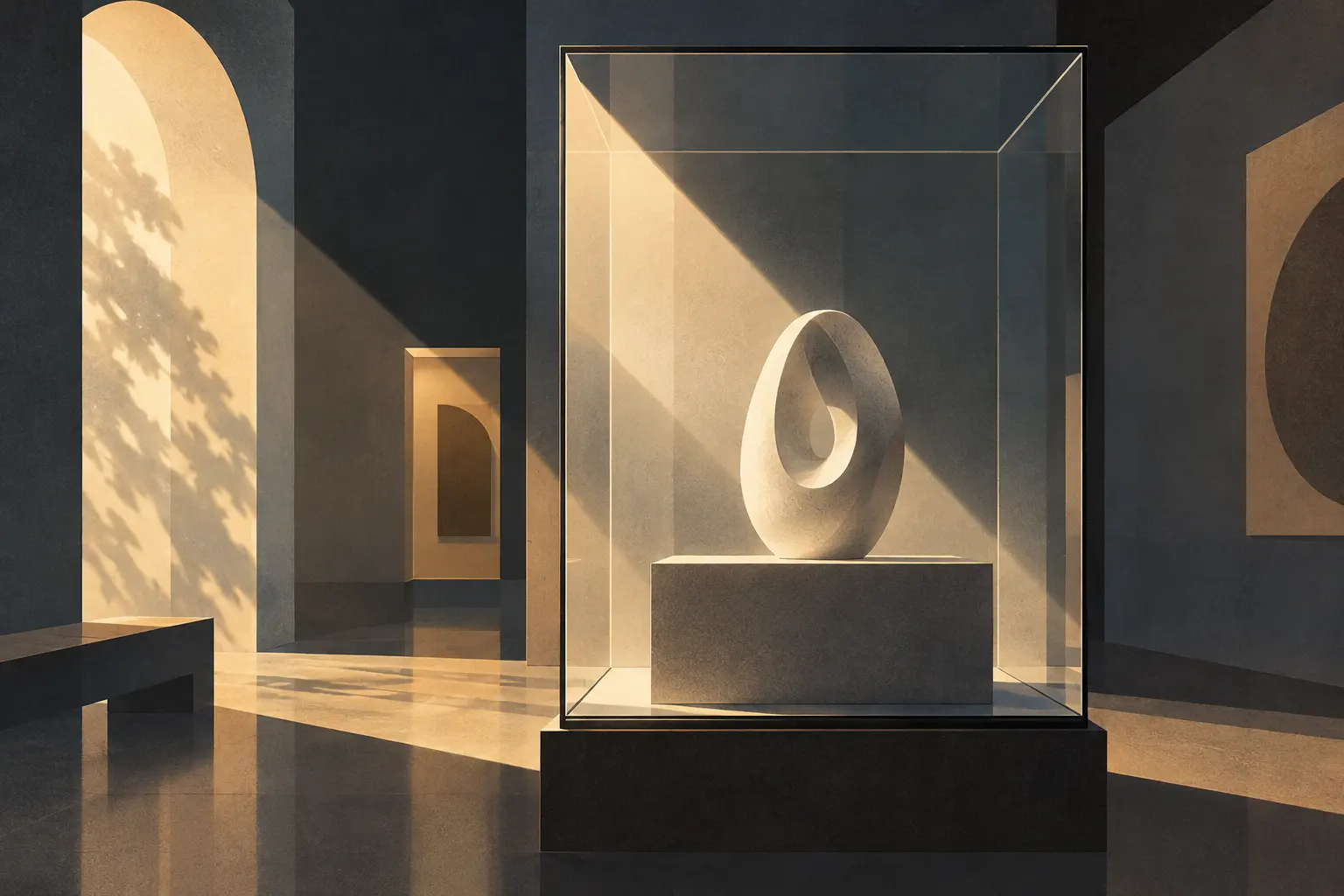
Lighting is one of the most critical factors in the conservation of sensitive objects. A well-planned lighting design not only highlights the aesthetic details of pieces but also controls light exposure, which can cause discoloration and degradation of organic materials. Current lighting strategies seek a balance between visibility and protection, using technologies that minimize light damage while maximizing visual clarity for the viewer.
Signage and museographic narrative
Signage is an essential component of museographic design that connects the visitor with the interpretive narrative. A clear and well-designed signage system facilitates the understanding of objects and their historical or cultural context. Additionally, signage can serve as an indirect conservation tool, guiding visitors to interact with pieces respectfully, avoiding direct contact or improper use of exhibition spaces.
Digital strategies and multi-format accessibility
Digital strategies have transformed how museums communicate their heritage. The availability of content in a variety of formats and platforms allows multi-format accessibility, reaching audiences who cannot physically visit the museum. These digital strategies not only complement the in-person experience but also offer new ways to interpret and contextualize objects, expanding the reach of museographic design beyond the physical walls of the institution.
Limitations and current challenges
Despite advancements, there are limitations in applying design as a conservation tool. The need to balance innovation with long-term preservation poses technical and economic challenges. Moreover, the rapid evolution of digital technologies requires constant updating of design strategies to maintain their effectiveness. The lack of standardization in museographic design practices also hinders the comparison and transfer of best practices between institutions.
Conclusion
Functional design has consolidated itself as a strategic tool in the conservation of cultural heritage. By integrating ergonomics, lighting, low-impact materials, and signage, museums can protect their collections while improving the visitor experience. Collaboration between designers, conservators, and curators is essential to develop solutions that balance physical preservation with effective communication, ensuring that cultural heritage remains accessible and relevant for future generations.
- Decade
- 1980s
- Region
- Global
- Level
- Introduction
- Entities
- Museum, Beatriz Moreno Palacios
Sources and references
- Publicidad y diseño: la eficacia comunicativa y función social de las marcas: evolución y adecuación al contexto socialdoi.org · 2026-10-22
- Diseño y patrimonio cultural: cómo asegurar la conservación ...turia.uv.es · 2026-10-22
- Museos de marca, mercantilización del patrimonio cultural ...translate.google.com · 2026-10-22
- Ejemplos y Datos de Estrategias Digitales para Museosevemuseografia.com · 2026-10-22
- (PDF) ¿Se merece la publicidad un museo? Estudio y ...www.researchgate.net · 2026-10-22