Conservation leaves records too
Restoration is often presented as an intervention on an object. Its institutional history includes a less visible task: recording what was done, where, when and under whose responsibility. Available sources document some episodes in Spanish museums from the 1970s through the late 2000s. They do not, however, provide a complete account of materials, methods or technical decisions. That limit matters: documenting what we know also means not filling gaps with guesses.
The Prado and collaboration in the 1970s
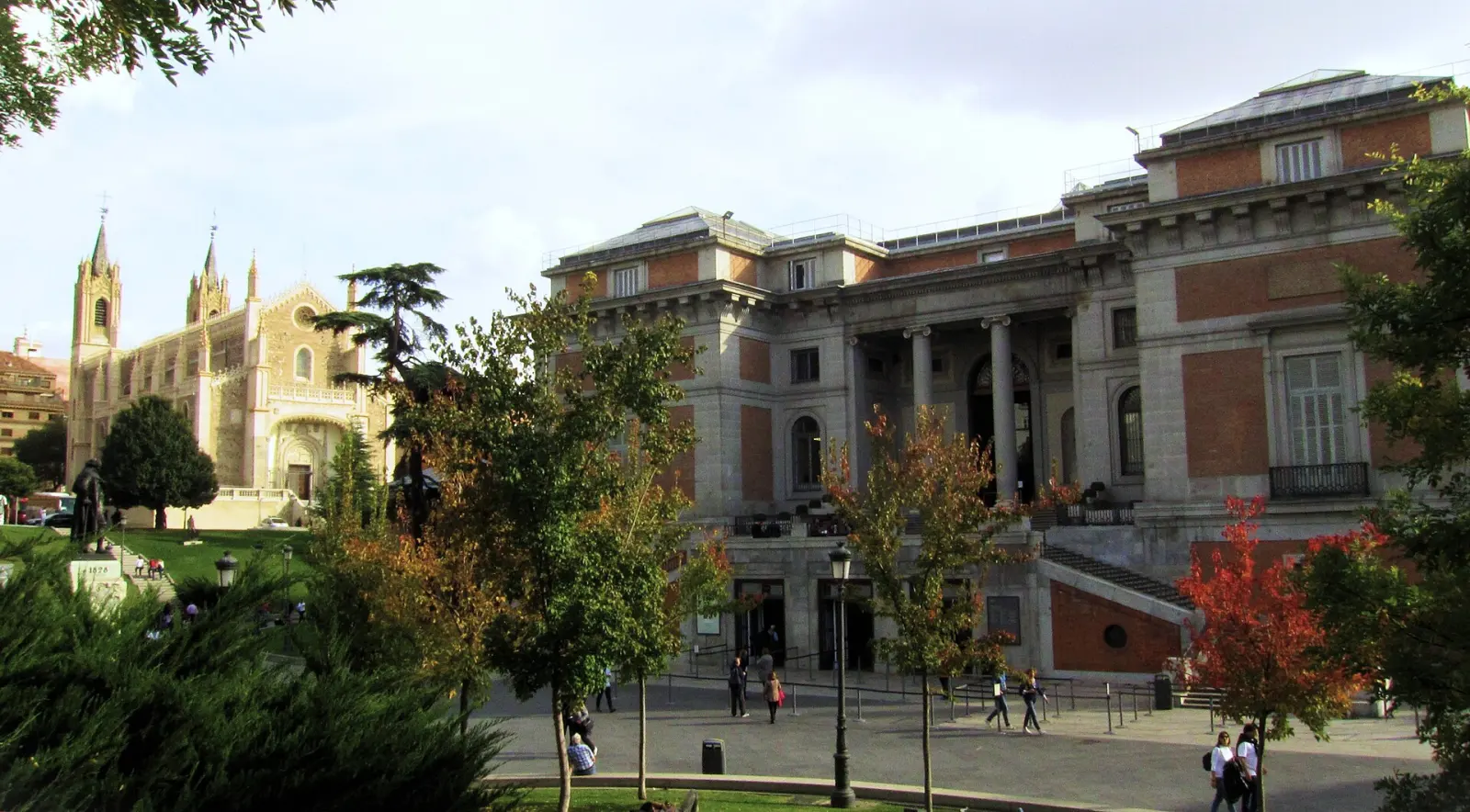
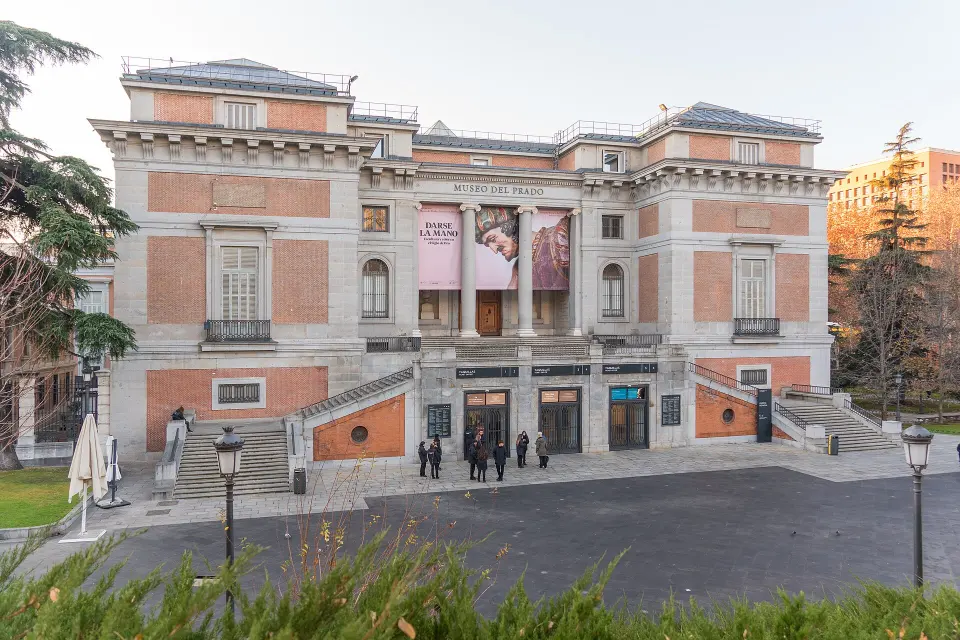
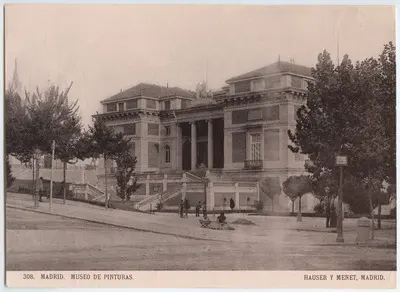
The Prado Museum’s encyclopedia states that technicians from the Restoration Institute worked with the museum, as technicians from the Ministry of Public Instruction had done earlier. In connection with the opening of the Casón del Buen Retiro, Amalia de Escauriaza worked there in 1970 and 1971, intervening on a significant number of nineteenth-century paintings. The record identifies an institution, a professional, a period and a broad group of works. The available extract does not specify the number of paintings or the techniques used, so those details cannot be reconstructed precisely.
The record shows the institutional dimension of the work: it presents the activity not as an isolated act, but as collaboration between the Prado and specialist technicians. That is an interpretation of the record, not proof that every intervention in the period followed the same protocol.
Cerralbo: recovering spaces and preserving their history
The Cerralbo Museum’s account documents work in stages. It mentions work in the Library in 2002, including restoration of the wall covering and the shelves on the upper floor. It then lists work in the galleries in 2006; in the Grand Entrance Hall, and the start of work in the Study and Library, in 2007; and in the Armoury, Drawing Corridor and Bathroom in 2008, with the latter works completed by the end of 2009.
The same page describes the project as based on historical research and on recovery, conservation and restoration tasks requiring coordination among historians, conservators and workers from various trades. This indicates that the project involved rooms as well as objects and museographic arrangement, but it does not justify assigning a particular technique to each space. The chronology is documented; many material details are not verifiable from the summary alone.
Records have a history of their own
The National Library of Spain describes a change in museum documentation: during the 1960s and 1970s, documentation was practically nonexistent, while later methodologies sought to address inherited gaps. The source notes that documentary records can include written and photographic materials. This helps explain why retrospective accounts do not always permit a full reconstruction of earlier work: sometimes the information gap is itself part of the documented past.
A thematic route by the National Archaeological Museum, created with Madrid’s Higher School of Conservation and Restoration of Cultural Heritage to mark the school’s fiftieth anniversary, proposes reviewing conservation history through the museum’s collections. The available page confirms the approach and institutional collaboration, but not the details of each case presented.
What these sources support
Taken together, these records support a careful conclusion: museum conservation is not limited to physical work on an object. It also involves institutional collaboration, coordination among different specialists and documentation that can support future study. The sources also show that the surviving level of detail varies. The Prado provides a period and a professional; Cerralbo offers a sequence of spaces and years; the National Library describes a broader change in documentation; and the National Archaeological Museum presents a historical route based on collections.
We do not have complete treatment reports, process photographs or individual records for the works mentioned here. We therefore cannot infer technical outcomes, specific criteria or the present condition of each element. The strongest conclusion is also the simplest: preserving heritage means preserving both objects and the information needed to understand what was done to them.
Documentary gallery
- Decade
- 2000s
- Region
- Spain
- Level
- Enthusiast
- Entities
- Museo Cerralbo, Museum, Museo Arqueológico Nacional
Sources and references
- Historia de la restauración de arte en España | Arte Restauraciónarte-restauracion.es · 2026-09-28
- Restauración en el Museo del Prado. - Museo Nacional del Pradowww.museodelprado.es · 2026-09-28
- Recuperación de espacios - Museo Cerralbo | Ministerio de Culturawww.cultura.gob.es · 2026-09-28
- Historia de la conservación-restauración (en el MAN) - | Ministerio de Culturawww.man.es · 2026-09-28
- Documentando la restauración… pasado, presente y futuro | Biblioteca Nacional de Españawww.bne.es · 2026-09-28