The documentation centre as material memory
Letters, photographs, invitations, catalogues and press clippings as document types cited by the Censo-Guía. The centre’s unofficial origin is linked to a 1974 donation of documents.
OPEN RECORD →CRT television · hi-fi system · VHS player
Letters, photographs, invitations, catalogues and press clippings as document types cited by the Censo-Guía. The centre’s unofficial origin is linked to a 1974 donation of documents.
OPEN RECORD →A documentary module on recovering interiors: Museo Cerralbo illustrates that conservation can encompass rooms, routes, and relationships between objects, not only individual pieces.
OPEN RECORD →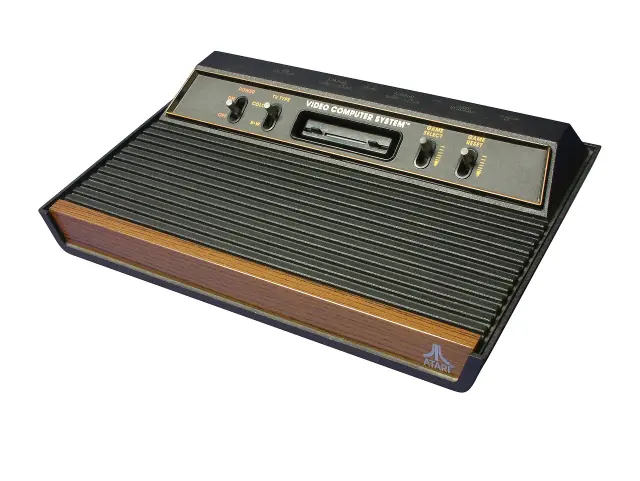 CONSOLE
An object representing the early history of home consoles. The evidence dates its original US launch to 1977 and presents a possible Spanish launch in 1980 as an inference, not a confirmed fact.
OPEN RECORD →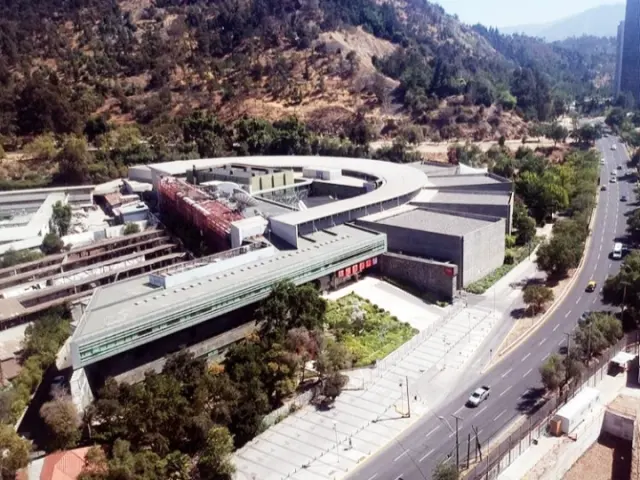 SERVICE
A contextual exhibit on Televisión Nacional de Chile: its establishment in 1969 and the start of its regular broadcasts in Santiago that same year. The source also describes it as a Chilean public broadcaster. The available evidence does not identify a specific television set, programme or collectible object associated with the broadcaster.
OPEN RECORD →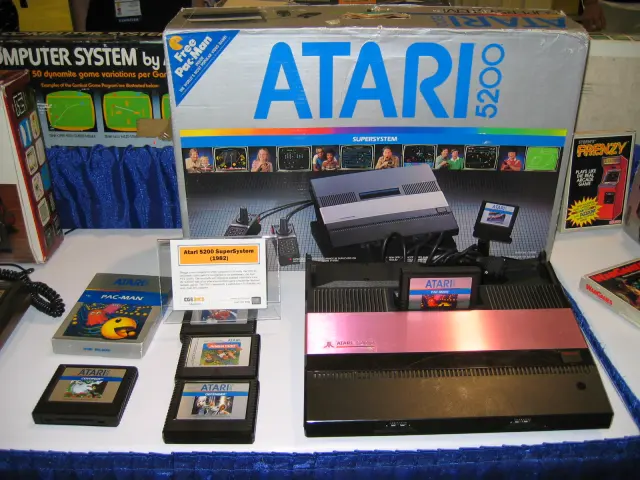 CONSOLE
An Atari home console released in 1982. The consulted source describes it as having improved graphics over its predecessor, the Atari 2600; it does not detail the components here or independently verify more specific technical comparisons.
OPEN RECORD →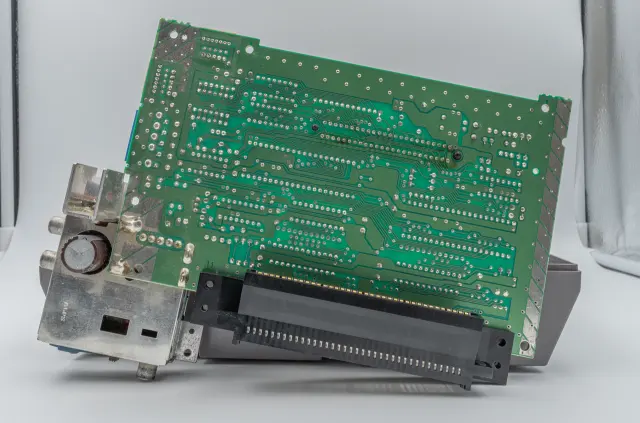 CONSOLE
An 8-bit console introduced in Japan in 1983 as the Family Computer, or Famicom. The source documents its design by Masayuki Uemura, its cartridges, and some of its peripherals.
OPEN RECORD →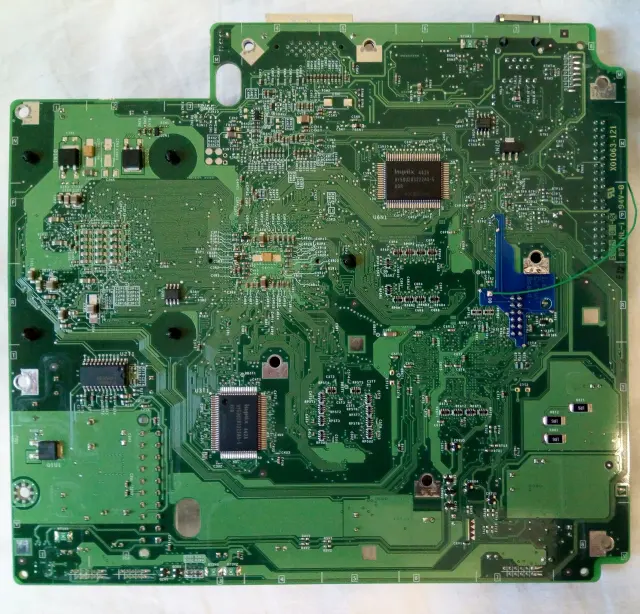 CONSOLE
Exhibit of the original Xbox console, highlighting its PC-based component design and its role in integrating personal computing technology into the living room.
OPEN RECORD →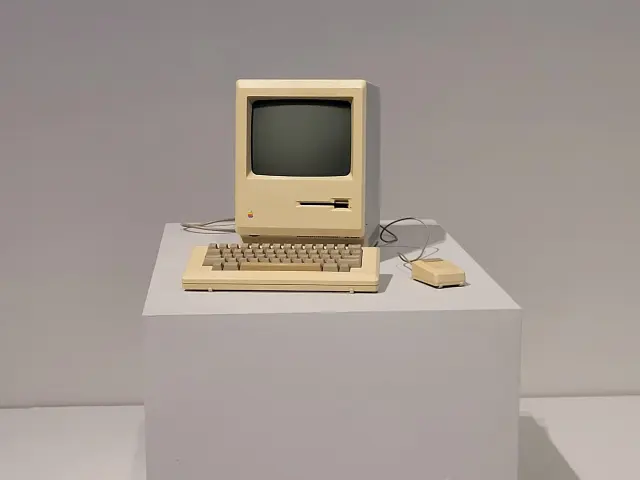 COMPUTER
A defining object for an 1980s home-computing room: the Macintosh 128K combined a screen, floppy drive, mouse and graphical interface in a compact computer. It illustrates how interaction through icons and windows began to complement—and challenge—command-based computing.
OPEN RECORD →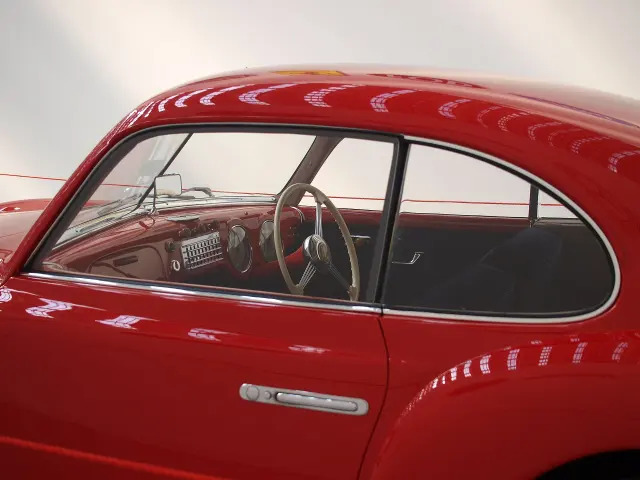 MUSEUM
A proposal focused on Turin’s Museo Nazionale dell’Automobile, which preserves historic vehicles alongside documentation and connects their history with technology, design and society. The exhibit can show how documentary research and conservation work help contextualize a car without reducing it to performance figures or reputation.
OPEN RECORD →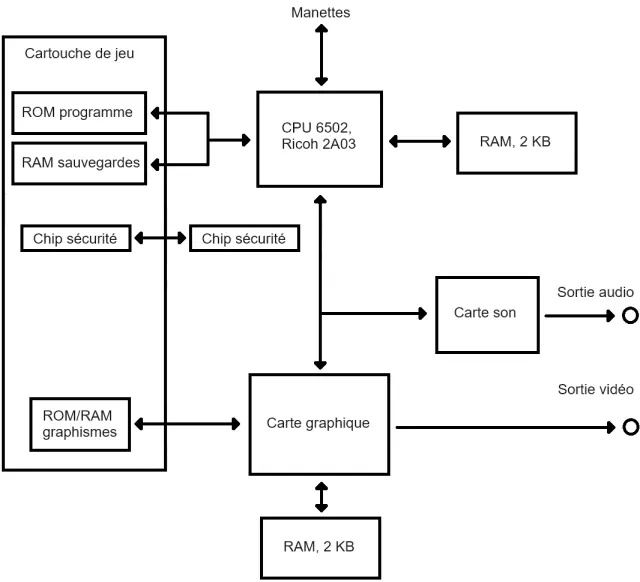 CONSOLE
The NES was Nintendo’s international version of the Family Computer. Launched in Europe in 1986, it used game cartridges and brought together titles such as Super Mario Bros., The Legend of Zelda and Excitebike—a useful object for explaining how a console and its shared library became part of the home.
OPEN RECORD →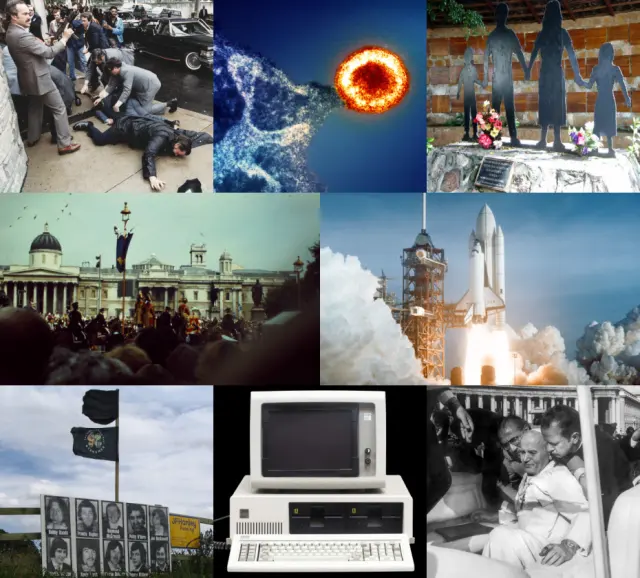 COMPUTER
In an 1980s living room, the IBM PC 5150 can illustrate how a desktop computer linked its main unit to peripherals and programs from different suppliers. Introduced in 1981, it helped legitimize PCs in business and popularize a compatible platform that soon outgrew IBM’s control.
OPEN RECORD →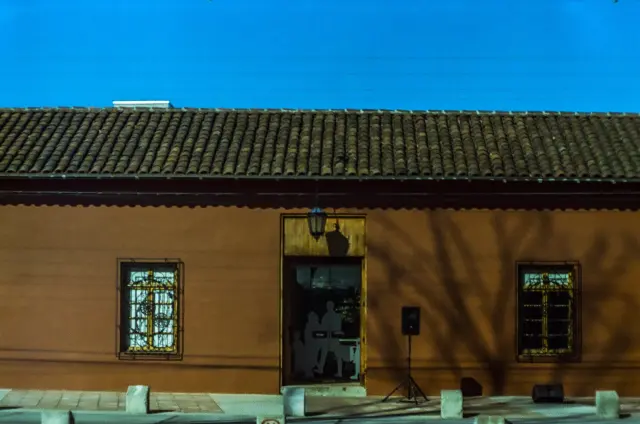 MUSEUM
Founded in 1994, Costa Rica’s Museum of Contemporary Art and Design offers a way to explore how a contemporary institution brings art and design together without erasing the differences between the fields. Its development was shaped by Costa Rican cultural policy, experimental curatorial practices, and the infrastructure available for contemporary art in Central America.
OPEN RECORD →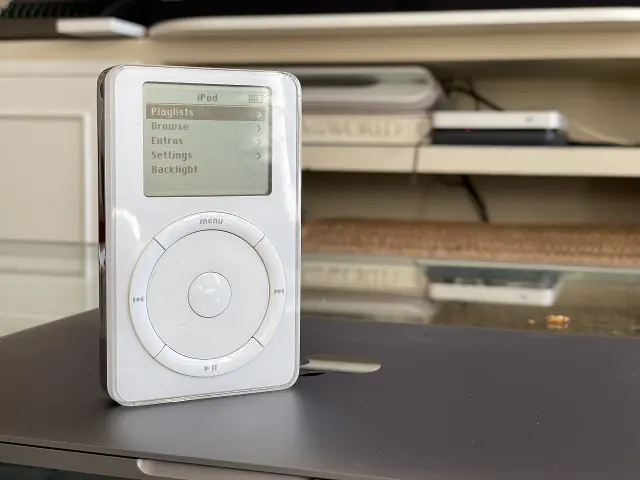 DEVICE
The 2001 model illustrates how the player’s design brought storage, music navigation and computer connectivity together in a portable object. Its control wheel and compact form help explain the usage decisions that distinguished the device.
OPEN RECORD →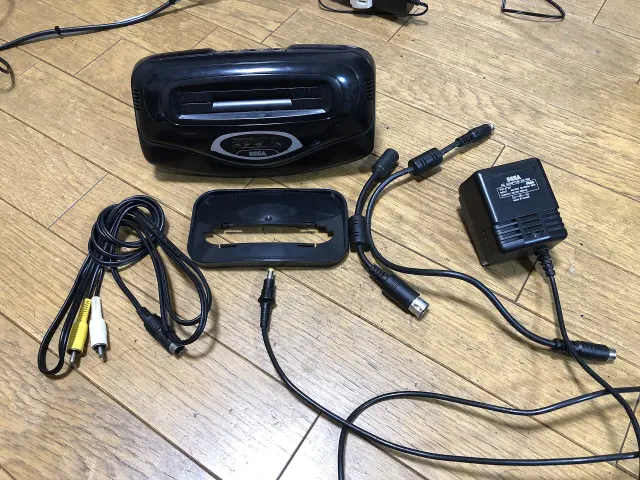 PERIPHERAL
The Sega 32X attached to the Mega Drive, ran its own cartridges and expanded the system’s graphical capabilities. Its design illustrates a route toward 32-bit gaming that differed from a standalone console, and helps explain how Sega’s add-on strategy overlapped with the arrival of Saturn.
OPEN RECORD →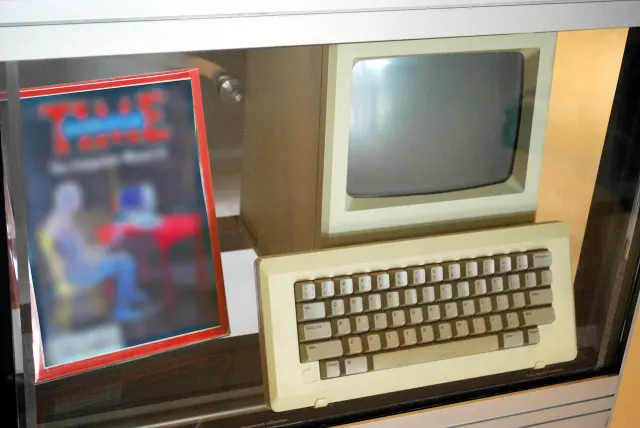 COMPUTER
Apple’s 1984 Macintosh 128K brought a monochrome display, mouse, graphical interface and 3.5-inch floppy drive together in a compact computer. Its all-in-one arrangement offers a way to show how a computer’s design and peripherals formed a unified experience for home users.
OPEN RECORD →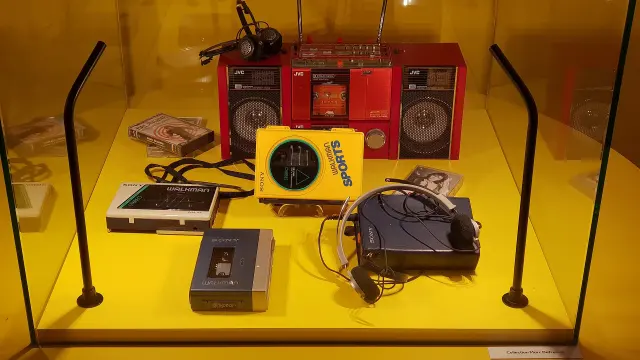 DEVICE
A portable stereo audio player introduced by Sony in 1979. Its design let people listen to cassette tapes through headphones away from home; its widespread use made personal, mobile listening one of the most recognisable technological experiences of the 1980s.
OPEN RECORD →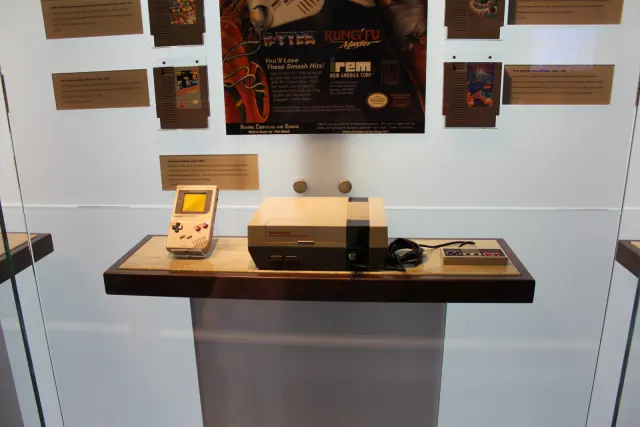 CONSOLE
Nintendo’s home console, launched in Japan in 1983, offers a way to show how sound-hardware constraints shaped early video-game music. The Famicom and NES noise channel served both sound effects and percussion; analysis of 1983–1987 soundtracks reveals different approaches to simulating instruments and building rhythmic styles.
OPEN RECORD →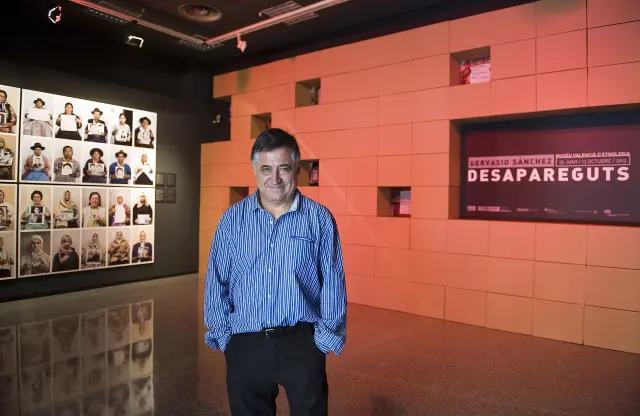 PERSON
An exhibition proposal focused on Gervasio Sánchez’s documentary photojournalism, considering photography’s role in documenting conflict and his receipt of Spain’s National Photography Award in 2009.
OPEN RECORD → VEHICLE
An object representing Spain’s post-war car industry. SEAT began manufacturing it in 1957 and continued until 1973; the consulted source links it to the spread of car ownership among the middle classes and gives approximate production as 800,000 units.
OPEN RECORD →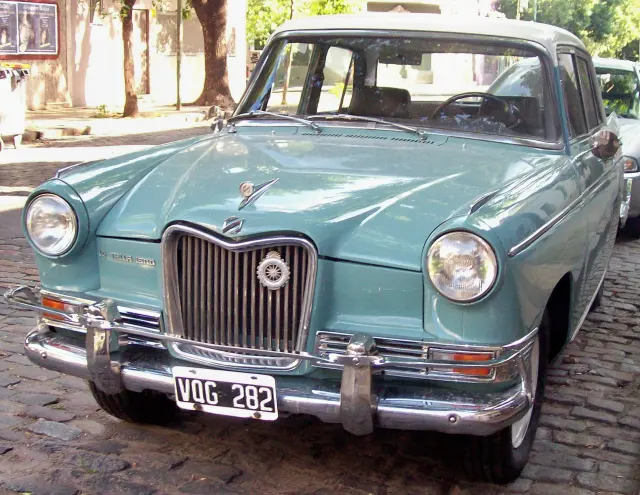 VEHICLE
Produced in Argentina from 1960 under licence from the British Motor Corporation, the SIAM Di Tella 1500 offers a way to discuss documenting a historic car without equating preservation with a complete restoration. The exhibit can place the model within SIAM’s history and treat materials, finishes and earlier repairs as evidence of the object’s life, rather than flaws to be erased.
OPEN RECORD →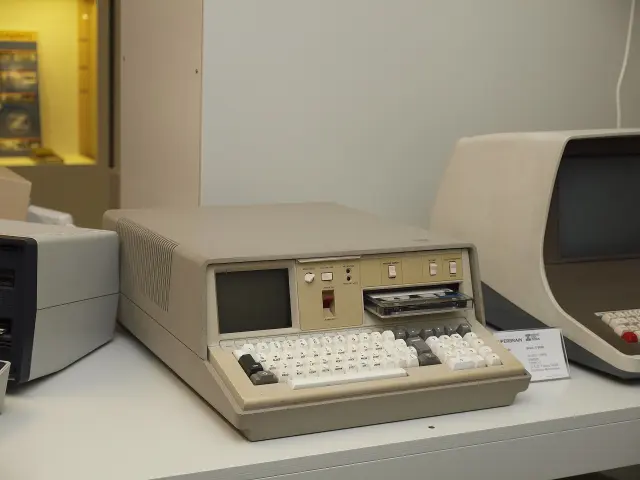 COMPUTER
Introduced in 1975, the IBM 5100 combined a keyboard, five-inch CRT display and tape drive in a self-contained, programmable computer. Its design shows how a machine intended for engineers and professionals brought computer use and program storage together in one unit; at 25 kg, its portability was relative.
OPEN RECORD →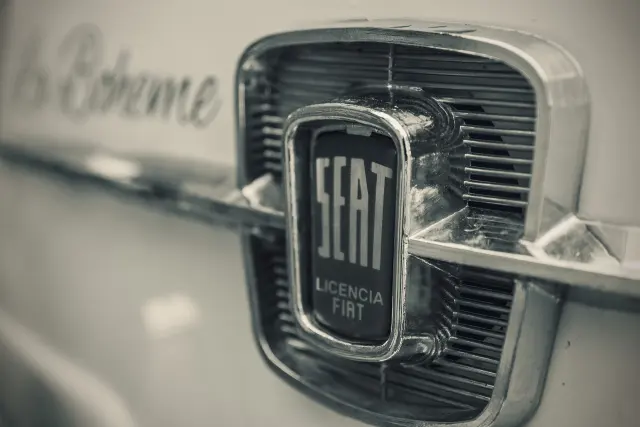 VEHICLE
An exhibit card on the SEAT 600 and its N, D, E and L Especial versions, built between 1957 and 1973. The car offers a concrete way to explain the evolution of a compact, rear-engine, rear-wheel-drive passenger vehicle and its association with the spread of car ownership among Spanish families.
OPEN RECORD →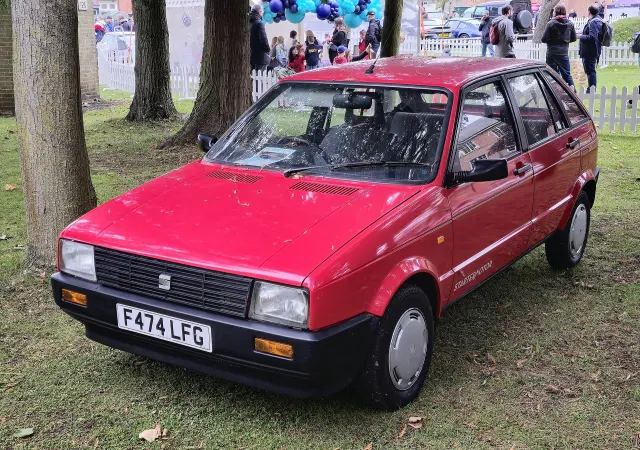 VEHICLE
Launched in 1984, the first-generation Ibiza was developed as SEAT sought to establish itself as a carmaker after its collaboration with Fiat ended. The model combined Giorgetto Giugiaro’s design, System Porsche engines and components that reflected the company’s industrial transition. It shows how SEAT began building a distinct identity before Volkswagen acquired a majority stake in 1986.
OPEN RECORD →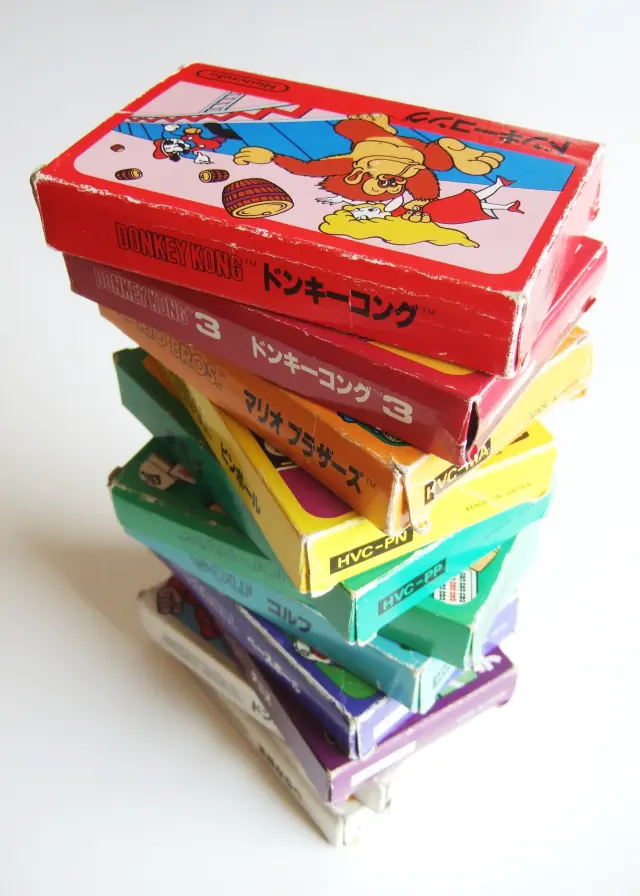 CONSOLE
The Famicom, launched in Japan in 1983, was the home platform Nintendo later marketed in North America as the Nintendo Entertainment System. Its compact casing and sound capabilities help explain how design and technical constraints shaped both the machine and the experience of playing it.
OPEN RECORD →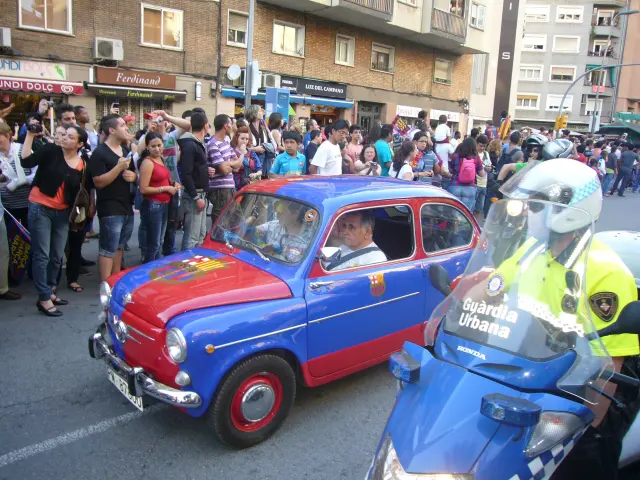 VEHICLE
Introduced in 1963, the SEAT 600 D increased displacement to 767 cc and its stated output to 25 hp. As an exhibit, this identifiable version of the small car connects technical changes with family use during the expansion of mobility in Spain.
OPEN RECORD →