The institution reports that Spain’s first restoration laboratory was established at its premises in 1956, preceding the National Service for the Restoration of Books and Documents.

- Type
- Place
- Year
- 1956
- Country or region
- Spain
- Status
- Documented
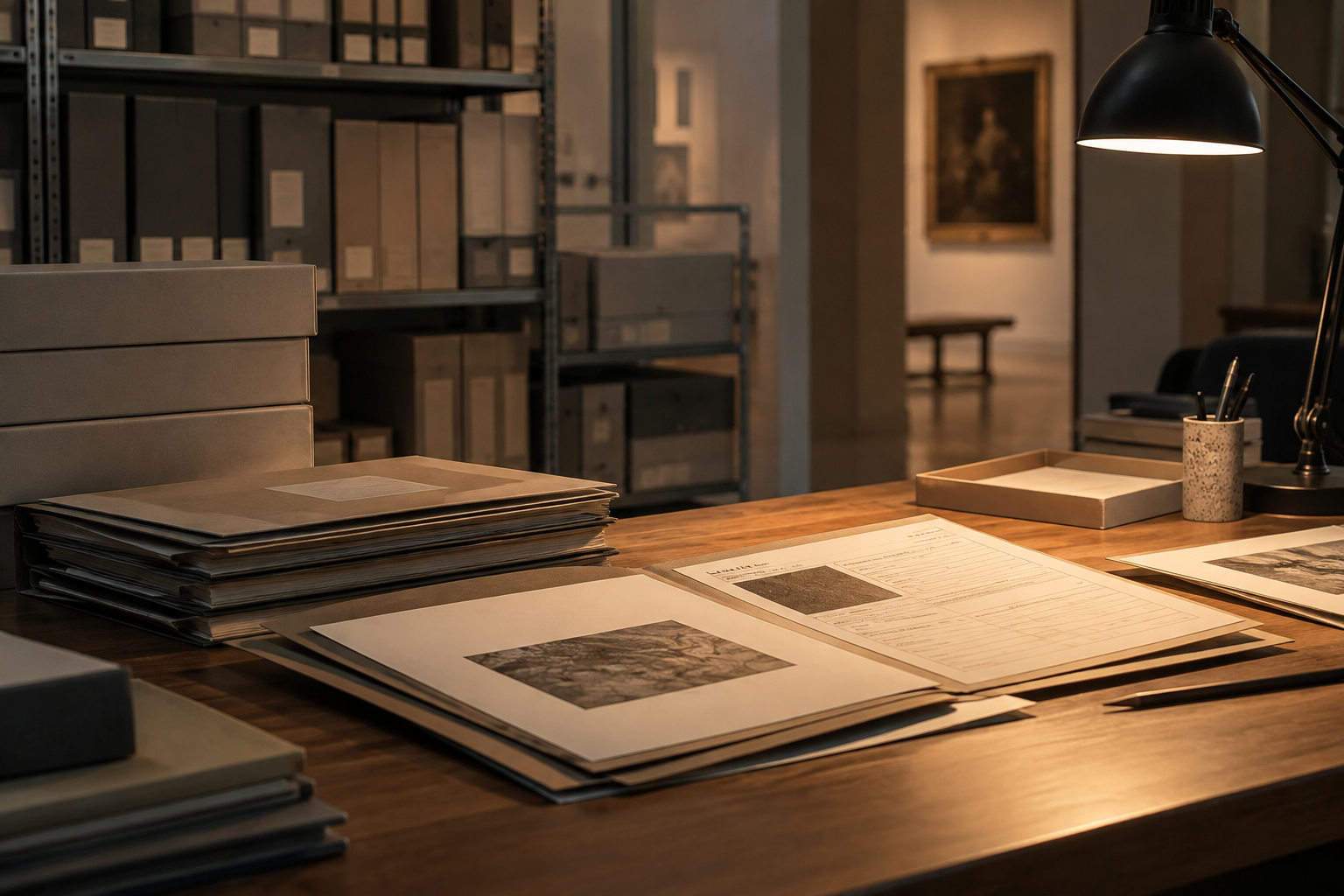
Documentary record connected to the editorial archive.

The institution reports that Spain’s first restoration laboratory was established at its premises in 1956, preceding the National Service for the Restoration of Books and Documents.
In 1980, the creation of the Museo del Prado Bulletin coincided with the systematic preparation of reports for every treated work and the organisation of a dedicated archive. More than an administrative detail, this process made conservation a consultable part of the museum’s memory.
Open storyA chronological reading of how documentation, preventive conservation and minimal intervention became central to institutional restoration, drawing on cases documented by the Prado, the MNCN and Spanish cultural bodies.
Open storyThe institutional evidence available shows that conservation and restoration are not limited to repairing objects: they depend on reports, inventories, protocols and traceable decisions. A look at the Prado, the MNCN and Spanish public documentation to understand why the record of an intervention becomes part of the object itself.
Open storyDocumentation makes it possible to study restoration as work, institutional memory, and a source of knowledge. The Prado’s published history points to a significant shift: from lists to systematic reports for individual works, alongside wider communication about restoration.
Open storyConservation records also tell a museum’s story. Reports, photographs and Prado publications show how restoration work became a record that can be consulted, although the available sources are not enough to reconstruct individual treatments.
Open story