The concept of cultural heritage has undergone a significant paradigm shift in recent decades. Traditionally, museums focused on monuments, artworks, and major historical events. However, a growing trend in contemporary museology proposes that everyday life is, in itself, a space of resistance, creativity, and knowledge transmission. This article analyzes how institutions in different parts of the world are integrating domestic objects and oral testimonies to preserve social memory, moving beyond the traditional focus on the exceptional.
From the monumental to the domestic
The concept of 'museumizing everyday life' has gained academic and practical traction. Authors and curators argue that the objects we use daily, from ceramics to textiles, carry a historical and social load comparable to that of major works. This perspective seeks to connect these objects with the social practices surrounding them, recognizing that cultural heritage resides not only in the grandiose but in the daily habits of people. Academia and documents from international bodies like UNESCO have underscored the importance of this safeguarding ethnology, where the museum acts as a refuge for the preservation of community identity.
The case of the National Museum of American History
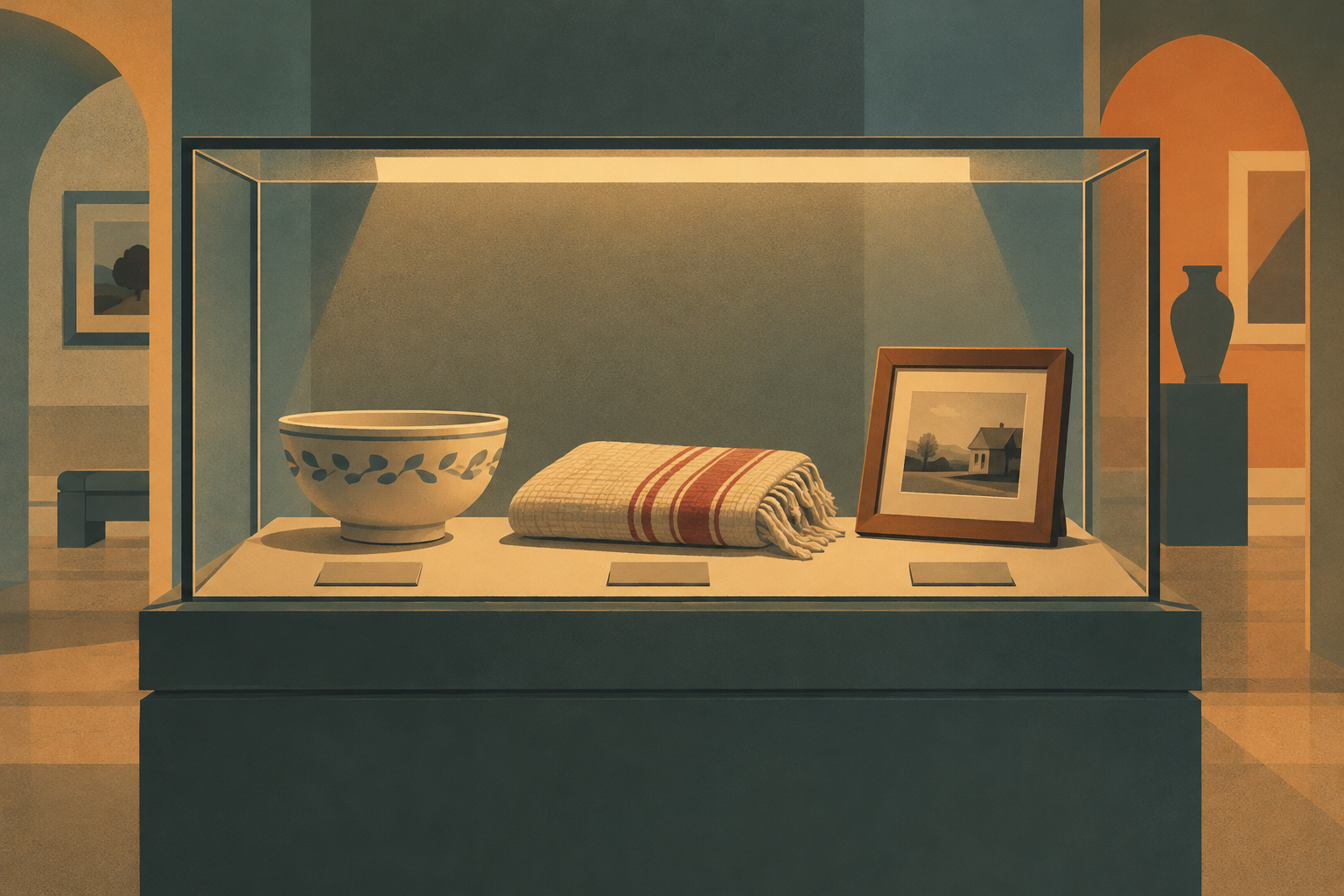
In the United States, the National Museum of American History (NMAH) exemplifies this transition. Its collections represent the everyday life of the diverse US population from the 17th to the 21st century. The museum includes specific divisions for domestic life, fashion, education, and religion, as well as ethnic collections. By incorporating ceramics, glass, and textiles, the NMAH does not just preserve artifacts but documents the evolution of family and social customs. This approach allows visitors to understand how private life has shaped the country's public history, offering a more inclusive and detailed narrative than one focused exclusively on political or military figures.
The Chilean perspective: Osorno and Valparaíso
In Latin America, this trend is also visible. The Osorno Municipal Historical Museum in Chile, founded in 1946, has evolved to become an active space for encounter between generations. Its headquarters, a neoclassical building from 1929, houses a heterogeneous collection that includes prehistoric vestiges, objects from the Mapuche-Huilliche culture, and records of the everyday life of local communities. The museum has managed to project itself beyond the simple safeguarding of ancient objects, developing a pedagogical line that invites reflection on the memory and present of the city. Meanwhile, the Valparaíso Natural History Museum has actively sought images of family life, such as portraits, birthdays, and graduations, to document the ways of life and communities that have shaped the region.
Safeguarding ethnology
UNESCO has promoted the concept of safeguarding ethnology, which emphasizes the need to protect living cultural expressions. In this framework, the museum is not just a warehouse of objects but an institution that facilitates community participation. By integrating testimonies and photographs of events such as weddings or celebrations, these institutions provide a context that allows future generations to understand the diversity of human experiences. This approach transforms the private into an accessible and studied common good, recognizing that identity is built in daily interaction and not only in major historical milestones.
The object as historical witness
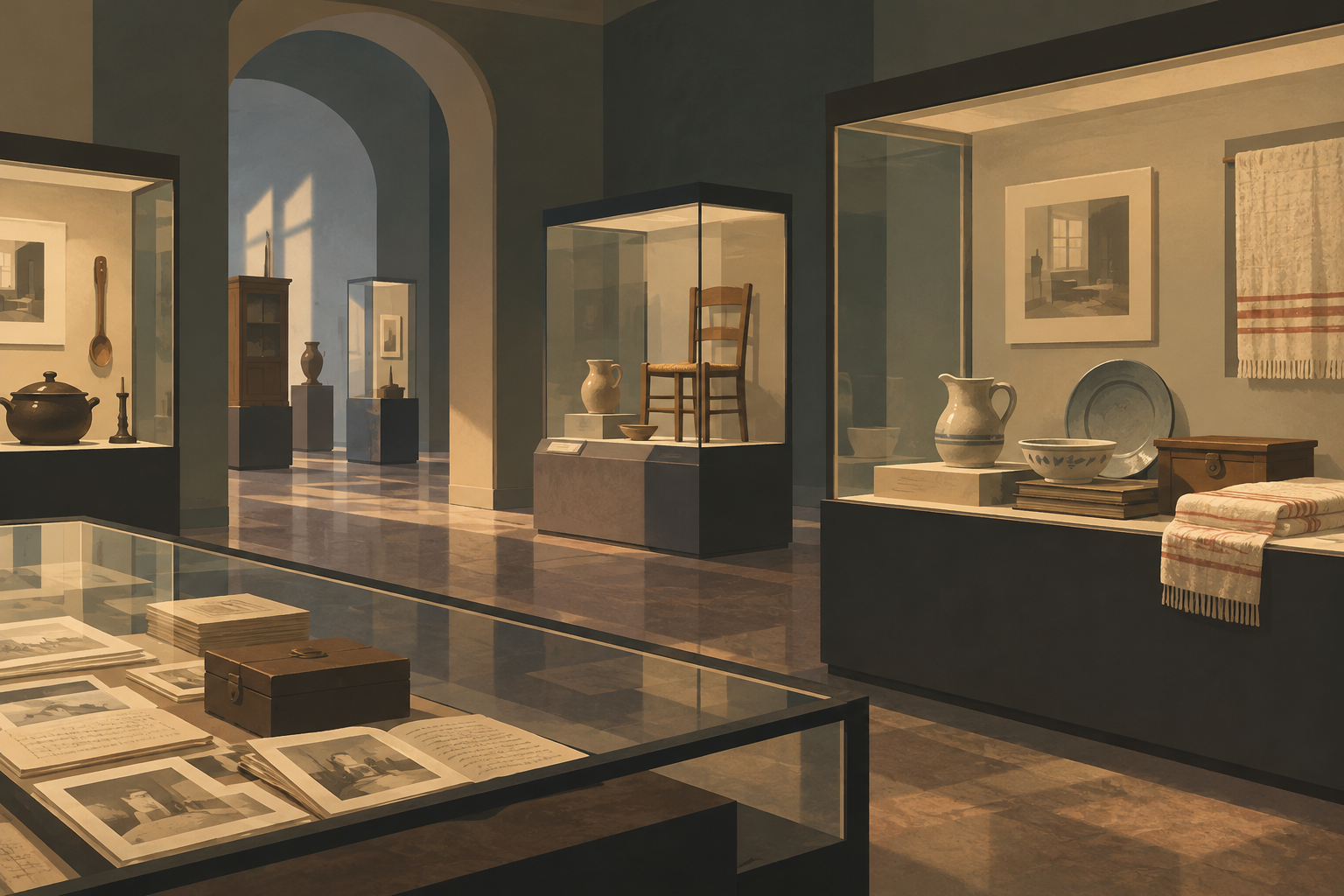
Every everyday object preserves a history. In the Regional Museum of Puebla, for example, everyday life is described through furniture, clothing, toys, medicines, and school supplies. These elements, seemingly insignificant, reveal the living conditions, aspirations, and limitations of the people who used them. Documenting these objects allows historians and the general public to access a tangible reality, away from the abstractions of academic texts. The presence of these artifacts in museums validates the experience of local communities and gives them a place in the official historical narrative.
Challenges in curating the everyday
Incorporating everyday life into museums presents significant curatorial challenges. Unlike artworks, domestic objects do not always have a clear authorship or recognized aesthetic value. Curators must work closely with communities to understand the meaning of these objects and avoid their decontextualization. Additionally, the preservation of organic materials and textiles requires specific techniques that can be costly. Community participation is key to ensuring that the representation is faithful and respectful, avoiding cultural appropriation or the simplification of local identities.
Conclusion
The integration of everyday life into museums represents an advance in the understanding of cultural heritage. By recognizing the value of domestic objects and personal testimonies, cultural institutions are building a more complete and representative memory. This approach not only preserves the identity of communities but also fosters empathy and understanding between different social groups. As museums continue to evolve, it is likely that we will see a greater diversification of collections and a greater participation of communities in defining their own cultural legacy.
- Decade
- Contemporary
- Region
- Global
- Level
- Introduction
- Entities
- Museum, Museo de Historia Natural de Valparaíso, Museo Histórico Municipal de Osorno
Sources and references
- Museizar la vida cotidiana, desde el sombrero a los zapatoswww.academia.edu · 2026-10-19
- Museo de Historia Natural de Valparaíso ...www.instagram.com · 2026-10-19
- Museo Nacional de Historia Americana (NMAH)translate.google.com · 2026-10-19
- museo comunitario que asciendewww.casapozonmuseo.org · 2026-10-19
- Por una etnología de salvaguardiaunesdoc.unesco.org · 2026-10-19
- Un objeto cotidiano también conserva una historiacinemedios.com · 2026-10-19
- Patrimonio culturales.wikipedia.org · 2026-10-19
- Museo Histórico Municipal de Osornoes.wikipedia.org · 2026-10-19