Neo-retro design takes recognizable forms from the past and combines them into a contemporary visual identity. It can suggest tradition, authenticity, or craftsmanship, even for products from recently established brands. That evocative power is part of its appeal, but it also makes it important to distinguish an aesthetic quotation from a verifiable claim about a brand’s origins or history.
A style assembled from mixed references
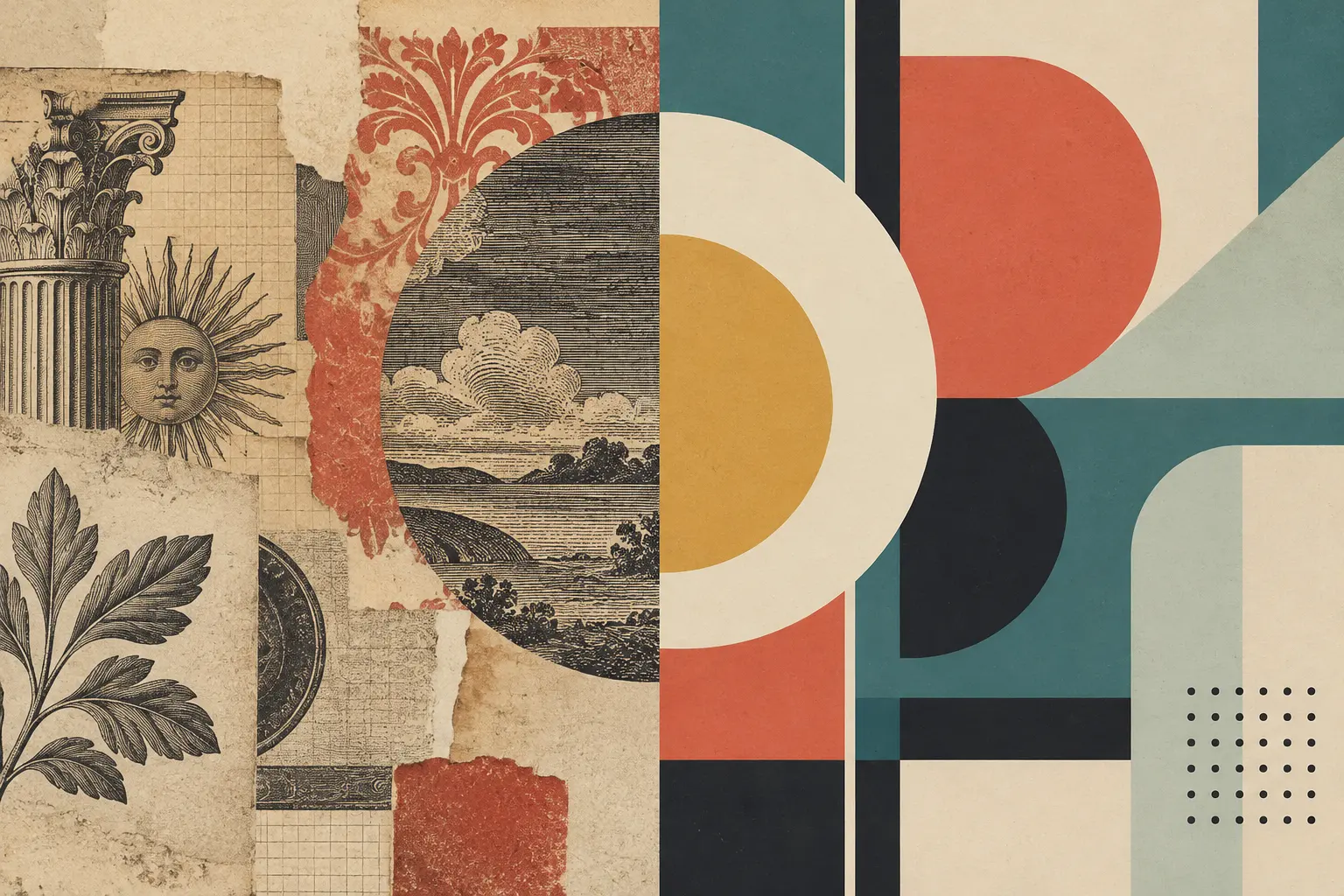
Franck Celhay, Lise Magnier, and Jan Schoormans describe neo-retro as a contemporary graphic style that reinterprets elements from different periods of design. It does not necessarily reconstruct a particular era: Victorian-looking ornament can sit alongside motifs associated with Art Nouveau or Art Deco, brought together in a composition made for the present.
To define its characteristics, the researchers held creative sessions with designers and analysed 65 contemporary packages tagged as retro on a professional platform. They grouped the devices into three categories: structural, graphic, and informational. They also described the style’s overall effect in terms of naturalness, harmony, and elaborateness. Taken together, the neo-retro packages they examined tended to combine an organic, balanced impression with visually rich composition.
How a package acquires a retro appearance
Structural cues included textured materials, matte surfaces, and finishes that suggested older substrates. Graphically, limited and muted palettes, centered layouts, and mixtures of typeface families were common. Illustrations could evoke engraving or hand drawing; frames, seals, flourishes, and patterns added ornament. Printed irregularities and simulated textures helped suggest a less mechanized kind of production.
Package copy also contributes to the effect. Phrases such as “handmade” or “locally produced,” references to small batches, and founding dates draw on the visual language of tradition and craft. But their presence does not, by itself, establish that a brand has a long history or that a product was made in the way the packaging implies. Design creates an interpretation; a brand’s history and production methods require evidence of their own.
What consumers perceive
In a second phase, the study tested experimental coffee-package designs with 251 participants. Designs containing more neo-retro elements were perceived as more retrospective and associated with authenticity, craftsmanship, originality, and small-scale production. Participants also made associations with hipster aesthetics. Typeface variation contributed particularly to the retro impression, while textures were linked to ideas of environmental friendliness.
These results describe associations evoked by the designs, not verified qualities of the coffee or its packaging. An artisanal appearance does not prove that a product was made artisanally, and a texture resembling paper does not establish that the packaging is more sustainable. The findings help explain how visual form guides interpretation; they do not turn that interpretation into a certification.
Historical quotation is not reconstruction
Neo-retro uses shared references to make something new. It can evoke past printing techniques, materials, or compositions without reproducing them exactly, and combine visual codes from different periods. That distinguishes it from historical reconstruction: its aim is not to document an old object faithfully, but to create a contemporary dialogue with its forms.
The study focused on coffee packaging and used a student sample for its experimental evaluation. Its findings should therefore not be treated as a rule for every product category or audience. They do, however, offer a way to examine the style more precisely: identify the visual devices, recognize the associations they evoke, and separate an aesthetic quotation from a claim about provenance. The past can provide a design vocabulary; historical authenticity depends on facts that support it.
- Decade
- Contemporary
- Region
- Global
- Level
- Introduction
- Entities
- No linked entities
Sources and references
- Modelo multidimensional de los factores que afectan la interacción entre marketing y ventas en el lanzamiento de nuevos productos en Latino Américadoi.org · 2026-10-27
- Identidad de marca en la década de 2010: Microsoftopenalex.org · 2026-10-27
- Manual para la internacionalización de la marca de ropa urbana Guiri para su participación en la feria Colombia-Moda en Medellín Colombiaopenalex.org · 2026-10-27
- Design, development and manufacture of surface dry for leather (crosta) and proposed design and manufacture of a product line in the form of leather business in business practice pieles duarte.openalex.org · 2026-10-27
- Moderno y auténtico. Definiendo el estilo neorretro en ...translate.google.com · 2026-10-27