Thematic archive · Toys

Toys and the worlds we imagined through play

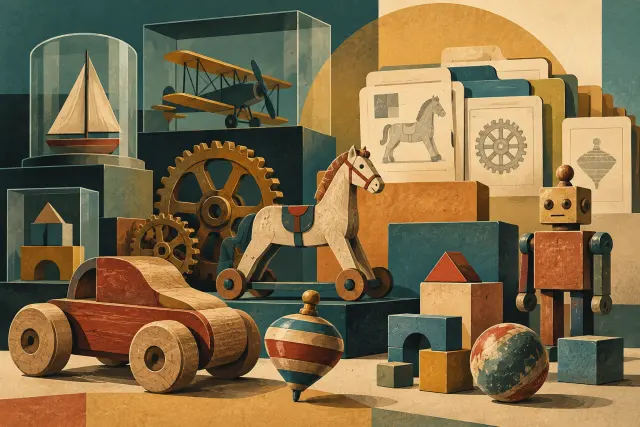
Pieces, figures and mechanisms opened up possibilities no advertisement could exhaust. We document their materials and practices of play, focusing on what the objects made possible to imagine and do.

Start here

Readings to help you find your bearings.

Analysis · pre-1950

The Toy as a Play Object: Materials, Uses and the Stories Collections Tell

Wear, materials and collecting histories help us understand toys without reducing them to rare curiosities. From pedal vehicles made by Valencia’s Sauquillo factory to a toy cradle in Madrid’s National Museum of Anthropology, these objects reveal possibilities for play as well as ideas about childhood, education and everyday life.

Open story

Toys

A story in context

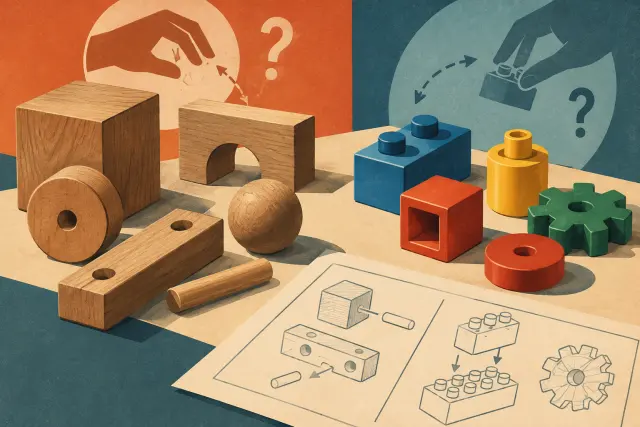
Instructions, packaging and signs of use explain who a toy was designed for and what could be done with it. Its history does not depend only on its rarity, but also on the ways it invited people to play.

The focus is on play and the object. Board Games explores the rules of tabletop games, while Collectibles covers series and their circulation.

Choose your path

Three perspectives on the archive.

Featured dossier

Heisei retro: objects that hold memories and invite new discoveries

Heisei retro brings together objects and practices from Japan between 1989 and 2019, but it belongs not only to those who lived through the era. Tamagotchi, stickers, purikura, anime and music show how a reissue can revive not just a design, but ways of playing, making and sharing.

Read article

Documented milestones

  1. 1900

    Manufacturing of pedal toys by Sauquillo factory

    In the early 20th century, the Sauquillo factory produced pedal toys, such as cars and planes, characterized by their metal construction and other materials. These pieces, preserved in the UPV Toy Museum, represent an early stage of the Valencian toy industry.

  2. 1907

    Founding of Mecano by Harry Ferguson

    Harry Ferguson, a British engineer, founds the company that will market the Mecano construction toy. This milestone marks the beginning of one of the most influential technical toy lines of the 20th century, based on real mechanical engineering.

  3. 1914

    Arrival of fabric toys in Spain

    During World War I, fabric toys arrive in Spain as part of a European trend driven by aesthetic and psychoeducational changes, beginning their history as comfort objects.

  4. 6 January 1933

    Royal toys donated to Madrid City Council

    On Epiphany 1933, a ceremony was held at the former Royal Stables to donate toys to Madrid City Council. The Republican government had decided to preserve some toys from the rooms of Alfonso XIII and Victoria Eugenia’s children and offer the others to the council.

    Read article
  5. 1950

    Start of the manufacturing context for Playmates Dolls

    Evidence places the manufacture of these dolls in the second half of the 20th century, a period marked by the expansion of toy production and export from Asia.

Latest additions

Contemporary

Heisei retro: objects that hold memories and invite new discoveries

Heisei retro brings together objects and practices from Japan between 1989 and 2019, but it belongs not only to those who lived through the era. Tamagotchi, stickers, purikura, anime and music show how a reissue can revive not just a design, but ways of playing, making and sharing.

Contemporary

Heisei retro: remembering not just the objects, but how they were used

Tamagotchi, Tamamori stickers and purikura show that revisiting the past involves more than reissuing its imagery: it also means considering what people did with these objects and how they circulate today. Heisei retro brings together memory and first-time discovery without reducing the era to a single experience.

Before 1950

The Toy as a Play Object: Materials, Uses and the Stories Collections Tell

Wear, materials and collecting histories help us understand toys without reducing them to rare curiosities. From pedal vehicles made by Valencia’s Sauquillo factory to a toy cradle in Madrid’s National Museum of Anthropology, these objects reveal possibilities for play as well as ideas about childhood, education and everyday life.

1980s

Reading a Toy Beyond Its Rarity

An object, its documentation and signs of use raise questions about play. The available sources support this approach, but do not identify instructions or uses for a particular toy.

1980s

June 18, 1982 in Figueres

Analysis of the opening of the Toy Museum in Figueres as a milestone in the institutionalization of the Spanish toy as cultural heritage.

1970s

What a toy collection can—and cannot—tell us

Exhibitions and collections place toys within material and social histories. But without instructions, packaging, or detailed object descriptions, they cannot by themselves reconstruct how people played with each item.

1970s

Material also sets the limits of play

The spread of plastic and the persistence of wooden toys appear in the sources as material changes, not as a complete account of how children played. Comparing that evidence helps ask what an object can reveal—and what its instructions would need to add.

Sources for the selected readings

Editorial review ·