The LEGO System is not merely a catalog of colored blocks; it is a technical infrastructure that enables infinite construction. To understand its cultural relevance, one must look beyond marketing and examine the mechanics that sustain the play experience. The history of this company, based in Billund, Denmark, reveals how a specific engineering decision transformed an artisanal product into a global standard of physical interaction. This analysis focuses on the evolution from carpentry origins to the consolidation of the fitting system, using available sources to trace the line between craftsmanship and the industrialization of play.
From Wood to Plastic: Origins in Billund
Sources indicate that LEGO's history begins in the context of carpentry in Billund, Denmark. The company's own careers page describes its legacy as the work of a "humble carpenter." This origin is crucial because it establishes a continuity between the tradition of wooden toy making and the later adoption of plastic. Although the sources do not detail every stage of this material transition, they place the company's birth in the 20th century, in an environment where local manufacturing and manual skill were the pillars of production. The mention of early carpentry suggests that the philosophy of construction and fitting did not arise from nothing, but evolved from previous techniques of assembling pieces.
The 1958 Patent and Fitting Engineering
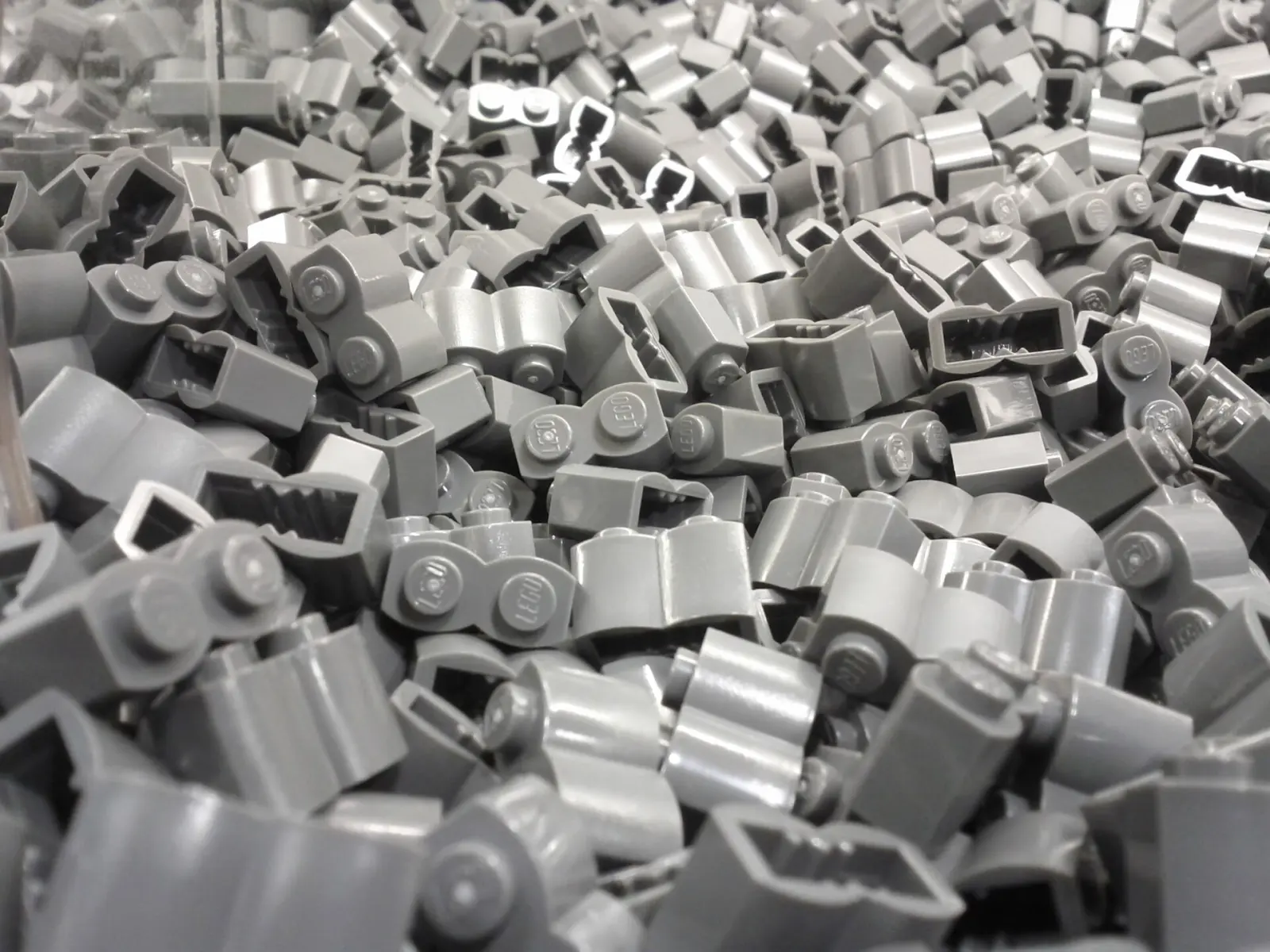
The documented turning point in the sources is the year 1958. According to the Transformalix website, in this year the patent for the "fitting system with inner tubes" was granted, associated with the name "LEGO System of Play." This technical specification is the core of the article: the use of inner tubes in the bricks is what allows the firm and detachable connection between pieces. Without this innovation, the blocks would simply stack or fall apart. The patent formalized a technical solution that guaranteed compatibility, allowing pieces built at one time to be disassembled and reused without losing functionality. This technical decision is the reason why the standard brick became the central element of the system.
Visual Consolidation: The Logo and Identity
The evolution of visual identity reflects the maturity of the product. According to the Imprenta Online blog, between 1955 and 1964, the LEGO logo adopted rounded forms and began to include the word "System." This change was not merely aesthetic; the inclusion of the word "System" in the brand indicates that the company was no longer selling just loose toys, but a set of rules and possibilities. The period 1964-1973 continued this trajectory of consolidation. The appearance of the term "System" in the logo coincides with the stabilization of the fitting technology, suggesting that the brand aligned with the technical reality of the product. Visual identity became a reminder that the value lay in the interaction between pieces, not just the individual piece.
The Standard Brick as Central Element
Brickipedia describes the LEGO System, along with TECHNIC, as the main line of building elements, minifigures, and sets from The LEGO Company. It specifically highlights the "iconic standard brick." This brick is the materialization of the 1958 patent. Its design, with inner tubes and outer studs, creates a physical user interface that is intuitive and robust. Compatibility is the defining characteristic: any standard brick produced at any time since the system's consolidation can fit with any other. This interoperability is what allows the creation of complex structures and the reuse of pieces, differentiating the LEGO System from other construction toys that may be more rigid or less compatible.
From Toy to Play System
The transition from toy to play system is a key concept. Sources describe the LEGO System as a set of fitting rules, pieces, and uses. This implies that the product is not static; it is a platform. The ability to build, disassemble, and reuse without losing compatibility transforms the consumption experience. The user does not just play with the toy, but plays with the system. This perspective changes how the product's value is perceived. It is not about the rarity of a specific piece, but about the play possibility that the system allows. Instructions, packaging, and signs of use, mentioned in the sources, are artifacts of this dynamic relationship between the user and the system.
Business Context and Global Scale
Wikipedia identifies Lego System A/S as a Danish toy company, known primarily for its building blocks. Other sources, such as the Mott Facebook post, state that LEGO System A/S is the largest toy company worldwide in sales. This global scale is the result of the system's standardization. The ability to produce millions of compatible pieces in different countries and sell them as part of a coherent ecosystem requires a sophisticated industrial and logistical infrastructure. The fact that the company continues to innovate, according to the sources, suggests that the 1958 system remains the base on which new product lines, such as TECHNIC or themed sets, are built. Scale has not diluted compatibility; it has amplified it.
Evidence Limitations and Conclusions
It is important to note that the provided sources do not detail every stage of LEGO's history, but offer key points: the origin in carpentry, the 1958 patent, the logo evolution, and the company's current position. There is no specific data on early plastic toys before 1958 or on the financial details of global expansion. The evidence is sufficient to trace the line of fitting engineering, but not for an exhaustive corporate history. However, the angle of this article focuses on the technique and culture of the system, not the corporate biography. The conclusion is that the LEGO System is an example of how a simple technical solution, the inner tube, can create a lasting cultural and economic ecosystem. Compatibility is the key, and the 1958 engineering remains its foundation.
- Decade
- 1950s
- Region
- Europe
- Level
- Introduction
- Entities
- LEGO System
Sources and references
- Evolución del logo de LEGO: historia de un iconowww.imprentaonline.net · 2026-10-22
- Sistema - Brickipedia - Fandomtranslate.google.com · 2026-10-22
- LEGO (empresa) - Wikipedia, la enciclopedia librees.wikipedia.org · 2026-10-22
- La evolución del logo de LEGOwww.facebook.com · 2026-10-22
- La Transformación de LEGO (2004–2022)transformalix.com · 2026-10-22
- Quiénes somos - Careers - LEGO.comwww.lego.com · 2026-10-22