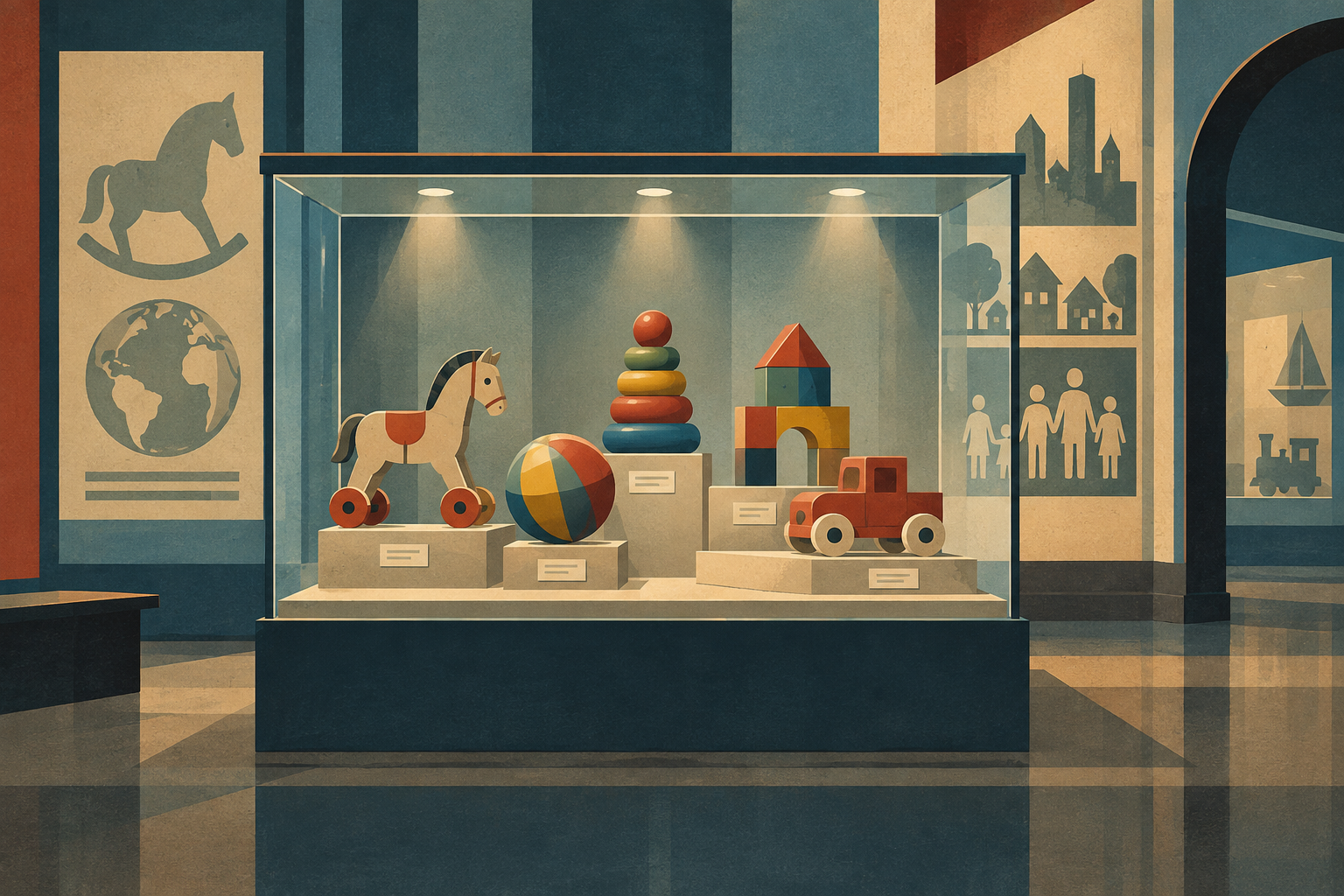
The conservation of toys in museum institutions has undergone a significant paradigm shift. Traditionally, the value of these objects was measured by their material rarity or physical preservation state. However, the contemporary approach prioritizes cultural and social context, recognizing that a toy is much more than an aesthetic or collection artifact. This transition allows objects to be interpreted in relation to the country's social history, giving them a documentary dimension that transcends their physical form.
From material rarity to social context
The National Museum of American History illustrates this evolution by housing over 1.8 million objects and five kilometers of archival collections. In this space, work teams use materials to interpret them in relation to the country's social and cultural history. This approach demonstrates that conservation is not limited to maintaining the physical integrity of the object but to preserving the narrative surrounding it. By noting who used a toy and when, part of its history is preserved, transforming the object into a document of everyday life. This practice turns the toy into a primary source for understanding the social dynamics of an era.
The living history of traditional games
Work with material and immaterial cultural heritage reveals that the history of toys depends on its continuous renewal. Traditional games museums, as documented in Argentina, emphasize that the living history of games is not static. It depends on practice and intergenerational transmission. This perspective challenges the idea that static preservation is sufficient. Instead, it suggests that the cultural relevance of a toy remains alive through its use and reinterpretation in the present. The integration of these perspectives in current museography allows for a deeper understanding of the toy as a cultural artifact.
Digital documentation and cataloging
The documentation of heritage collections is fundamental to understanding the value of objects. Projects such as the one carried out on the archaeological miniatures of the Benjamín Muniz Barreto collection at the Museo de La Plata in Argentina demonstrate the importance of digital registration and cataloging. These processes allow the reconstruction of the uses and game rules that defined the experience of original users. Digitalization not only facilitates access to information but also allows the reconstruction of contexts that would otherwise be lost. This methodology is applicable to toys, where documentation of game rules and uses is crucial to understanding their social function.
Preventive conservation and manufacturing context
Preventive conservation is defined as the set of actions aimed at protecting and ensuring the material life of cultural goods. However, this physical protection is complemented by research on the context of manufacture and use. In the case of Playmates dolls, their production in the second half of the 20th century places them at a key moment in social history. The object reflects the dynamics of the era, including changes in gender norms and family structure. Understanding this context is as important as maintaining the physical integrity of the doll. Research on the manufacturing context allows museums to offer a richer and more contextualized interpretation of their collections.
The toy as a reflection of the era
In the second half of the 20th century, the production of toys like Playmates dolls aligned with significant social transformations. These objects were not only consumer products but also reflections of the era's dynamics. The integration of these perspectives in current museography allows for a deeper understanding of the toy as a cultural artifact. Beyond its aesthetic or collection value, the toy becomes a tool for understanding social history. This approach enriches the visitor experience, offering a deeper connection with the past.
Limitations of verification
Although the contextual approach is powerful, there are limitations in verifying historical data. Not all toys have clear documentation regarding their use or manufacturing context. In these cases, museums must resort to inference based on indirect evidence. Additionally, the interpretation of objects may vary depending on the cultural perspective of the researcher. It is important to recognize these limitations and be transparent about the methods used to reconstruct the history of objects. Intellectual honesty is key to maintaining the credibility of museum institutions.
Conclusion
The conservation of toys has evolved from a focus on material rarity to one that values cultural and social context. This transition allows for a deeper understanding of toys as cultural artifacts. By integrating social history, domestic use, and digital documentation, museums can offer a more enriching experience for their visitors. The toy, far from being a static object, becomes a living document of everyday life. This approach not only preserves the past but also connects it with the present, allowing for continuous reflection on our shared history.
- Decade
- 1970s
- Region
- Global
- Level
- Enthusiast
- Entities
- Museum, Argentina, Museo Nacional de Historia Americana
Sources and references
- Patrimonio Cultural - MUSEO PEDAGÓGICO COLOMBIANOmuseopedagogico.pedagogica.edu.co · 2026-10-20
- Un juguete guardado conserva una formawww.facebook.com · 2026-10-20
- Museo Nacional de Historia Americana (NMAH)translate.google.com · 2026-10-20
- La importancia del museo de juegos y juguetes ...museodeljugueteetnico.com.ar · 2026-10-20
- Manual de Documentación - de Colecciones Patrimonialeswww.cdbp.gob.cl · 2026-10-20
- Conservación, registro y catalogación digital de objetos ...www.researchgate.net · 2026-10-20