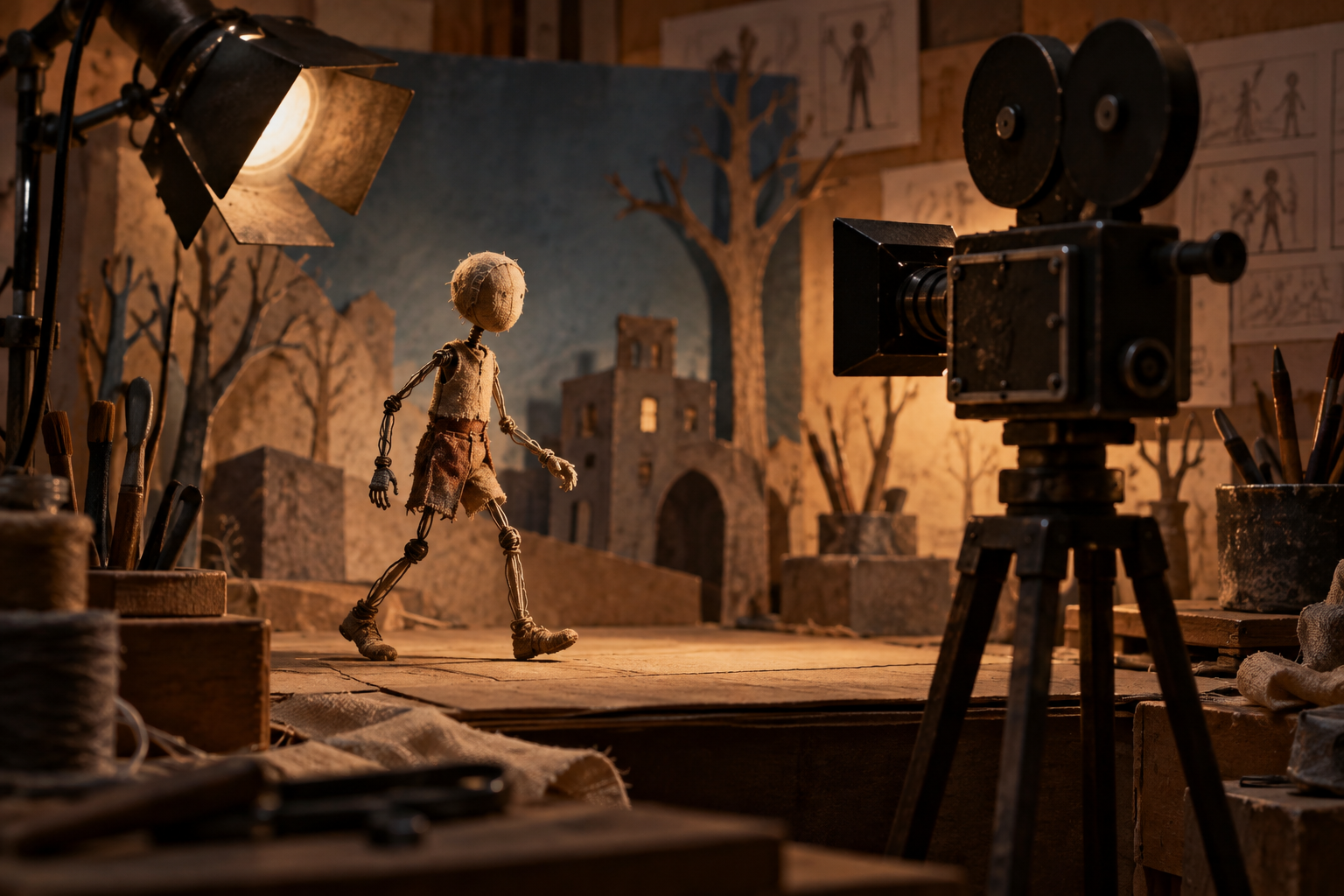
Stop motion animation is distinguished by a fundamental characteristic that sets it apart from other forms of audiovisual creation: its absolute dependence on matter. It is not a digital process where elements exist as data, but a practice where each frame is the result of tangible physical manipulation. This reality imposes a set of constraints and possibilities that have shaped the history of the technique for over a century. This article examines how the interaction between object, camera, and time has defined the aesthetic and narrative identity of stop motion, based on academic sources and recent historical studies.
Origins in the silent film era
The roots of stop motion date back to the late 19th and early 20th centuries, coinciding with the pioneering experiments of cinema. According to studies from the Polytechnic University of Valencia, the technique emerged almost simultaneously with cinema itself, taking advantage of the camera's ability to capture images in sequence. In this initial stage, stop motion was not an autonomous form of animation, but a curiosity effect, a demonstration of the technical possibilities of the new medium. Early filmmakers used simple objects and rudimentary puppets to create illusions of movement that surprised the audience. The technological limitations of the time, with heavy cameras and slow development processes, made each movement a logistical challenge. However, it was precisely this difficulty that gave the technique its artisanal character and its value as a demonstration of ingenuity.
Materiality as language
Unlike digital animation, where movement can be calculated and smoothed through algorithms, stop motion retains the traces of human intervention. Each adjustment of a puppet, each displacement of an object, leaves a visible mark on the final result. This materiality is not a defect, but a defining characteristic that lends a tactile and organic quality to the images. Academics have noted that this quality allows for a unique emotional connection between the viewer and the narrative, as the movement perceives the physical resistance of objects. The texture of materials, the imperfection of movements, and the presence of real shadows contribute to creating an atmosphere that digital animation often tries to imitate but does not always manage to replicate with the same authenticity.
Ray Harryhausen and integration into live-action cinema
One of the key moments in the history of stop motion was its integration into live-action cinema, a process decisively driven by Ray Harryhausen. Born in 1920 and died in 2013, Harryhausen was a pioneer who used the technique to create visual effects in big-budget films. His work demonstrated that stop motion could coexist with human actors and real sets, breaking the barrier between animation and conventional cinema. Harryhausen not only perfected animation techniques but also developed methods to integrate puppets into the physical environment of the film, creating an illusion of reality that deceived the viewer's eye. His legacy is fundamental to understanding how stop motion transitioned from a curiosity effect to a legitimate narrative tool in mainstream cinema.
Technological evolution and tools
Over the years, technology has evolved, but the physical essence of stop motion has remained. Studies from the National University of La Plata have analyzed the development of the technological tools involved in stop motion animation in Argentina, showing how the availability of new materials and equipment has influenced creative possibilities. From early wire puppets to remote control systems and high-resolution cameras, each technological advance has expanded the scope of the technique. However, the need for constant physical intervention remains an inescapable requirement. Technology has facilitated the process, allowing for more precise and complex movements, but has not eliminated the dependence on matter. This tension between technological innovation and the permanence of the physical is a central theme in the history of the technique.
Pre-production and planning
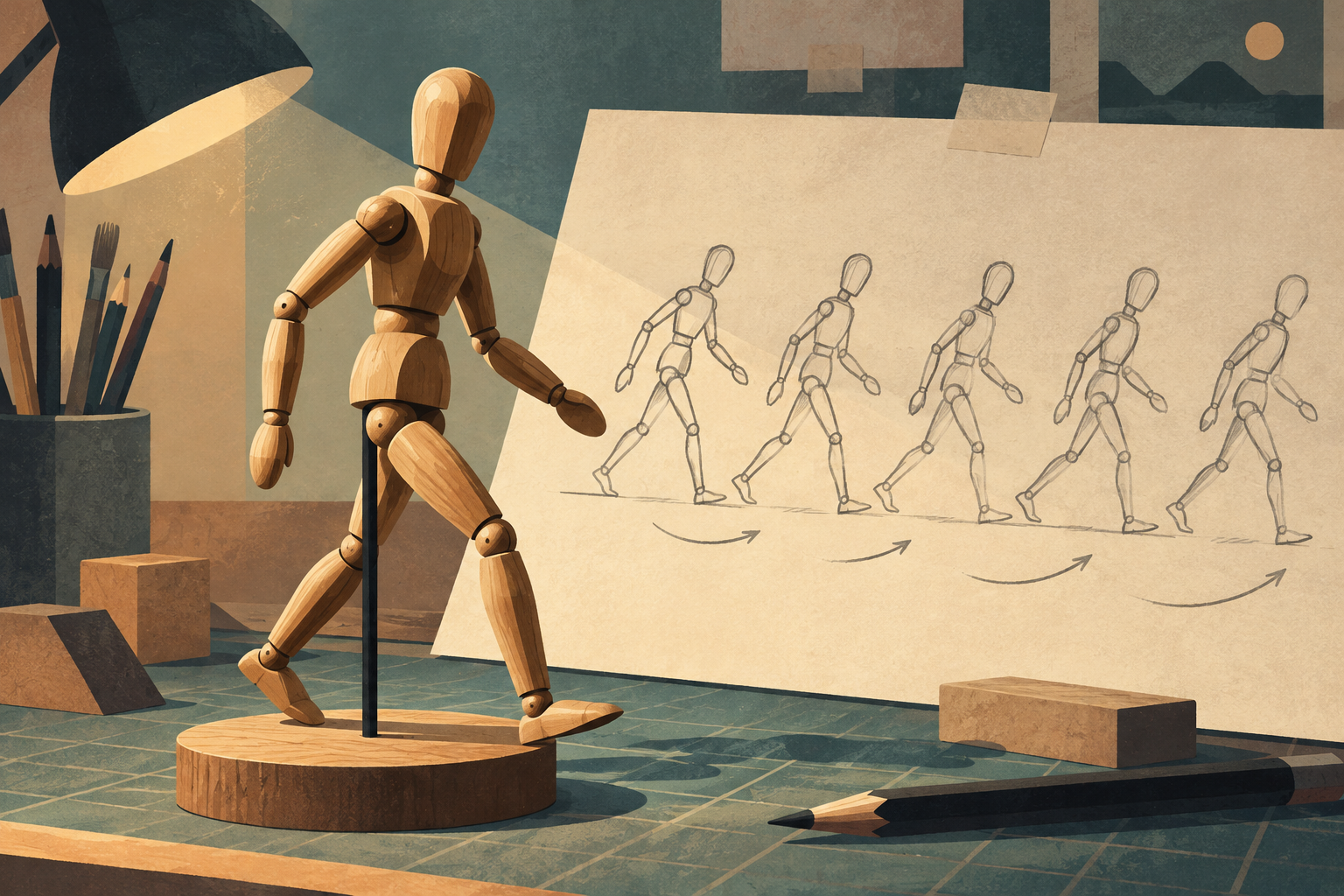
The complexity of stop motion demands rigorous pre-production. Unlike live-action filming, where multiple takes and on-set adjustments are possible, stop motion requires detailed planning of each movement. Studies on pre-production in stop motion have highlighted the importance of storyboards, models, and puppet prototypes. Each frame must be carefully designed and executed, which implies a slow and methodical work process. This demand for precision not only affects production logistics but also influences the narrative, as movements must be coherent and fluid to maintain the illusion of life. Pre-production is, therefore, a critical phase where creative decisions are made that will determine the success or failure of the animation.
Economic viability and industrial adoption
The industrial adoption of stop motion has been conditioned by economic and technical factors. The profitability of the technique has been a constant topic of debate, as the production process is laborious and requires a significant investment in time and resources. However, technical feasibility and the ability to create unique visual effects have allowed stop motion to find its niche in the film industry. The combination of artistic quality and the possibility of creating fantastical worlds has made the technique attractive to producers and directors. History shows that stop motion has survived technological and economic changes thanks to its ability to offer a distinct visual experience that cannot be easily replicated by other techniques.
Legacy and cultural relevance
The legacy of stop motion extends beyond the technique itself. It has influenced the aesthetics of animation and the public's perception of what is possible in cinema. The technique has been used in a wide variety of genres, from fantasy to horror, and has contributed to the creation of memorable cultural icons. The cultural relevance of stop motion lies in its ability to evoke a sense of craftsmanship and authenticity in an era dominated by digitalization. In a context where technology advances rapidly, stop motion offers a valuable contrast, reminding the viewer of the importance of matter and human intervention in artistic creation. Its history is a testament to the resilience of traditional techniques in the face of technological innovation.
Conclusion
Stop motion animation is a testament to the interaction between matter and narrative. Its history, from its origins in silent cinema to its consolidation as a cinematic language, is marked by the tension between technological innovation and the permanence of the physical. The materiality of the technique is not a limitation, but a source of aesthetic and narrative richness. By examining the evolution of stop motion, one can appreciate how physical intervention has defined its identity and cultural value. In an increasingly digital world, stop motion remains a form of art that celebrates the tangibility of creation, offering a unique perspective on the relationship between object, camera, and time.
- Decade
- 1990s
- Region
- Global
- Level
- Enthusiast
- Entities
- Fantasia, Animación stop motion, Argentina
Sources and references
- Tecnología stop motion - SEDICIsedici.unlp.edu.ar · 2026-10-18
- Proto stop-motion: Análisis de las primeras apariciones del stop motion en el cine de acción real.openalex.org · 2026-10-18
- (PDF) La evolución de la técnica de animación stop-motion a través de ...translate.google.com · 2026-10-18
- La animación Stop Motion. Técnicas y posibilidades artísticas. Cut-outriunet.upv.es · 2026-10-18
- Preproducción en Stop-Motion: Técnicas y Legado | PDF | Animaciónes.scribd.com · 2026-10-18
- La Maquina del tiempo +www.facebook.com · 2026-10-18