RetroPauseArcade
Thematic archive · Arcade

Arcades and arcade culture

A cabinet, a coin, and a game played under the gaze of other players: arcades bring together machines, public spaces, and ways of competing. This section looks at how the cabinet, its controls, and its setting shape the experience.

Start here

Readings to help you find your bearings.

History · 1970

From Arcade to Living Room: Pong’s Early Commercial Journey

Pong is often used as an entry point to the commercial history of video games. Drawing cautiously on the available evidence, this article traces its association with arcades in 1972 and Atari’s later move toward a home version, separating documented details from broader interpretations about the medium’s growth.

Open story
Arcade

A story in context

The control panel, screen, and sound all form part of the practical rules of an arcade game. The venue and the people there also change the way a game is played.

This section covers cabinets, arcades, and arcade culture. Video Games focuses on the works themselves; Consoles looks at their arrival in the home.

Choose your path

Three perspectives on the archive.

Featured dossier

Video Games in the 1990s: New Ways to Play, Tell Stories, and Connect

The 1990s transformed video games without replacing one platform with another overnight. 3D graphics, CD-ROMs, personal computers, and early networked communities broadened the medium, while arcades retained experiences that were difficult to reproduce at home.

Read article

Documented milestones

  1. November 1971

    Computer Space reaches the arcade

    Computer Space, an arcade adaptation of Spacewar! associated with Nolan Bushnell, began commercial distribution in November 1971. The machine operated with coins; its status as the first commercial video game is not unanimously established.

    Read article
  2. 1972

    Atari’s Pong reaches the consumer market

    La Nación places the launch of Pong, a two-player tennis game, in 1972 and describes it as a notable step in video games’ entry into the consumer market.

    Read article
  3. 1972

    Pong reaches the consumer market

    La Nación presents Atari’s 1972 launch of Pong as a milestone in video games’ move into the consumer market and reports that the game became an immediate hit.

    Read article
  4. 29 November 1972

    Atari announces Pong for arcades

    On November 29, 1972, Atari announced Pong, its table-tennis arcade game. The date marks the commercial announcement, not the installation of its prototype, which had been tested earlier at Andy Capp’s Tavern in Sunnyvale.

    Read article
  5. 1975

    Telegames Pong brings the game into the home

    According to La Nación, Atari released the Telegames Pong home console in 1975, allowing people to play Pong at home and drawing in competitors.

    Read article

Latest additions

1970s

Pong and the arcade cabinet: controls that turned a game into a social encounter

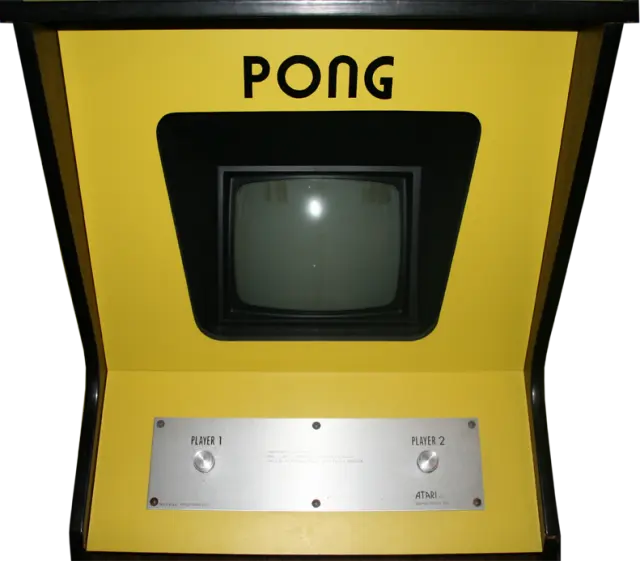
In Pong, two rotary controls and a shared cabinet made the duel easy to see—and gave people waiting for a turn a reason to watch. The game’s path from a prototype tested in a Sunnyvale bar to home versions shows how controls and setting could reshape the experience even when the basic mechanics remained familiar.

1980s

How the Mega Drive reshaped Sega's global strategy

The 1988 launch of the Mega Drive marked a turning point for Sega, seeking to consolidate its position in the home market after its arcade dominance. While its reception in Japan was modest, the console found resounding success in North America and Europe, driven by titles like Sonic the Hedgehog and an aggressive marketing campaign targeting teenagers.

1980s

The 3DO Tried to Be a Standard Before It Was a Console

The 3DO paired advanced hardware with an unusual business model: licensing its specifications to outside manufacturers. Its history reveals both the ambition of that approach and the limits imposed by price and a crowded console market.

1970s

The Coin That Changed the Recreational Room

Analyzes how the transition from academic experiments to arcade cabinets in the 1970s defined video game culture, focusing on the coin-operated business model and the socialization of play.

1970s

From Computer Space to the Archive: Telling the Story of Arcade Games

The sources identify Computer Space as an early commercial milestone. From there, arcade history can be followed through machines and venues, but also through specialist archives, databases and public-history projects. The available evidence also makes clear where claims must stop.

1970s

Computer Space and the move to coin-operated games

Commercialized in 1971 as an arcade adaptation of Spacewar!, Computer Space offers a way to examine a key shift: video games began to be presented as public, commercial experiences. The available evidence also shows that some milestones in this history remain disputed.

Sources for the selected readings

Editorial review ·