An animation medium of Japanese origin, traditionally made by hand and also using digital techniques. Its productions span many genres and are distributed through television, home video and cinema.
Selected excerpts from our archive offer more context on this subject. Each reading links to the original article and its sources.
1950-1956: Two Documented Paths Toward the Anime Industry
Between 1950 and 1956, the available evidence offers two very different pictures of how Japanese animation work could be organised: an initiative assembled in a home and a production company created as a business. They are not equivalent episodes, nor are they enough to summarise the decade. They do, however, make a change of scale visible—one often obscured when history is told only through famous titles or retrospective labels.
The first date is January 1950. Ryūichi Yokoyama, a cartoonist known for the manga Fuku-chan, decided to enter animation after seeing Disney’s short The Skeleton Dance. The supplied source places that short’s Japanese release in 1930. Yokoyama bought a 16 mm camera, converted his home into a studio called Otogi Productions, and began work in March with a six-person team. The second date is 1956, the year Tōei Dōga was founded; it is now known as Tōei Animation.
These dates did not emerge from a vacuum. The historical summaries in the supplied material place animated films in Japanese cinemas around 1910 and state that roughly 93 foreign animated films were shown between 1914 and 1917, with American works being the most popular. They also describe a crucial material limitation: celluloid was not manufactured in Japan, and imports were expensive.
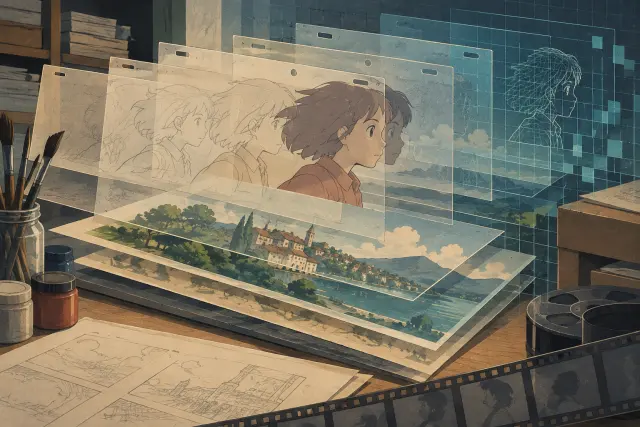
According to those sources, this encouraged the use of drawn cardboard, cut out and photographed: cut-out animation. The information does not justify imagining a single method for all Japanese production, but it does show that technique depended on supply, cost, and availability. Animation’s industrial history is not simply a sequence of works; it is also a history of materials and decisions made under specific constraints.
Tōei Dōga: A 1956 Studio in Anime’s Industrial Origins
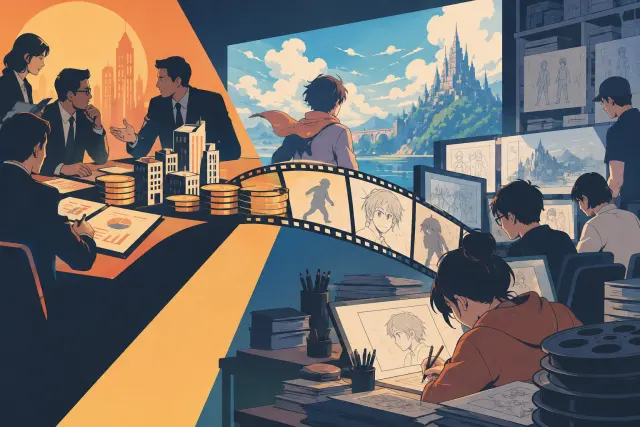
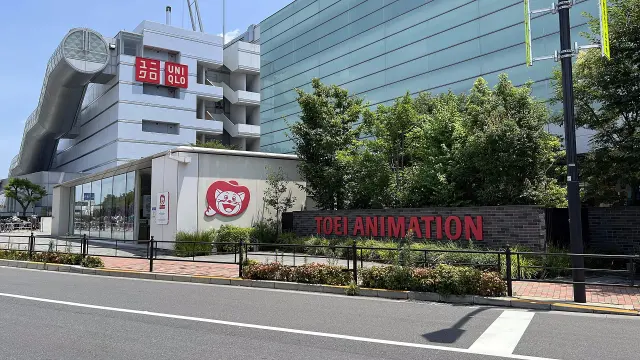
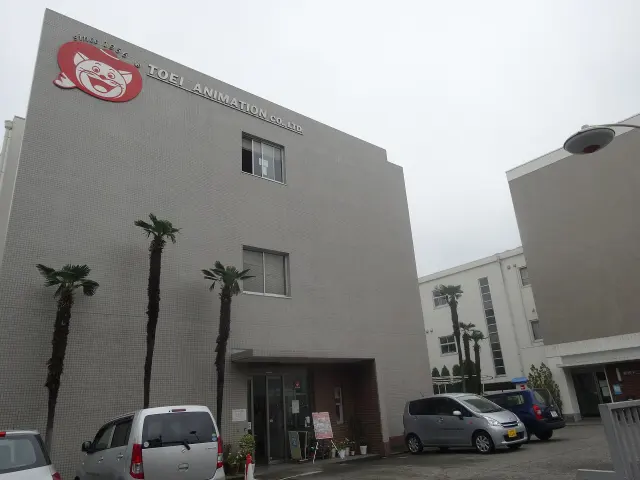
Tōei Dōga holds a particularly revealing place in any account of postwar Japanese animation. The available evidence establishes a clear starting point: the production company was founded in 1956 and is now known as Tōei Animation. This continuity of name does not, by itself, summarize a corporate or aesthetic history, but it does offer a precise entry point into a period when Japanese animation was increasingly organized around companies making television series and feature films.
This profile should be read as contextual interpretation rather than an exhaustive studio chronology. The available sources describe Tōei Dōga as one of Japan’s most important animation studios, a privileged training ground for animation professionals, and a place associated with anime’s emergence. Those are meaningful but broad formulations: they document historical importance, yet they do not authorize a specific list of titles, techniques, creators, or commercial outcomes not supported here.
Tōei Dōga’s founding did not happen in a vacuum. General anime history places its beginnings in the second decade of the twentieth century. It also states that foreign animated films reached Japanese cinemas around 1910 and that roughly 93 foreign animated films were shown between 1914 and 1917, with American productions the most popular. This matters because it shows that domestic animation developed in dialogue with images, formats, and practices already visible to Japanese audiences.
Production conditions were not identical to those elsewhere. One historical source explains that celluloid, indispensable for some animation practices, was expensive in Japan because it was imported. As an alternative, artists used cut-out processes with cardboard: characters were drawn, cut out, and photographed. This does not directly describe Tōei Dōga’s own methods, but it prevents an overly simple reading of the medium. Japanese animation history includes choices shaped by resources, material availability, and working practices.
KEY FACTS
- Type
- Anime
- Country or region
- Japan
References
- Animees.wikipedia.org