The room as profile and meeting place
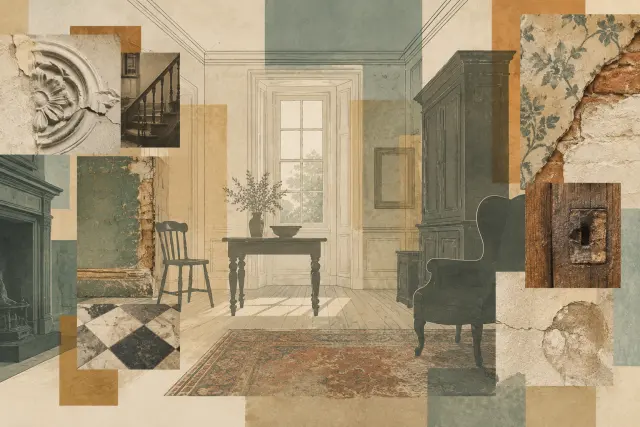
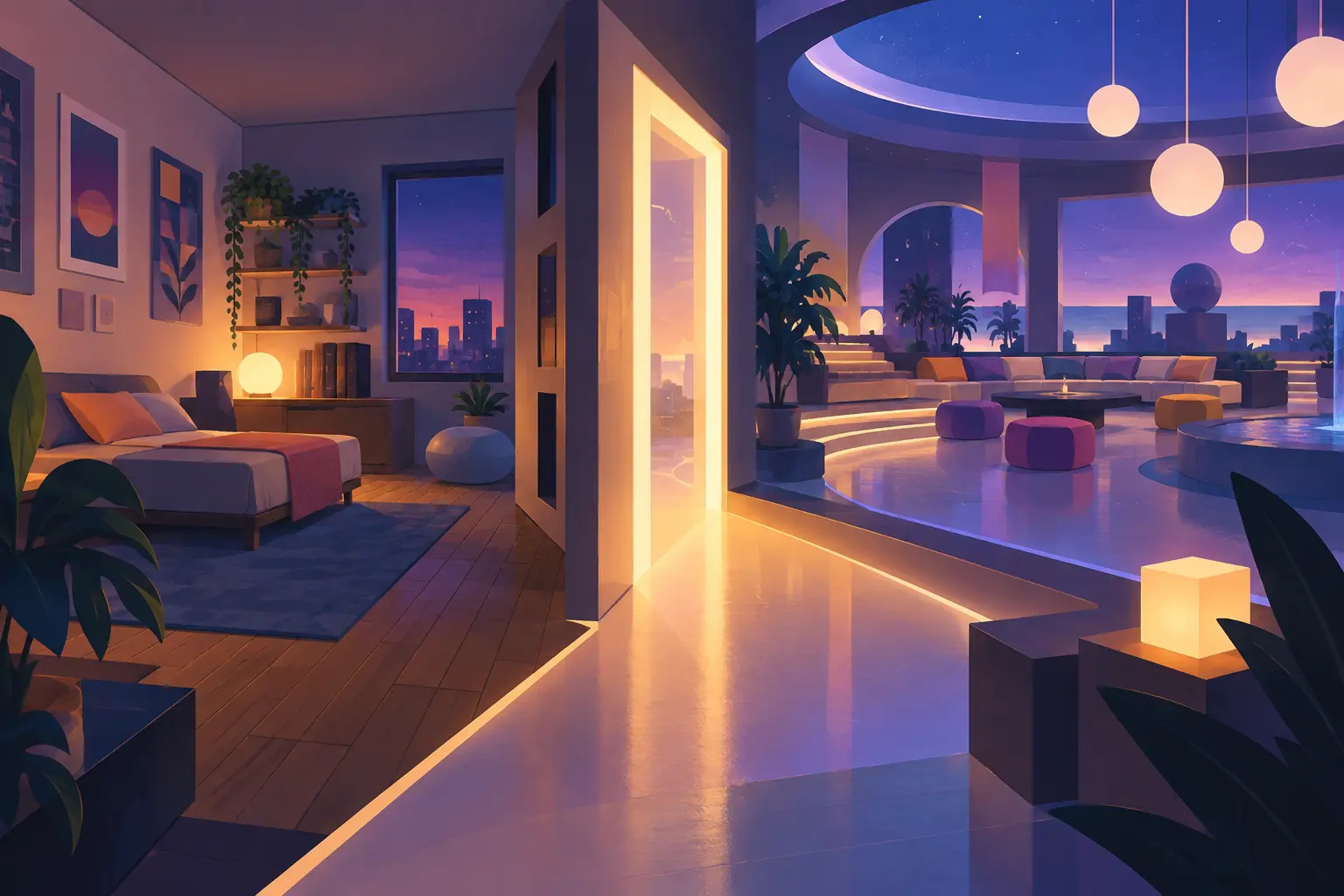
In the three-dimensional social spaces of the 2000s, a room was somewhere to talk, but it also made an identity visible and provided a place to welcome others. PlayStation Home, tied to PlayStation 3, and IMVU, built around avatar chat rooms, organized this experience in different ways. In both, furniture and layout could turn a conversation into a visit: someone arrived, saw the setting, and spent time with the person who had arranged it.
PlayStation Home: a home within a shared world
PlayStation Home gave each user a personal apartment that could be changed with virtual furniture and objects. The basic apartment, known as the Harbour Studio, was free; other items could be obtained or purchased within the service. The apartment did not stand alone: plazas and other public spaces served as meeting places, so the experience moved between a space of one’s own and shared areas.
The option to invite friends gave decoration a practical social dimension. An apartment could be shown to other people, and its objects and appearance helped make it distinctive. At the same time, the private home belonged to a larger network of social venues and spaces associated with games and activities. Access to the service depended on a PlayStation 3, tying this shared world to a console platform.
Home launched as a public beta in December 2008 and closed on March 31, 2015. Its history places it within the specific context of the PlayStation 3 era, rather than as a timeless form of virtual life. The service combined community spaces designed by the platform with apartments users could modify, though customization and creation were not unrestricted.
IMVU: configurable rooms and host-controlled access
IMVU organized conversation in three-dimensional rooms and placed particular emphasis on the variety and configuration of those spaces. Users could buy furniture and other virtual objects to furnish them, and rooms could be public or limited to invited guests; other room types had their own access conditions. Hosts could set rules for their spaces and, in some cases, delegate moderation.
IMVU’s shop connected customization with community production: its catalogue included items made by users, which others could acquire for their avatars or rooms. Decorating, then, was not simply a matter of choosing from a set of objects supplied by the company. The presence of creators and user-made products allowed the platform’s visual repertoire to grow from within its community.
That object economy also complicated the idea of a virtual room as entirely free and open to everyone. The service could be used without paying, but some items and options depended on credits or other purchases. The ability to imagine a setting and the ability to build it with particular objects were shaped by the platform’s rules and economy.
Decoration also organized social life
The contrast between the two services is not absolute. PlayStation Home connected personal apartments with plazas and shared spaces managed by the platform; IMVU placed greater emphasis on room variety and on hosts’ control over settings and access. In both, however, space formed part of the interaction: users could decide how to present it, meet there, and—within different limits—choose who could enter.
Virtual interiors can therefore be understood as social arrangements as well as decoration. A sofa, a lighting scheme, or a layout had no material function outside the digital environment, but each helped create a recognizable atmosphere and frame a conversation. A room could express tastes, affinities, or an imagined scene; its access rules also defined who took part in that scene.
It is important to distinguish between a platform’s features and the specific practices of its users. The existence of an invitation or room-restriction option tells us what could be done, but not how often people used it or what it meant to them. Even so, these services show that digital sociability was not built only through avatar-mediated conversation: it also took shape through arranging, displaying, and sharing space.
- Decade
- 2000s
- Region
- Global
- Level
- Introduction
- Entities
- PlayStation, PlayStation Home, Avatar
Sources and references
- ✨ Mira este timelapse de nuestra decoración con globos ...www.instagram.com · 2026-11-05
- Decoración de stand para feria Beauty Expo de empresa ...www.instagram.com · 2026-11-05
- 50 ideas de escaparates de Año Nuevo para 2027v-count.com · 2026-11-05
- PlayStation Homees.wikipedia.org · 2026-11-05
- IMVUes.wikipedia.org · 2026-11-05