Fashion in the 2000s is best understood as a network of circulation rather than a list of trends shared by everyone. Runways, shops, magazines, television, celebrities, the internet and everyday wear spread styles at different speeds. Distinguishing what was designed, promoted, sold and worn helps us read the decade without mistaking media visibility for social adoption.
Denim as a thread
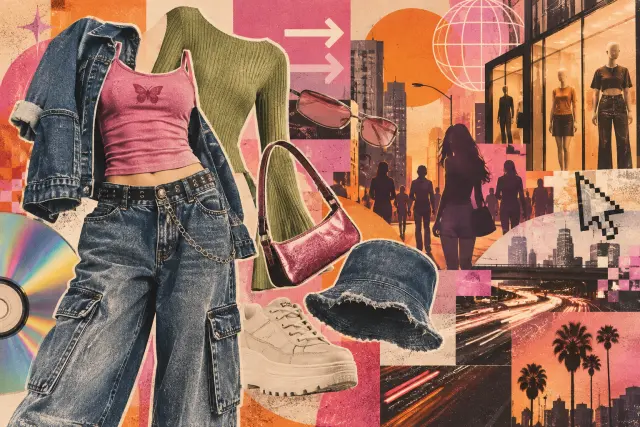
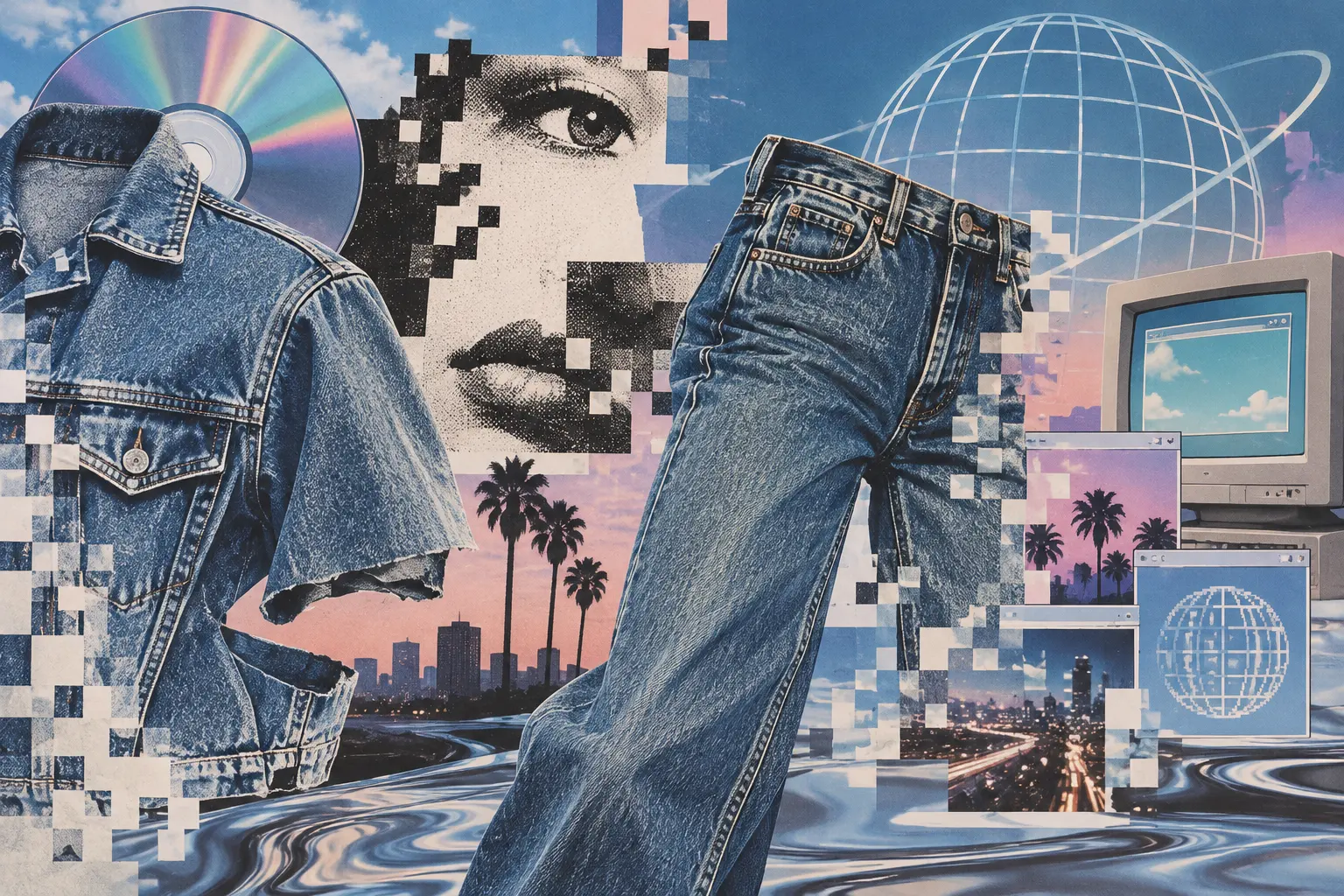
Jeans offer a useful thread for following some of the period’s changes. The Fashion Institute of Technology (FIT) timeline notes that denim remained prominent throughout the decade: low-rise, flared jeans were prevalent in the early 2000s; bootcut styles gained popularity in the middle of the decade; and skinny jeans spread from 2005–06. The timeline also records distressed finishes and jeans entering settings previously associated with more formal dress.
These are documented trends, not a universal wardrobe. Photographs of Jessica Alba wearing True Religion jeans around 2005, or of other public figures, show denim moving onto red carpets and into fashion coverage. They do not, by themselves, establish how widely it was worn by people of different ages, places or social groups. Street scenes and photographs of everyday clothes widen the view, provided we consider who took the pictures and what settings they depict.
Celebrity, the press and desire
The circulation of certain looks was linked to celebrities’ growing presence in the media. The FIT timeline connects that visibility with the speed at which images could be shared online. Public figures became recognisable reference points, but a look’s repeated appearance in magazines or paparazzi photographs does not mean everyone adopted it.
Accounts of the decade often feature highly recognisable garments and products: bohemian dress, miniskirts with Ugg boots, velour tracksuits and trucker hats. Sienna Miller became associated with the boho look; Britney Spears with Juicy Couture tracksuits; and several celebrities made Ugg boots and Von Dutch caps recurring elements of their public image. Such examples help identify the decade’s media vocabulary. Their prominence in the press, however, does not prove they were equally common in every setting.
Roland Mouret’s Galaxy dress, introduced in 2005, offers another example of a designer garment becoming a visible reference and being reproduced in high-street versions. During the decade, “must-have” items linked design, advertising, celebrity and commercial copying. Press coverage documents their media reach; photographs and surviving garments help investigate how they were worn and reinterpreted.
From runway to mass retail
Karl Lagerfeld’s collaboration with H&M, presented in November 2004, was a milestone in the relationship between luxury design and fast fashion. WWD reported the commercial excitement it generated and how quickly some pieces sold out. The episode shows how a mass retailer could partner with a haute couture designer and turn a launch into a media event.
Collaborations were not the only way designer references reached more shoppers. The FIT timeline describes how high-street chains quickly translated runway ideas into commercial products. This did not erase the differences between original designs and mass-market versions; it did bring trend, retail and public imagery into closer contact.
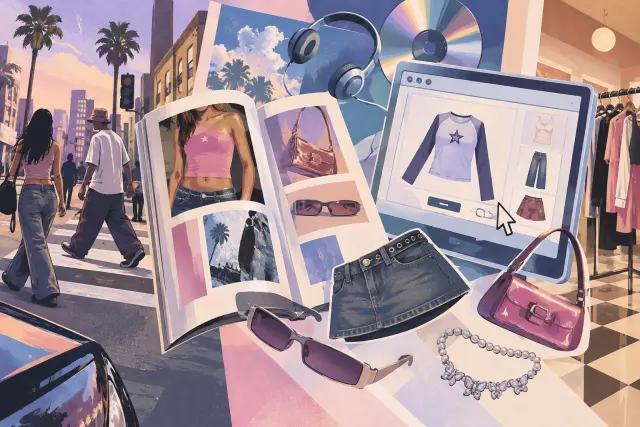
The growth of online retail reinforced that circulation. Digital shops run by fashion chains and, toward the end of the decade, new ways of shopping on smartphones shortened the time between seeing a garment, wanting it and buying it. Yet the 2000s were not an exclusively online story: magazines, television, physical shops and word of mouth remained important channels.
Music, style and menswear
Menswear was also shaped by musical and media references. The FIT overview records sportswear and casual clothing alongside slimmer cuts and revivals of earlier decades. In the second half of the 2000s, two particularly visible influences were styles associated with hip-hop and an indie scene featuring skinny jeans, band T-shirts, blazers and narrow ties.
These are broad categories, not uniform dress codes. Music scenes encompassed different tastes and practices, and the same garment could carry different meanings depending on who wore it and where. The connection between music and clothing helps explain why certain looks appeared in photographs, music videos and the press, but it does not replace the material history of the clothes themselves. Everyday wear should be distinguished from styling created for a stage or a photo shoot.
Reading images in context
Fashion in the 2000s connected everyday dress with the red carpet, celebrity influence with advertising, and mass retail with the online circulation of images. Each link raises a different historical question: what was designed, promoted, sold and worn?
An editorial photograph can document an outfit in detail and still be staged. A street photograph records a particular use, not a representative sample of an entire population. Comparing photographs, garments and press accounts makes it possible to treat fashion as social practice without turning a selection of striking images into what everyone supposedly wore.
- Decade
- 2000s
- Region
- Global
- Level
- Enthusiast
- Entities
- Televisión, Internet, Karl Lagerfeld, Roland Mouret
Sources and references
- 2000-2009 | Cronología de la historia de la modatranslate.google.com · 2026-11-05
- vestidos del mundo desde la antigüedad hasta el siglo xix: ...www.facebook.com · 2026-11-05
- Historia de la moda - Wikipedia, la enciclopedia librees.wikipedia.org · 2026-11-05
- Biblioteca — Historia de la Modahistoriadelamoda.net · 2026-11-05
- Historia de Barcelonaes.wikipedia.org · 2026-11-05