Illustrated magazines in a politicized press
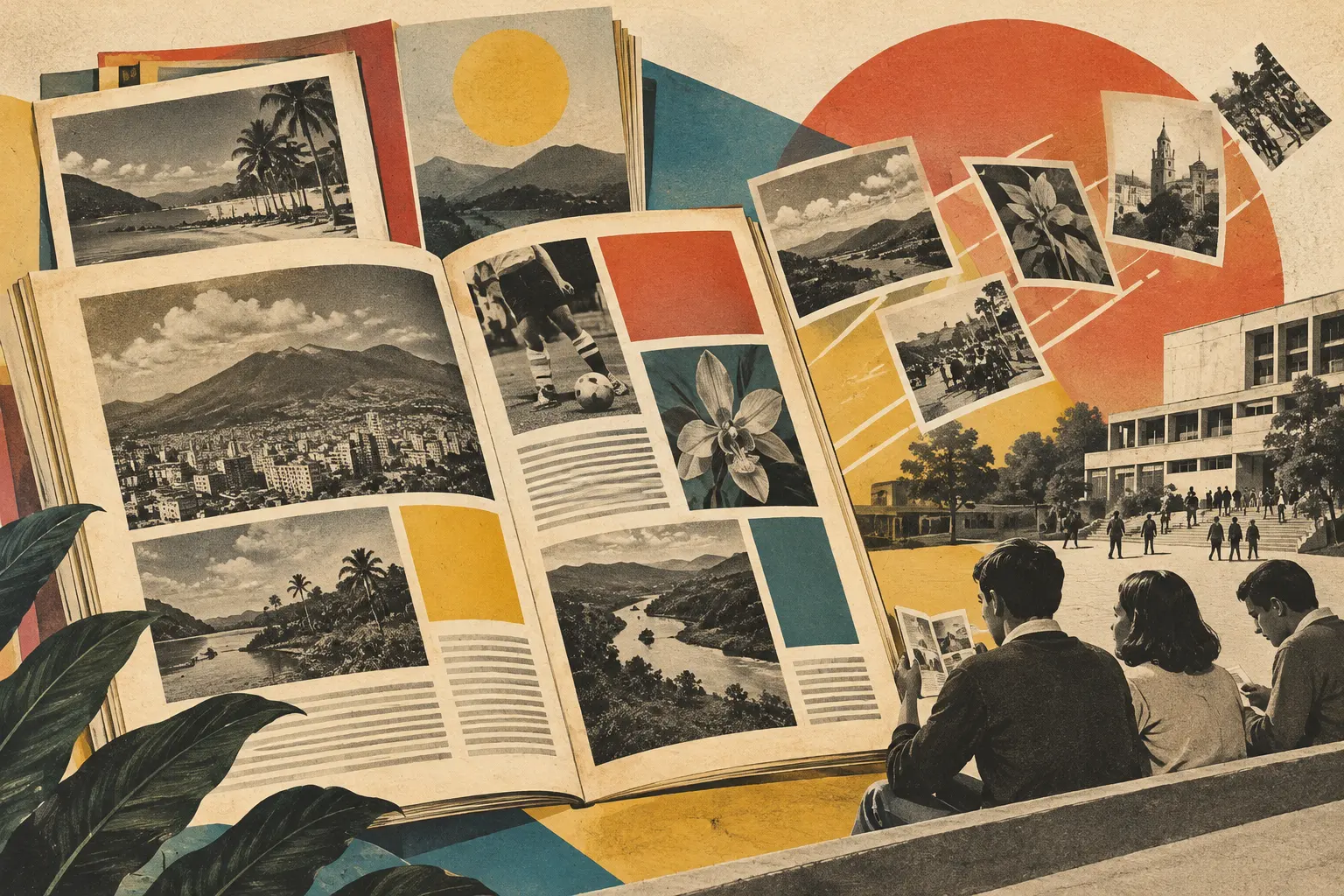
From 1910 to 1931, El Gráfico, Cromos and Universidad made printed images a central part of Colombian cultural life. In a press where partisan newspapers intervened directly in political disputes, these magazines made room for photography, illustration, caricature and the visual arts. César Ayala Diago describes them as publications able to show “another country”: a cultural and social life not reducible to conflict between parties, even if it was never wholly separate from politics.
Their importance to graphic history does not depend on classifying them as comics. Their pages combined images and writing, but that combination did not necessarily create a sequence of panels or a sustained visual narrative. What matters is how each magazine organized its pages, directed attention and made people, works and events visible.
Three magazines, distinct emphases
Founded in 1910, El Gráfico was an illustrated magazine with a wide reach. Ayala Diago emphasizes its record of material progress and its abundant visual content. Photographs of groups, ceremonies, landscapes and public spaces built a recognizable repertoire of national life; alongside them appeared news, poetry, commentary and artists’ work. The magazine welcomed illustrators, painters, photographers and caricaturists, circulating their work among readers who could encounter both established figures and younger talents.
Cromos, first published in 1916, sought an illustrated presentation on an international level and combined national and international news with art, social life and caricature. The artist Coriolano Leudo created some of its early covers; other artists, including Ricardo Rendón, contributed to its pages. Caricature could take a prominent place and comment on current politics, while portraits and images of social events formed a visual chronicle of the period.
The magazine Universidad, founded in 1921 and associated with the student movement, sought to bring together new generations of writers and artists. Under the direction of Germán Arciniegas, it published Rendón’s caricatures, literary and essayistic writing, and work by both young and established artists. Its project linked student activity to the promotion of art and literature, while also seeking to place Colombian culture in conversation with the wider continent.
The page as a way of seeing
A cover, portrait or caricature was not neutral. Its selection and placement alongside news, poems or commentary influenced which figures received attention and how readers encountered them. In El Gráfico, photographs of gatherings and ceremonies could present society through associations and public events. In Cromos, caricature offered a pointed way of depicting prominent figures. In Universidad, portraits of young creators and student leaders helped construct the image of a generation.
This visual culture also had limits. Published scenes could suggest social harmony and modernity, while inequality and deprivation remained less visible. The representation of society depended on editorial decisions, the interests of those financing the publications and hierarchies that shaped who appeared and how they were shown. The magazines expanded the available repertoire of images, but they did not offer a complete or impartial view of the country.
María Paula Marín’s study of El Gráfico and Cromos examines the diversification of Bogotá’s reading public between 1910 and 1924. Read alongside Ayala Diago’s research, these publications show that illustrated reading was more than the reception of news: it brought readers into contact with styles, artists and public figures, helping to form shared experiences of social life.
A visual antecedent, not a comic
The connection to comics history lies in the broader field of print culture: these magazines explored ways for drawing, photography and writing to coexist in a single publication. But that experimentation should not be confused with comics. In comics, panel sequences and the narrative relationships between them are fundamental; in the magazines considered here, images could accompany or comment on text without forming a sequential narrative.
Their significance, then, is to show that the printed page also constructs a way of seeing. A caricature could enter political debate; a photograph could record a public event; a cover could introduce an artist to new readers. El Gráfico, Cromos and Universidad made such graphic choices part of Colombian cultural history and of the ways the country represented itself.
- Decade
- 2000s
- Region
- Global
- Level
- Enthusiast
- Entities
- Ways of Seeing
Sources and references
- Presentación del Númerodoi.org · 2026-11-10
- Presentación del Dossierdoi.org · 2026-11-10
- Presentación del Númerodoi.org · 2026-11-10
- La historia local, la historia regional y la microhistoria como ...portal.amelica.org · 2026-11-10
- Hemerografía, gráfica y paz en los comienzos del siglo XX ...www.redalyc.org · 2026-11-10