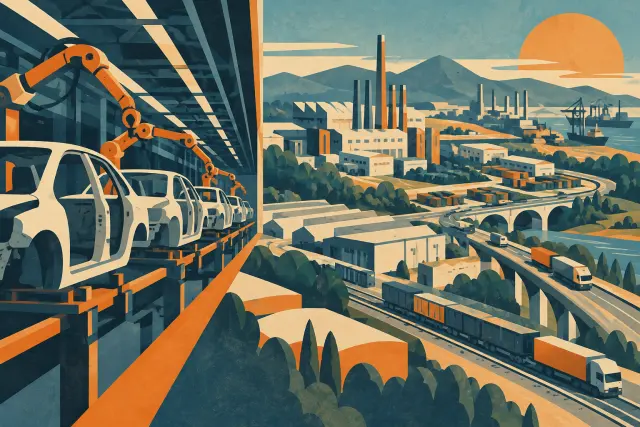
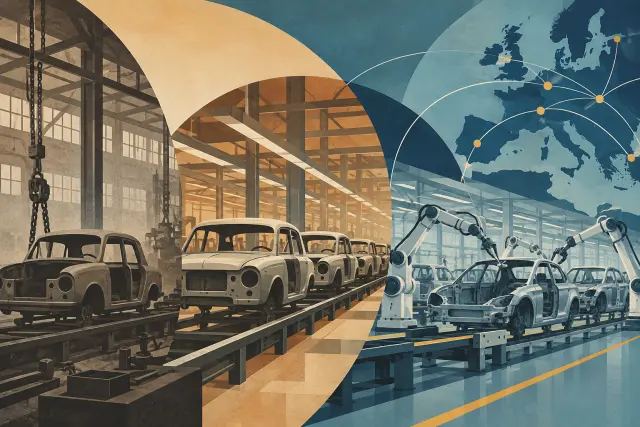
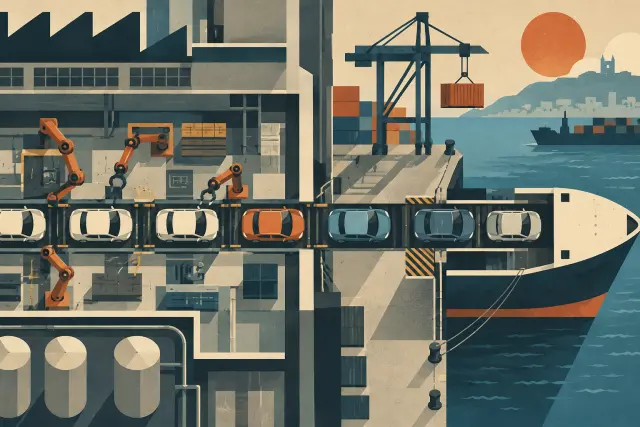
Spanish automobile company founded as a public enterprise on 9 May 1950 by the National Institute of Industry. It was privatised in 1986, when Volkswagen acquired a majority stake.

Selected excerpts from our archive offer more context on this subject. Each reading links to the original article and its sources.
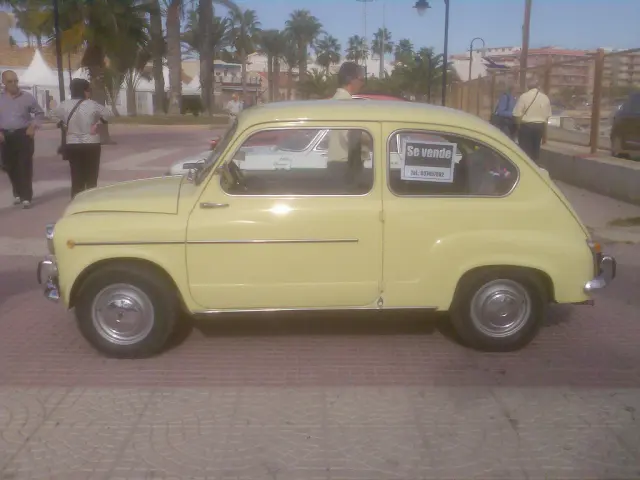
The SEAT 600 D, between mechanical change and memory
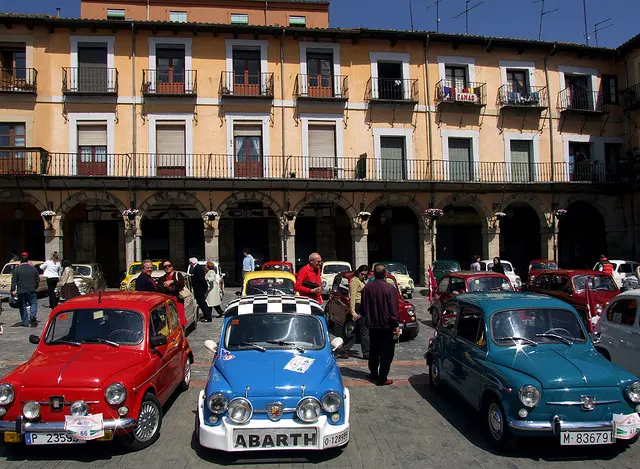
The SEAT 600 D is often discussed in two registers. One concerns changes to a particular car; the other describes a broader social transformation, with the vehicle cast as a symbol of mobility and freedom. The sources gathered support the claim that the D version appeared in 1963 and represented a technical development of the SEAT 600. They do not, however, turn every claim about its impact into a measured fact or provide a complete account of its history.
The references consulted date the arrival of the 600 D to 1963. One describes this as the beginning of the model’s period of greatest prominence; another calls the version an important technical evolution. These are statements from automotive and journalistic sources, not a complete factory chronology. They establish the year given for its appearance, but do not identify the precise launch date or reconstruct the process in detail.
The specific change repeated in the material is an increase in the displacement of the four-cylinder engine. The same description places that engine over the rear axle. This is useful for understanding what is presented as the D version’s innovation, though the available material gives no displacement figure and offers no detailed comparison of components, performance, or successive modifications.
The phrase “technical evolution” summarizes one source’s interpretation; it should not be mistaken for a comprehensive specification sheet. The increase in displacement is supported by the evidence provided, but its precise value and measurable effects are not given. Nor does the material include factory manuals, homologation documents, or a complete list of changes between versions.
From vehicle to museum object: how the history of the automobile is told
The published account of the Argentine museum says that the Centro Tecnológico-Cultural y Museo del Automovilismo Juan Manuel Fangio was created on 22 November 1986, with support from the Province of Buenos Aires, companies and supporters, as well as contributions from Fangio himself and activities organised by the Commission. Among the items mentioned are a 1903 Peugeot with a single-cylinder engine, a two-seat Wanderer with tandem seats, a 1912 Daimler, a 1898 Krieger electric car, and the Yruam, designed in Argentina between 1927 and 1928 by the French engineer Maury.
KEY FACTS
- Type
- Company
- Year
- 1950
- Country or region
- Spain
References
- SEATes.wikipedia.org