A popular car, shaped by successive changes
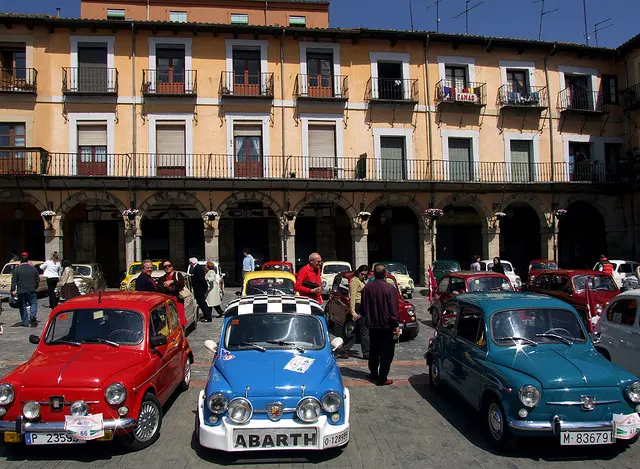
Built by SEAT in Barcelona’s Zona Franca from 1957, the 600 derived from the Fiat designed by Dante Giacosa. Its significance is often summed up as that of a car that extended individual mobility among Spanish families. That social dimension belongs to its history, but the model can also be understood through its changes: engine capacity increased, doors and equipment were revised, and derivatives appeared for other purposes.
The early chronology involves distinct milestones. RTVE dates the official presentation to 29 May 1957 and puts cumulative production at about 800,000 cars. Other accounts give 27 June of that year as the date the first car left the factory. Presentation and the start of manufacturing are different events, so the dates should not be treated as interchangeable.
From 633 to 767 cc
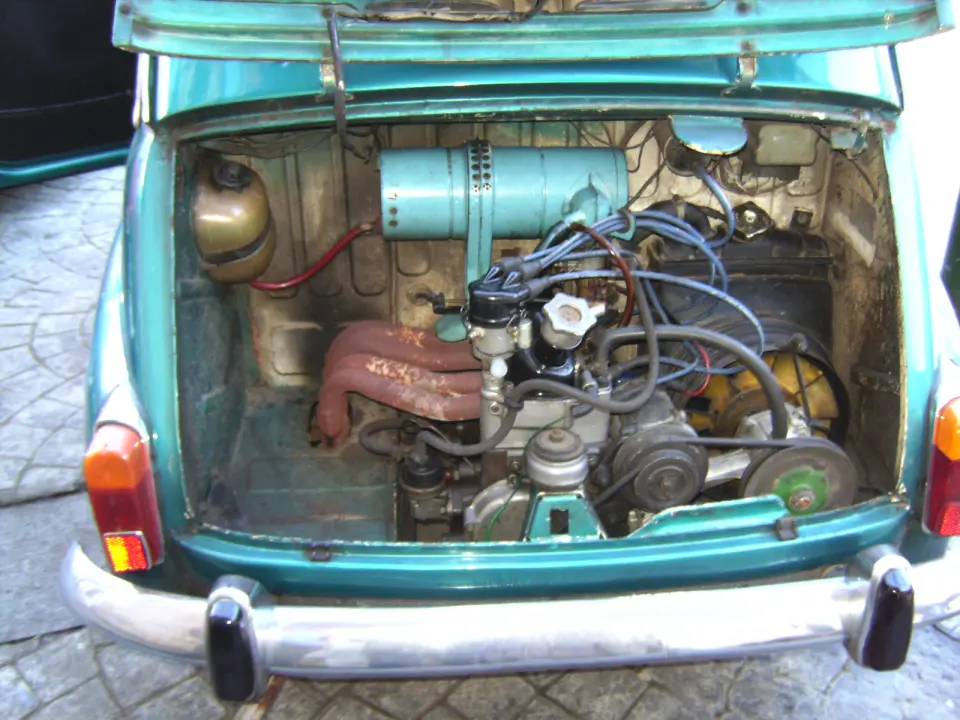
The original 600 had a 633 cc engine. The D version, launched in 1963, used a 767 cc engine rated at 25 hp, while retaining the basic layout: a longitudinal engine at the rear and rear-wheel drive. Published figures for power and speed can vary by version and source; they should not be applied indiscriminately to every car in the range.
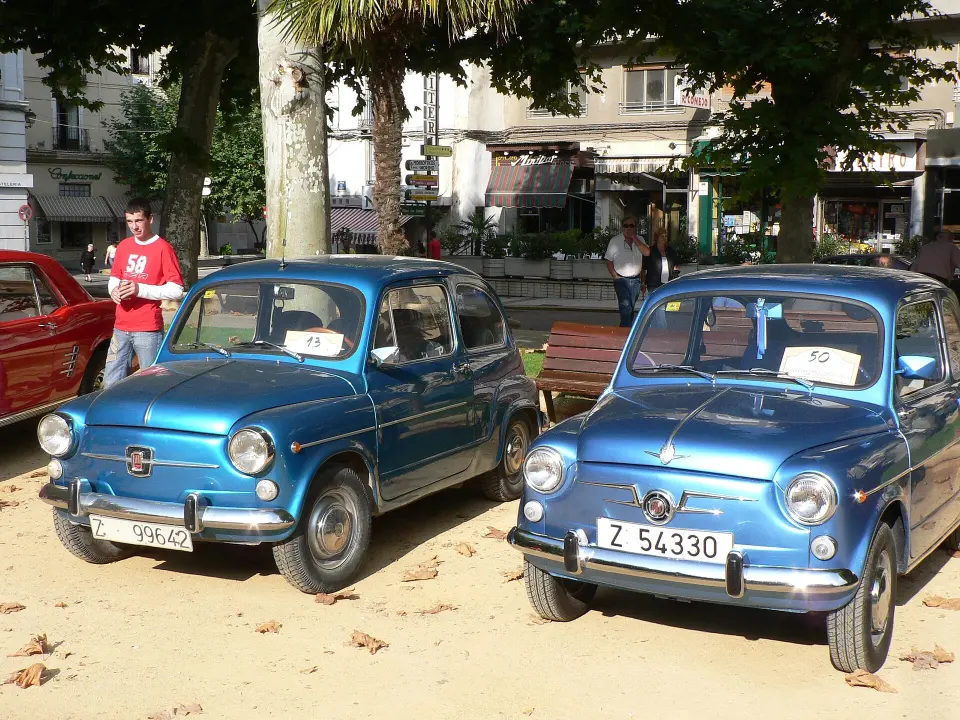
The changes were not confined to the engine. Early models had front doors hinged at the rear, opening in the opposite direction to the usual arrangement. The 600 E, introduced in 1969 according to some accounts, adopted conventionally hinged doors and visible changes to its lights and trim. Motorpasión’s chronology places the L Especial, the final version, in 1971. It retained the 767 cc engine and raised the stated output to 28 hp through mechanical and equipment changes.
The N, D, E and L Especial designations therefore mark stages with specific differences, not merely interchangeable trim levels. Sources place production of the 600 D between 1963 and 1970, the E from 1970, and the L Especial towards the end of the model’s run. Although the car kept its two-door profile, the 600 also spawned derivatives: the four-door SEAT 800, associated with coachbuilder Costa, as well as commercial versions and special bodies. Distinguishing these from the standard model avoids assigning features of a particular derivative to every 600.
Between specifications and memory
Specifications describe the vehicle; the press and personal accounts help explain its uses and reputation. In an RTVE programme, sociologist Eulalia Solé recalled overheating as one of its mechanical shortcomings. This is testimony about the experience of the car, not a general technical assessment applicable to every version.
The 600 became popular during a period of economic growth and the expansion of consumer society. RTVE’s archive revisits period advertisements, sounds and accounts from buyers, while later motoring coverage often presents the car as a family vehicle and an emblem of Spain’s motorisation. These sources document public image and social memory; they do not turn recollections of what the car meant to its owners into measurable performance claims.
Production ended on 3 August 1973, as competition increased and safety requirements changed. Motoring coverage also noted the difficulty of fitting seat belts to the body’s narrow pillars. Placing the end of production in this context helps situate the car as a product of its time, rather than projecting the capabilities of a modern vehicle onto it.
Reading the versions alongside contemporary sources offers a more precise view: the SEAT 600 was a range of vehicles with verifiable technical changes and, at the same time, a cultural object associated with the expansion of mobility in Spain. Its engineering can be described through specifications; its status as an icon is understood through use, imagery and collective memory.
Documentary gallery
- Decade
- 1960s
- Region
- Spain
- Level
- Enthusiast
- Entities
- SEAT, Sounds, Cuatro, SEAT 600
Sources and references
- Seat 600: los 800.000 volantes de la revoluciónwww.rtve.es · 2026-11-05
- El Seat 600: Historia de un mito motorizadowww.rtve.es · 2026-11-05
- La Revista / Motor: El 600 cumple los cuarentawww.elmundo.es · 2026-11-05
- Desde un parto a bordo hasta superventas en Finlandia: desgranamos al SEAT 600 en 58 claves - HOY SE HABLA DEwww.motorpasion.com · 2026-11-05
- SEAT 600, el coche que movilizó a España - Historiawww.larazon.es · 2026-11-05
- SEAT 600: el primer coche de la mayoría de españoles - Blogs MAPFREwww.motor.mapfre.es · 2026-11-05
- 40 años desde el fin de la producción del Seat 600 - HOY SE HABLA DEwww.motorpasion.com · 2026-11-05