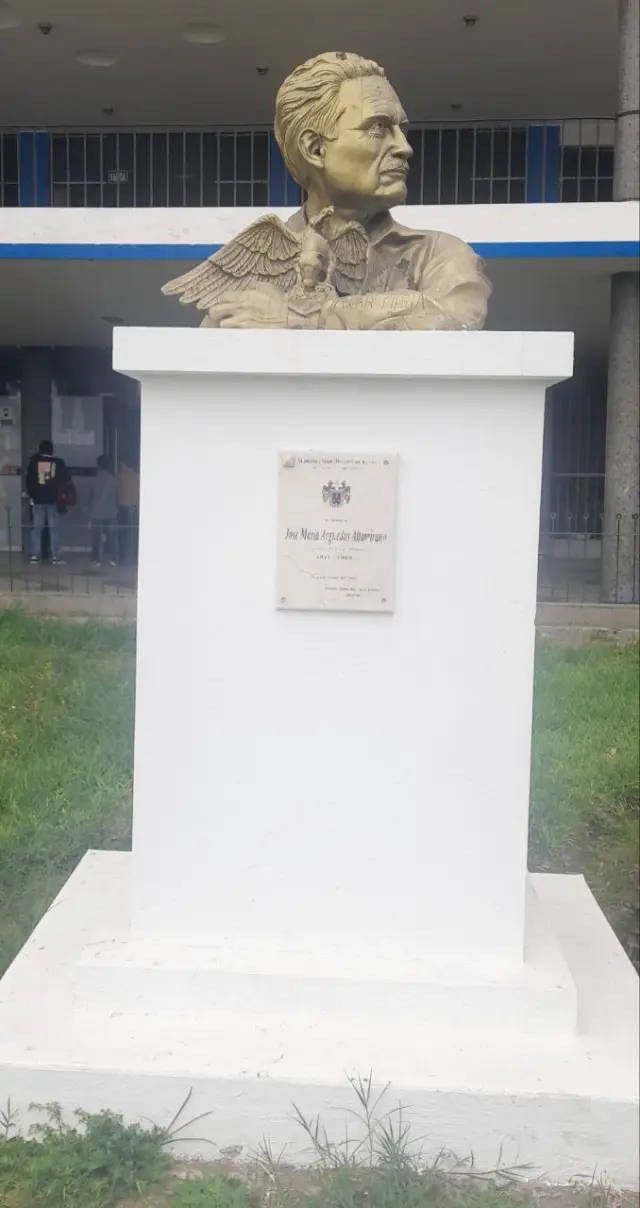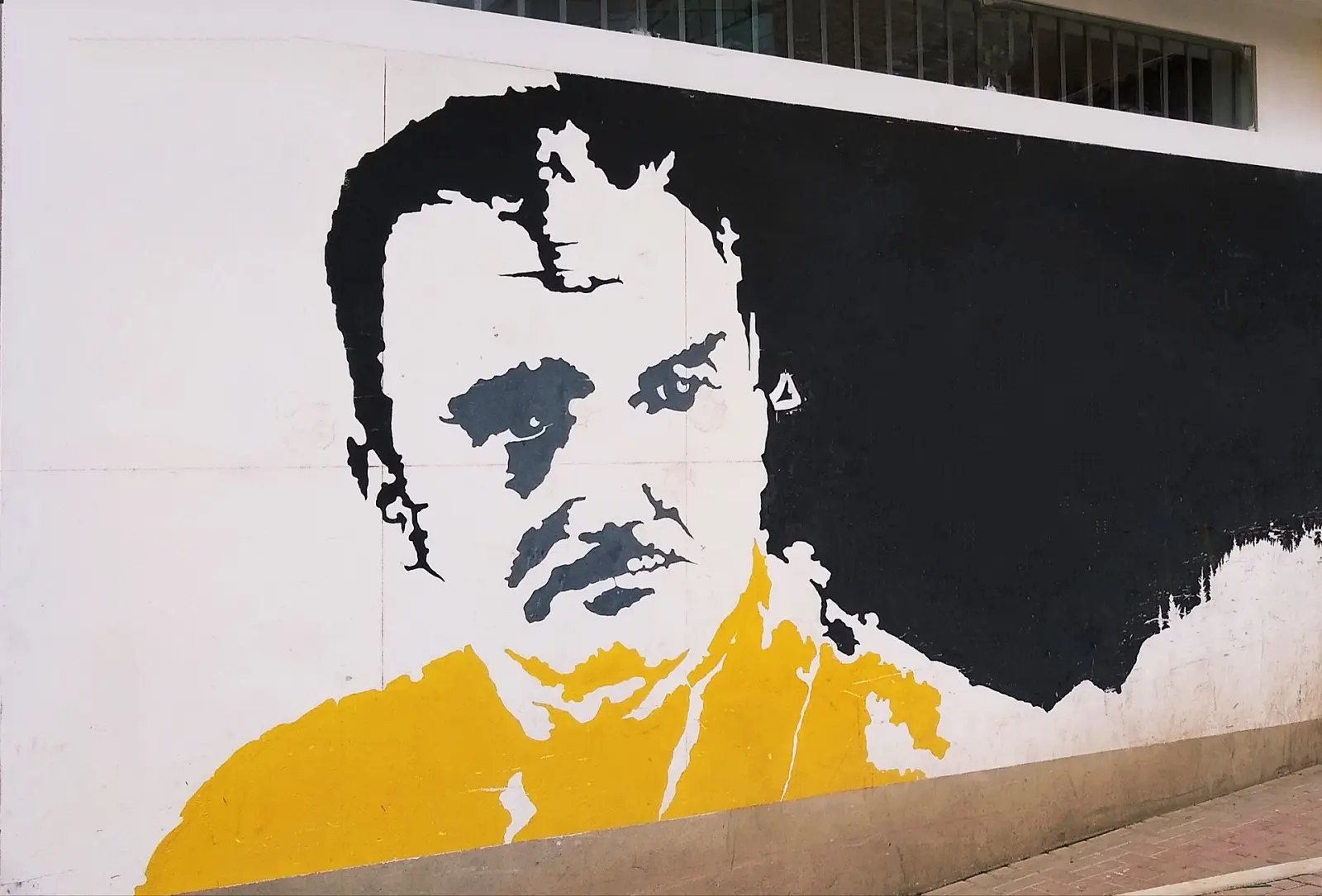
Between 1949 and 1952, officials from Peru’s Ministry of Public Education, led by the intellectual José María Arguedas, recorded around two hundred musical pieces in an effort to establish the country’s first public folklore archive. The project was pioneering, but its recordings were made under persistent constraints: discs were fragile, equipment and supplies were scarce, and the responsible institutions lacked reliable means to duplicate and safeguard the collection. The archive’s history shows how ideas about authenticity and cultural representation met the limits of technology and public administration.
A local initiative within an international network
The project did not emerge in a single moment or from one institution. From 1945, the US Library of Congress sent folk-music discs to Peruvian organizations as part of cultural exchanges. These exchanges connected researchers and officials in both countries and offered a model of sound recording linked to ethnographic research. In 1948, Peru’s Ministry acquired a Presto recorder; by early 1949, Arguedas was already testing it.
Those connections influenced the project without making it a mere extension of US initiatives. Its Peruvian organizers set their own priorities, shaped by indigenist thought and a desire to document music they considered neglected. Arguedas sought to record Andean performers and repertoires, gather information about musicians and performance settings, and counter commercial versions he believed distorted this music. International cooperation brought access to knowledge and equipment, but it also exposed the imbalance between those who needed their recordings duplicated and those who controlled the technology to do so.
Recording in Lima under constraint
Material limits affected the choice of repertoire from the start. Sessions took place in Lima, often at night or on holidays, when musicians had finished their other work and rooms were available. The team made use of performers and ensembles from other regions who were visiting the capital. Recording outside Lima was difficult and expensive; the first field trip, to Huaraz, took place in 1950 and required outside financial support, as well as a solution to local electricity problems.
The archive therefore cannot be treated as a neutral sample of the country’s musical diversity. Its contents reflect who could reach Lima, which performers were accessible to officials, what repertoires they prioritized, and how many blank discs they could obtain. The recordings leaned toward Andean music, particularly pieces from regions including Áncash, Apurímac, Ayacucho, Cusco, and Junín. The surviving catalogues also contain gaps and inconsistencies; they do not provide a complete, uniform inventory of what was recorded.
The disc as medium and point of vulnerability
The pieces were recorded on acetate discs. Each disc served as a way to listen to and study the music, but it was also the physical object meant to preserve it. That dual role carried a risk: playback could wear down the medium. Officials noted that some discs could be played only a limited number of times. To stretch scarce supplies, several pieces were sometimes recorded on one side; if the disc was damaged, more than one recording could be lost.
Duplication seemed an obvious remedy, but it could not be done adequately in Peru. In 1949, Ministry officials sent original discs to the Library of Congress in the hope of obtaining copies. The exchange dragged on amid confusion over whether the discs were originals or copies, changing plans, and delays. The US institution eventually copied the recordings onto magnetic tape and returned the originals in 1951. The researchers who reconstructed the episode say that some discs may have been lost or damaged in transit; the documentation does not establish the extent of any loss with certainty.
The cooperation did leave copies of the recordings at the Library of Congress, but it did not solve the problem of the archive in Peru. The tapes were not an easy substitute for Ministry officials, who lacked the equipment and resources to use them routinely. Sending the originals abroad also placed them temporarily beyond the reach of the people who needed them for research, presentations, and attempted circulation. Preservation came to depend in part on institutions outside the country and on decisions that Peruvian organizers could not fully control.
Authenticity, archives, and commercial circulation
The initiative had more than one aim. The Ministry wanted to assemble recordings for research and preservation, while Arguedas also hoped to circulate the music among the public. He believed that some commercial versions recorded outside Peru had distorted Andean repertoires. The Ministry therefore explored agreements with record companies: some pieces were issued by Odeón, while other proposals failed or were rejected for technical and commercial reasons.
An archive and a commercial record followed different criteria. The former could preserve recordings not intended for sale; a company, by contrast, had to decide what could be reproduced and marketed. Disputes over selection, costs, and the return of recordings show that commercial release did not guarantee either the integrity or broad circulation of the collection. In some cases, publication offered another route for the music to travel; in others, projects stalled.
The officials’ language for describing the music matters too. Arguedas called it “pure” and authentic, terms that expressed an intellectual and indigenist position, not neutral categories accepted by every performer. Recording detached sound from its occasion and relocated it within an institutional framework of research, classification, and national representation. At the same time, the archive preserved traces of performances, repertoires, and musicians who might otherwise have remained outside commercial channels. It was thus both a recording project and a cultural selection: its criteria made some music visible while leaving other practices less represented.
A pioneering archive with an uncertain afterlife
The initiative ended in 1952, when a Ministry reorganization dissolved the department that had driven it. In the years that followed, the collection became dispersed and its material history difficult to trace. In 1964, the head of the Folklore Department at Peru’s Casa de la Cultura reported receiving a few acetate discs in poor condition, unusable for artistic purposes. Decades later, researchers located recordings on tapes and discs held in different collections; other copies remained with institutions abroad. What is known of the archive today comes from these fragments, not from an intact collection.
The case makes clear the difference between preserving a musical work and preserving a sound document. A piece may continue to be performed or transmitted in other ways; a recording also depends on the condition of its medium, the information needed to identify it, and whether anyone can access it. The discs’ fragility and the lack of local duplication meant that recording a performance did not ensure its survival.
The history of Peru’s archive is not only a story about new technology or a project that fell short of all its aims. It is the story of a pioneering cultural effort whose ambitions ran up against scarce resources, unstable institutions, and transnational technical dependence. Its recordings preserve particular sounds, but they also reveal the conditions that shaped them: who could be recorded, what counted as authentic music, and where the power to preserve and circulate recordings lay.
- Decade
- 1950s
- Region
- Latin America
- Level
- Enthusiast
- Entities
- Sounds, José María Arguedas
Sources and references
- La valoración de colecciones como herramienta para la ...revistas.javeriana.edu.co · 2026-10-26
- Archivo del Museo de Música de Mariana, siglos XVIII-XIXwww.unesco.org · 2026-10-26
- Diseño de una experiencia aumentada para un archivo ...translate.google.com · 2026-10-26
- La accidentada gestión de sonidos auténticos: Agendas ...www.cambridge.org · 2026-10-26
- Escuchar un paíswww.museoreinasofia.es · 2026-10-26