An archive built against wear
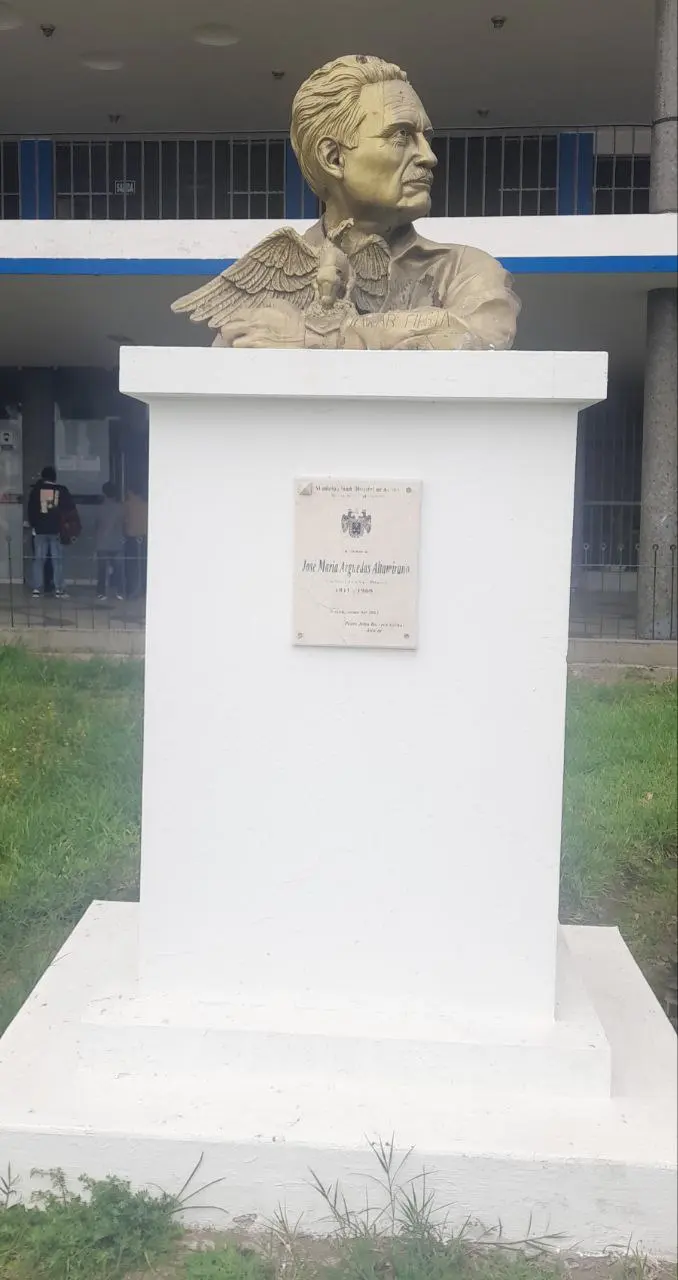
From 1949 to 1952, the Folklore and Popular Arts Section of Peru’s Ministry of Public Education undertook a pioneering effort: recording traditional music to create a sound archive. José María Arguedas, then the section’s folklore conservator, led the work with musician and recording operator Juan de la Cruz Fierro. Using a Presto recorder, they captured around two hundred pieces, mostly Andean repertories.
The project set out to document and circulate music its organizers considered valuable. But the archive was made under difficult conditions: acetate discs wore down with playback, and the ministry lacked the means to duplicate them systematically. In 1949, the director of Artistic Education and Cultural Outreach warned that the available discs were low quality and could be played only a few times. Every listening session—necessary for research and sharing—risked bringing a recording closer to damage.
This fragility was not a technical footnote detached from music history. It shaped how the recordings could be heard and circulated, and whether a collection dependent on unique copies could be preserved. Those who assembled the archive had to do more than record performances: they also had to find a way to protect the discs while keeping them accessible.
What could make it to Lima
In the first phase, Arguedas and Fierro mainly recorded performers who came to Lima. They took advantage of musicians’ visits from different regions and public performances, including events associated with the Fiesta de San Juan de Amancaes. Limits on travel and the availability of performers shaped what could be recorded and under what circumstances. The archive was therefore not a neutral reproduction of the country’s full musical diversity; it emerged from personal contacts, scarce resources, and practical choices.
The recordings leaned toward Andean repertories: huaynos, carnival music, and ritual songs from several regions. Arguedas associated the music he wanted to document with performers and practices he considered authentic. That idea reflected both his own criteria and the intellectual climate of the period, which was marked by an interest in documenting cultural expressions believed to be threatened by modernization. The recordings did more than capture sound: they selected and organized practices that could then be presented as representative.
Plans to travel to the provinces took time to materialize. In 1950, Arguedas and Fierro went to Huaraz to make the first recordings outside Lima. An unreliable electricity supply forced them to rent a generator, a cost Arguedas and a local school director paid personally. The episode shows how much the work depended on improvised solutions and occasional support rather than stable infrastructure.
The exchange with the Library of Congress
The relationship with the US Library of Congress predated the Peruvian recordings. In 1945, the institution had sent folk-music discs to Peru and proposed an exchange. Several years later, once a recorder was available, Peruvian officials sought help duplicating their discs: they could not make masters continuously in Peru and feared losing recordings that could withstand only a few plays.
In 1949, some recordings travelled to Washington in the hope of being copied. The exchange became complicated by disagreements and confusion over who would keep the originals, what duplication meant, and whether the material could be issued as an album. The Library had its own collecting and publishing aims; the Peruvian ministry needed copies that would let it protect and consult the recordings at home.
After delays and misunderstandings, the original discs returned in 1951. The Library had copied material onto magnetic tape, but the complete acetate duplication requested by Peruvian officials did not take place. The condition of every returned disc is unknown; because some recordings are absent from the US archive, it is possible that material was lost in transit. The episode shows how unequal access to playback and copying equipment could give a foreign institution influence over the timetable, access, and fate of the recordings.
Between the archive and the market
The ministry also approached record companies to circulate some of the recordings. Preserving a documentary recording was not the same as preparing a commercial record: the latter had to meet technical requirements and have a chance of selling. Some pieces were rejected; others were released. Arguedas hoped commercial editions would make music available that, in his view, stood apart from Andean versions he considered distorted.
The two routes served different purposes. A record released for the public was a selection, not the complete archive; a documentary recording, in turn, was not necessarily prepared for general distribution. Duration, sound quality, playback conditions, and choices about what to include changed what listeners could hear in each format.
Commercial publication did not guarantee that the state archive would receive enough income to continue its work. Arguedas saw potential royalties as a way to buy blank discs and support further collecting. Negotiations with companies, however, brought disputes over selection, returns, and payments. Circulation might help preserve some recordings, but it could not replace a stable preservation policy.
A history made of fragments
The initiative ended with the reorganization of the ministry’s cultural departments in late 1952. In 1964, Josafat Roel reported finding only a few acetates in poor condition. Decades later, tapes containing copies of part of the repertory surfaced in the archive of the National Museum of Peruvian Culture; some discs were also located in institutional and private collections. Other recordings were preserved at the Library of Congress, and some were issued commercially. These traces make it possible to reconstruct the project, but they do not amount to a complete inventory of everything recorded.
The archive’s history shows that recording a performance does not guarantee its survival. Acetate made it possible to capture performances that might otherwise not have been documented in this way; at the same time, wear, scarce copies, and a lack of space and staff limited use and preservation. Catalogues, recording notes, institutional exchanges, and decisions about what to publish were part of the recordings’ history too.
Listening to the surviving material today means attending to both the music and the conditions that allowed it to reach the present. Arguedas and his colleagues’ archive was a pioneering effort, but also an incomplete collection shaped by material scarcity and a historically specific idea of authenticity. Its fragments document repertories while revealing the decisions and imbalances that determined what could be recorded, played, and preserved.
- Decade
- 1950s
- Region
- Latin America
- Level
- Enthusiast
- Entities
- Museum, José María Arguedas
Sources and references
- La valoración de colecciones como herramienta para la ...revistas.javeriana.edu.co · 2026-10-27
- Archivo del Museo de Música de Mariana, siglos XVIII-XIXwww.unesco.org · 2026-10-27
- La accidentada gestión de sonidos auténticos: Agendas ...www.cambridge.org · 2026-10-27
- Catálogo de Músicawww.bibliotecadominica.gob.cl · 2026-10-27
- Escuchar un paíswww.museoreinasofia.es · 2026-10-27