Josep Maria Roca Peña · Wikimedia Commons · CC BY-SA 4.0 · CC BY-SA 4.0
Code Lyoko: Evolution resumed the story a year after the animated series and made its change of format part of its identity: live action at Kadic and on Earth, 3D CGI in Lyoko. XANA’s return and the arrival of Cortex, Professor Tyron and Laura Gauthier expanded the conflict, while the divide between the two worlds posed a question of continuity.
Read article ↗
Editorial team illustration · RetroPause
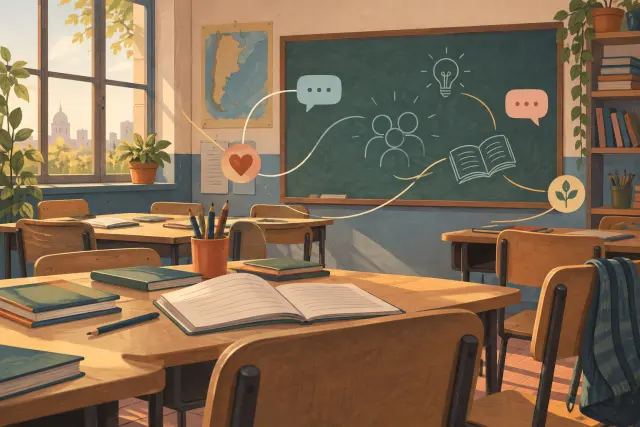
Drawing on Argentine secondary-school teachers’ testimonies gathered in 2007 and 2008, Irene Macera examines how emotional relationships intersect with teaching and school belonging—and the tensions this creates.
Read article ↗
MyName (Cinecol (talk)) · Wikimedia Commons · CC BY 3.0 · CC BY 3.0
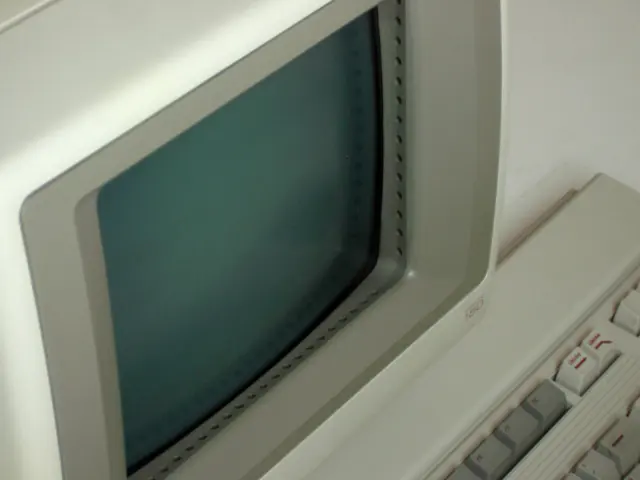
Early touchscreens did not become more accurate through better sensors alone. Coordinate mapping, cursor stabilisation and the chance to correct a selection before confirming it mattered just as much.
Read article ↗

Editorial team illustration · RetroPause
From posters to websites, media and tools changed, but central questions remained: what to emphasize, how to relate text and image, and how to make a message recognizable. Advertising campaigns of the 1960s and 1970s, the visual system for Munich 1972 and the arrival of desktop publishing show why advertising design cannot be reduced to period style.
Read article ↗
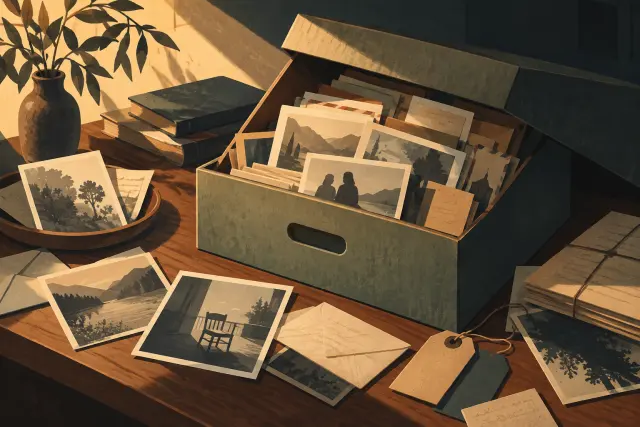
Editorial team illustration · RetroPause
Photographs, letters and household documents can bring into view experiences that official records often leave in the background. Their historical value depends on context, corroboration and comparison with public records—and on recognizing which experiences were never preserved.
Read article ↗
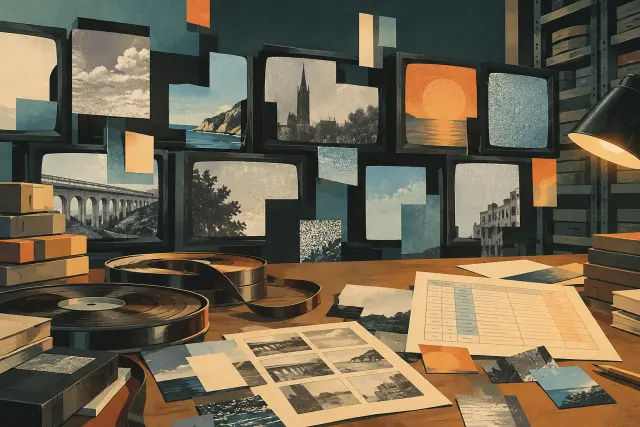
Editorial team illustration · RetroPause
Television history rarely survives intact: live broadcasts, reused tapes and selective archives left a discontinuous record. Elina Adduci Spina’s study of Argentina shows how recordings, schedules, documents and private collections can restore context without mistaking fragments for complete broadcasts.
Read article ↗
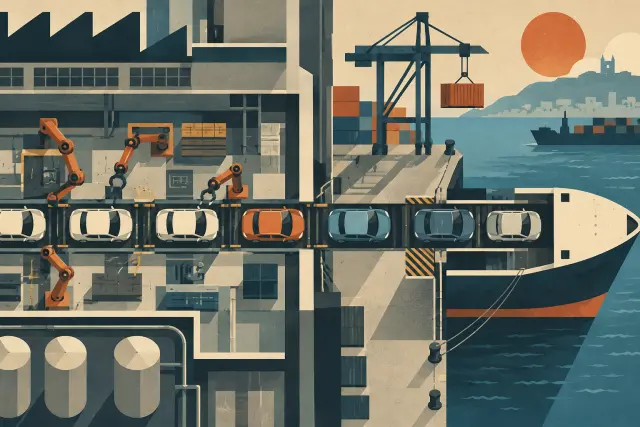
Editorial team illustration · RetroPause
Founded in 1950 with participation from the Spanish state, domestic banks and Fiat, SEAT helped establish large-scale car production in Spain. Its models, split from Fiat and later integration into Volkswagen trace changes in industrial policy and in the identity of a manufacturer rooted in Barcelona.
Read article ↗
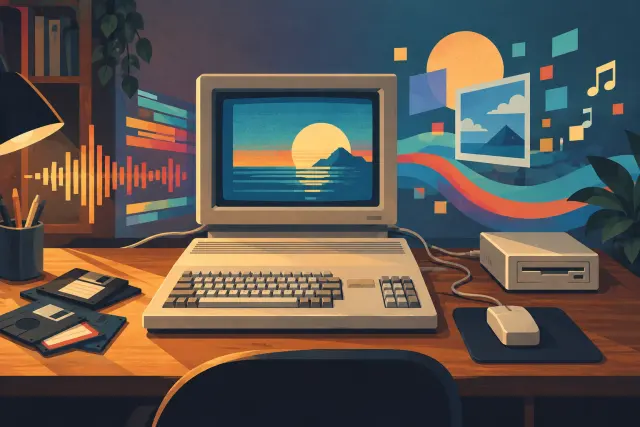
Editorial team illustration · RetroPause
The Amiga was more than a machine for graphics, sound and games: its disks, peripherals and expansion options shaped what people could do with it at home. From the compact A500 to the expandable A2000, it also became a tool for making music, images and video.
Read article ↗
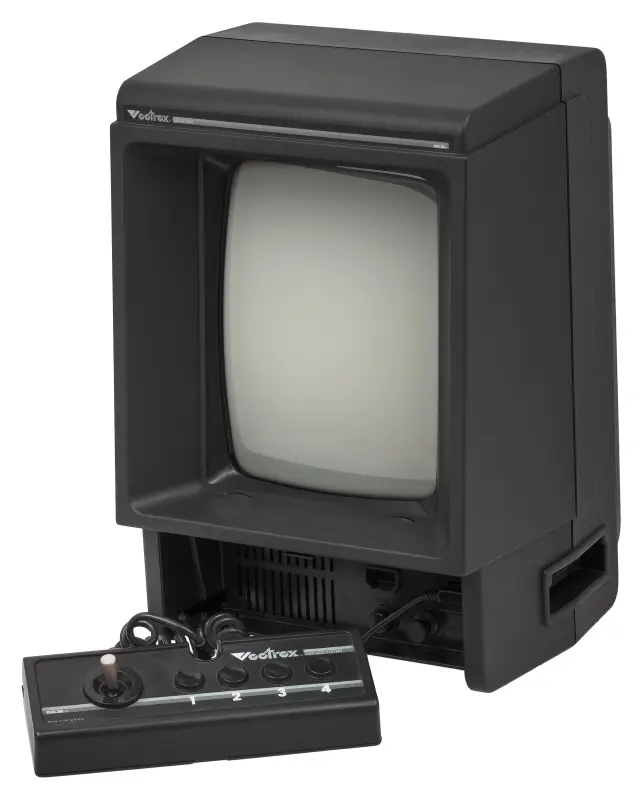
Evan-Amos · Wikimedia Commons · CC BY-SA 3.0 · CC BY-SA 3.0
With its built-in portrait CRT, Vectrex brought an unusual arcade aesthetic into the home. Its story links vector graphics, distinctive games and accessories, a brief commercial run and a community that keeps the system alive.
Read article ↗
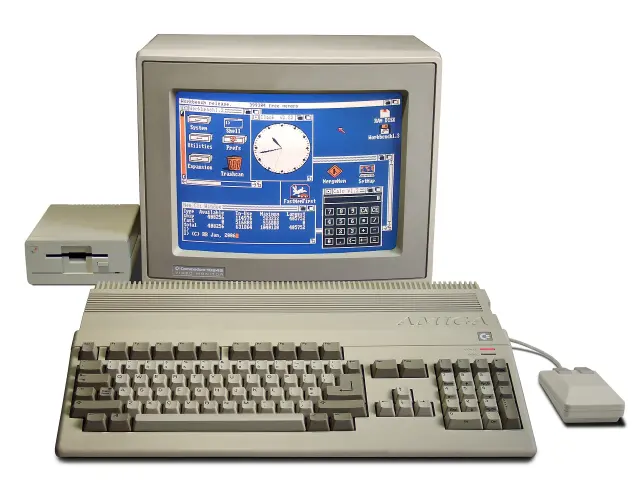
Bill Bertram · Wikimedia Commons · CC BY-SA 2.5 · CC BY-SA 2.5
From custom-chip architecture to a diverse family of machines, the Amiga shaped games, music and video—and still poses distinctive challenges for preservation.
Read article ↗
This is the preserved newsletter snapshot. Linked articles may receive subsequent corrections.