Television began across several households
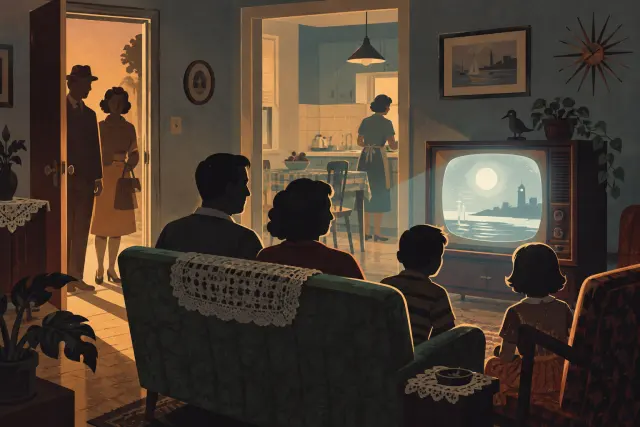
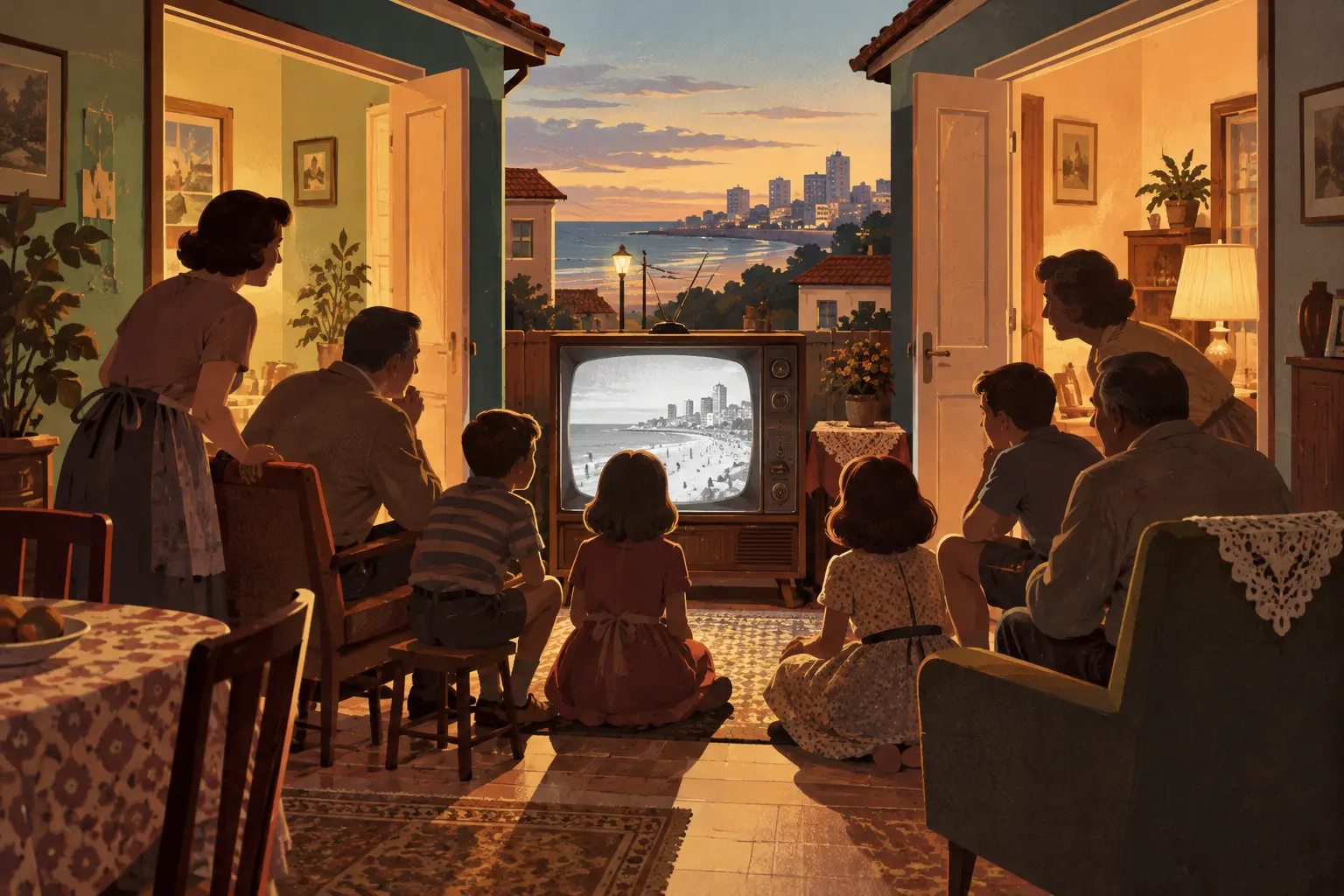
Television history is often told through broadcasters and their programmes. In 1960s Mar del Plata, it can also be reconstructed through the homes that opened their doors to people who wanted to watch. When the local signal arrived, television sets were still expensive and many families did not own one. For numerous children, watching meant going to a neighborhood club, a community association or a neighbor’s house.
Argentine television began in 1951, but broadcasts could be received only in Buenos Aires until 1960. That year, Canal 12 began broadcasting in Córdoba and Canal 8 in Mar del Plata. The arrival of the latter gave shape to an anticipation some families had already begun: buying a set before local programming existed and waiting, sometimes for months, to tune it in.
The cost of the set and the wait for a signal
The interviews collected by historian Inés Pérez show that access was uneven. Families with greater means could buy television sets earlier. For many others, a purchase became possible as sets grew more affordable and were offered on credit. Most interviewees place the more widespread arrival of television in homes between 1966 and 1968, though there were earlier exceptions.
One family recalled buying a set six months before Canal 8 began broadcasting. During that interval, the television was already in the home, but there was no local channel to tune in to. Memories also reveal a generational contrast: people who were children awaited the signal and its programmes eagerly, while many adults remembered the set chiefly as a technological novelty, a prestigious object or a possible distraction from everyday tasks.
Oral accounts preserve different interpretations of those early years. One family’s story of being first in its neighborhood emphasizes children’s visits, while other residents remember going to homes with which they already had close ties. Shared viewing was therefore not the same experience for everyone; it depended on household resources, age and relationships between neighbors.
Children crossed the threshold
Pérez distinguishes these visits from older neighborhood practices such as sharing a kitchen or refrigerator when such goods were less common. In earlier decades, some household appliances moved from one home to another; by the 1960s, those forms of sharing had become less usual. Television visits followed a different pattern: children were the ones most likely to cross from one home to another. Adults visited less often, generally on special occasions.
That detail complicates the idea that television was installed from the outset at the center of the nuclear family. In the early years of local broadcasting, a set could draw people from outside the household and turn a living room, kitchen or neighbor’s home into a gathering place. The apparatus was inside a home, but watching could extend across the neighborhood.
Access to a set did not determine a single way of watching. Some adults remembered television as competing with paid work or housework; others said the set had been bought with children in mind. Age, gender and household means shaped reception as much as the available programming did.
From novelty to everyday fixture
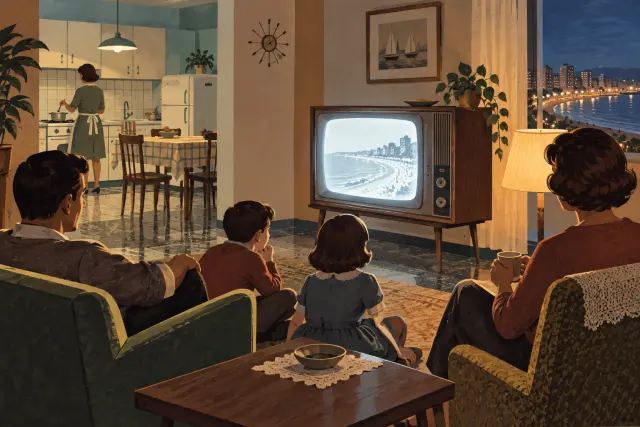
The location of a family’s first television reveals something about what it meant. In many of the households described by interviewees, it stood in the living or dining room, where family members and visitors could watch. In others, it was placed in the kitchen. Pérez notes that this choice did not map directly onto social class: it appears in accounts from both middle-class and working households.
A television could signify modernity and status even when reception was weak or intermittent. One family recalled occasionally picking up broadcasts from Buenos Aires and, less often, signals from Uruguay or Brazil before Canal 8 arrived. In such accounts, the set’s value depended on more than its programmes: its novelty, price, brand and status as one of the first in the neighborhood mattered too.
The kitchen, in turn, shows how the set entered routines that were already in place. Watching could happen alongside domestic tasks without requiring undivided attention. But this arrangement was not socially neutral: some attitudes of the period associated television with wasting time or neglecting household duties, especially in discourse directed at housewives. The set entered spaces shaped by existing family and gender expectations.
A history of use and space
Mar del Plata shows that television’s entry into everyday life was not simply a move from public viewing to private viewing. Visits to neighbors’ homes, family viewing and sets in living rooms, dining rooms and kitchens coexisted. For some, television was initially a novelty or a marker of distinction; for others, it was a source of programmes they still remember vividly from childhood.
Interviews reveal what a history focused only on broadcasts would leave out: who could watch, where people gathered and how the set changed the use of the home. Television did not have a fixed place from the beginning. That place took shape among households, neighbors and generations.
- Decade
- 1960s
- Region
- Latin America
- Level
- Enthusiast
- Entities
- Televisión, Buenos Aires, Argentina, Inés Pérez
Sources and references 5
- Historia de la televisióntranslate.google.com · 2026-11-14
- 9.1: La evolución de la televisiónespanol.libretexts.org · 2026-11-14
- USOS DEL TELEVISOR EN LA VIDA COTIDIANA. MAR ...www.scielo.org.co · 2026-11-14
- usos del televisor en la vida cotidiana. Mar del Plata ...journals.openedition.org · 2026-11-14
- Historia de la televisión en Chilees.wikipedia.org · 2026-11-14